Freehold, Monmouth County
Chimney Sweep in Freehold, NJ
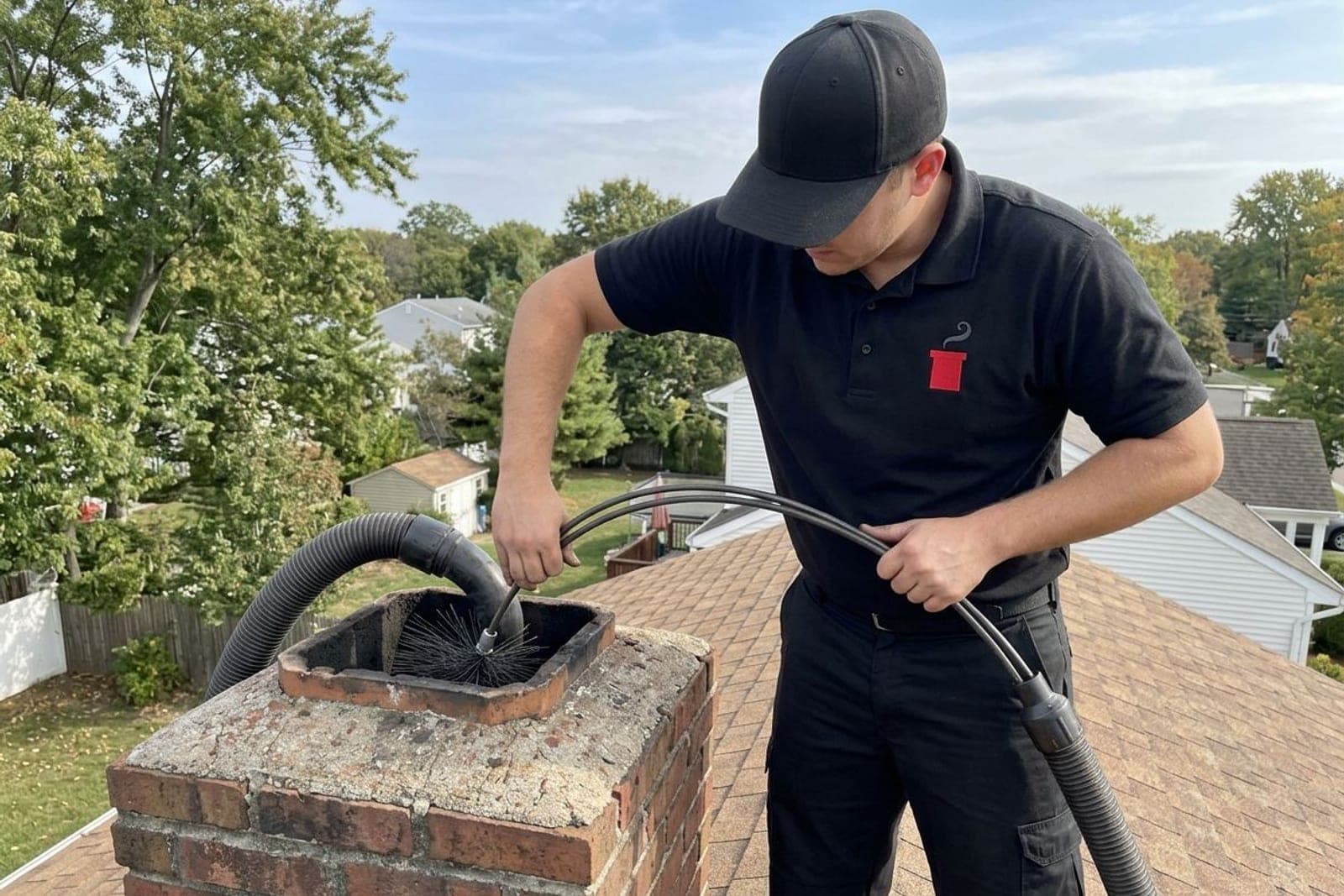
Every wood fire leaves creosote behind, and it builds up whether the flue is an older masonry stack near the courthouse or a newer, lined chimney out on a residential street. We sweep and inspect in the same visit so you know exactly what's in the flue before the next fire, not after smoke is already backing into the room.
Typical investment
$179–$399
- Local crews
- Licensed & insured
- Documented work
- Fast scheduling
- Serving Freehold and the surrounding Monmouth County towns
- $99 inspection, deducted from an approved quote
- Usually on the same Monmouth County route as Atlantic Highlands, Brielle, Colts Neck
Why Freehold homes need chimney sweep
Because sweeping doesn't require a permit, it never has to go through Freehold's construction office — but if the visit turns up damage that does need repair, that's the point where the borough's permit process, and for a contributing historic-district building, its preservation commission, enter the picture. We note that distinction on the written report so you know from day one whether a finding is cosmetic or the start of a permitted job.
We treat Freehold — about 35,354 residents — as home turf, together with Marlboro, Manalapan and Colts Neck next door. That is why chimney sweep appointments here fit into an existing route instead of a special trip.
Creosote removal
Eliminates flammable creosote buildup that can ignite.
Safer venting
Keeps smoke and gases moving up and out — not back inside.
Cleaner fires
Better draft means more efficient, enjoyable fires.
Protection for masonry & flue
Prevents damage from corrosive byproducts and moisture.
Chimney Sweeping for Freehold's Older and Newer Homes Alike
Creosote is a black, tar-like residue that coats the inside of a flue every time wood burns, and past a certain thickness it ignites at a temperature an ordinary fire reaches easily. Stage 1 creosote brushes off in a standard sweep; Stage 3, glazed creosote, needs chemical treatment or rotary equipment and takes considerably longer — the gap between those two outcomes is usually just how long it sat.
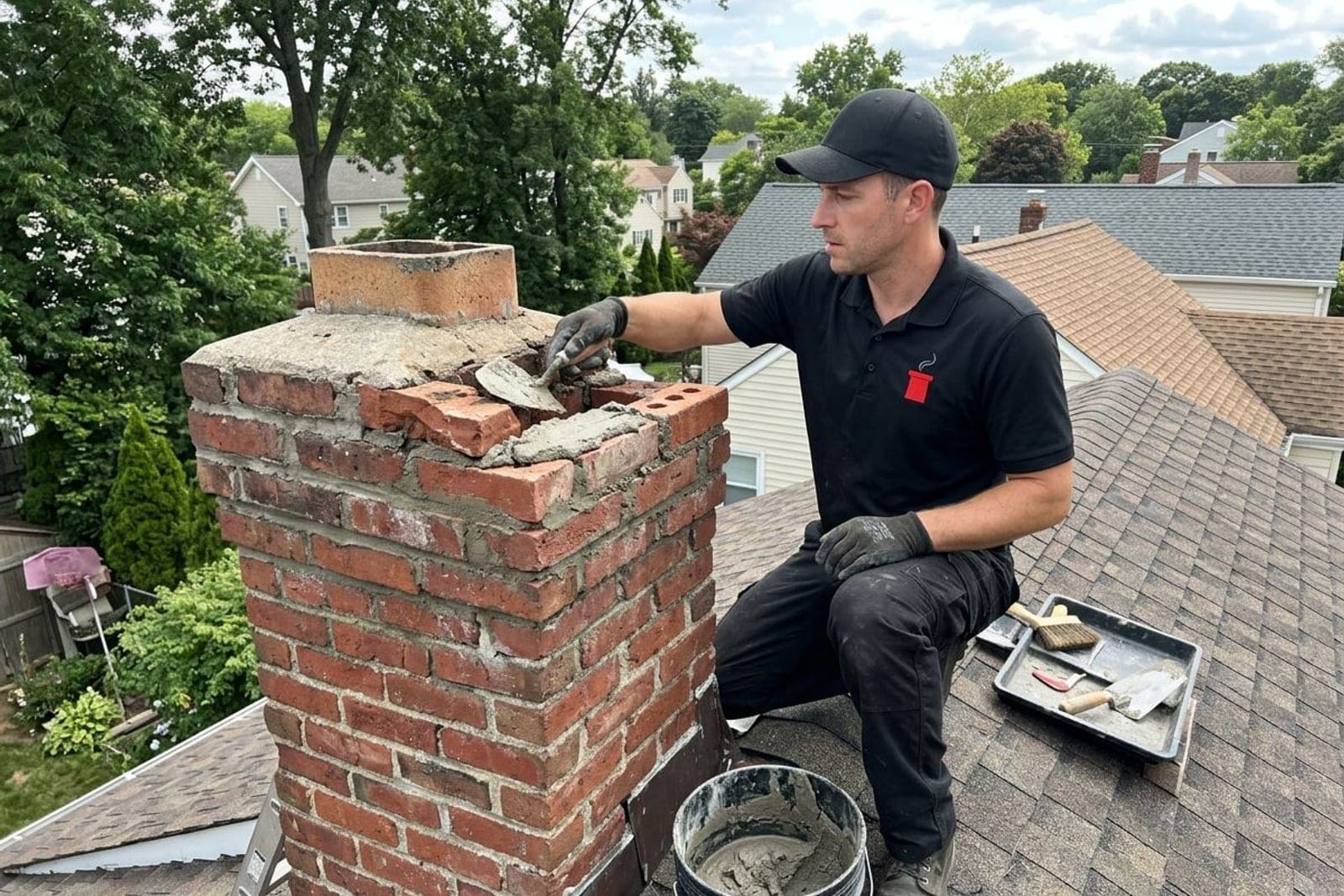
Sweeping is cleaning, not construction, so it never triggers Freehold's permitting process the way a rebuild or new liner would. What it sometimes uncovers is a different matter: clearing years of buildup from an older downtown flue can reveal a cracked flue tile, a deteriorating crown, or mortar that's lost its bond, and that finding is what starts the borough's permit conversation, not the cleaning itself.
A meaningful part of Freehold's older housing stock, concentrated around the courthouse and the borough's original residential blocks, predates the clay-tile and metal liners that modern construction takes for granted. An unlined masonry flue holds and accumulates creosote differently than a lined one, which is why liner condition gets checked as part of every sweep here rather than sold as a separate add-on service.
Humidity plays a role too. In a flue sitting unused through the shoulder season, moisture in the air can cause creosote to clump and grip the flue walls more stubbornly than it would in a drier stretch, so a sweep that's a season overdue tends to run noticeably harder — and take longer — than one done on schedule.
The National Fire Protection Association recommends an annual inspection for every chimney in regular use, and in Freehold that single visit clears two separate risks at once: the fire risk from built-up creosote, and the carbon monoxide risk from a flue that isn't drafting properly because of a partial blockage.
A sweep is also the cheapest point in the entire chimney-service timeline to catch a problem early. A cracked flue tile found during routine cleaning is a small, planned repair; the same crack found months later, after a full winter of water working into the surrounding masonry, is a considerably larger job.
Sweeping a Flue That Was Never Fitted With a Liner
A masonry flue with no clay-tile or metal liner, common in the older construction around Freehold's courthouse, holds heat and interacts with smoke differently than a lined one, and it accumulates creosote at a different rate too — sometimes faster, sometimes in a heavier, more stubborn layer, depending on how the masonry has aged. A brush and rotary tooling sized for a standard modern flue diameter doesn't always reach the corners of an older, irregular opening the same way.
That's why the flue's construction gets identified before we start sweeping rather than assumed from the home's age alone — a downtown building can carry a chimney relined decades ago, and a newer residential-street house can carry an older chimney inherited from a prior structure on the lot. We adjust equipment and technique to whichever we find.
- Source: Borough of Freehold, NJ — Historic Preservation, accessed 2026-09-18
A Sweep Doesn't Trigger Review — What It Finds Might
A routine sweep, on its own, never involves Freehold's Zoning Department, its Construction Office, or the borough's Historic Preservation Advisory Commission, because cleaning a flue isn't construction. What changes that is a finding: if the sweep turns up a cracked flue tile or a deteriorating crown on a contributing property in one of the borough's three districts (Peach Orchard, Broad Street, Downtown), the repair that follows can draw the commission's review before its own permit is filed.
We separate the two on the written report — what was cleaned, and what was found — so a homeowner in one of these districts knows exactly which line item might need a second look from the borough, rather than assuming every sweep carries the same paperwork.
- Source: Borough of Freehold, NJ — Code Enforcement, accessed 2026-09-18
What's Included in a Freehold Chimney Sweep
Every chimney sweep we do in Freehold includes:
- Full sweep of the flue to remove creosote, soot, and debris
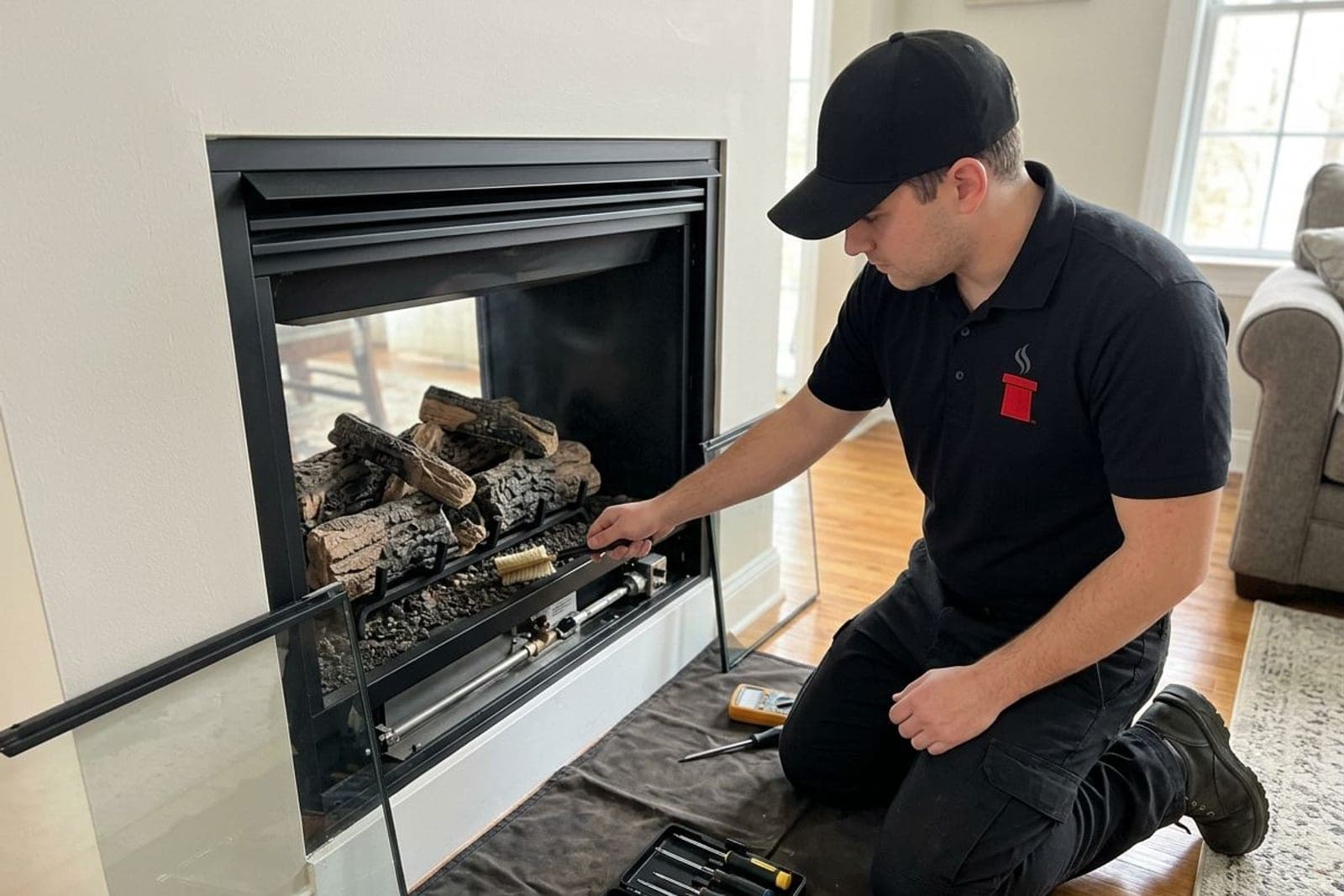
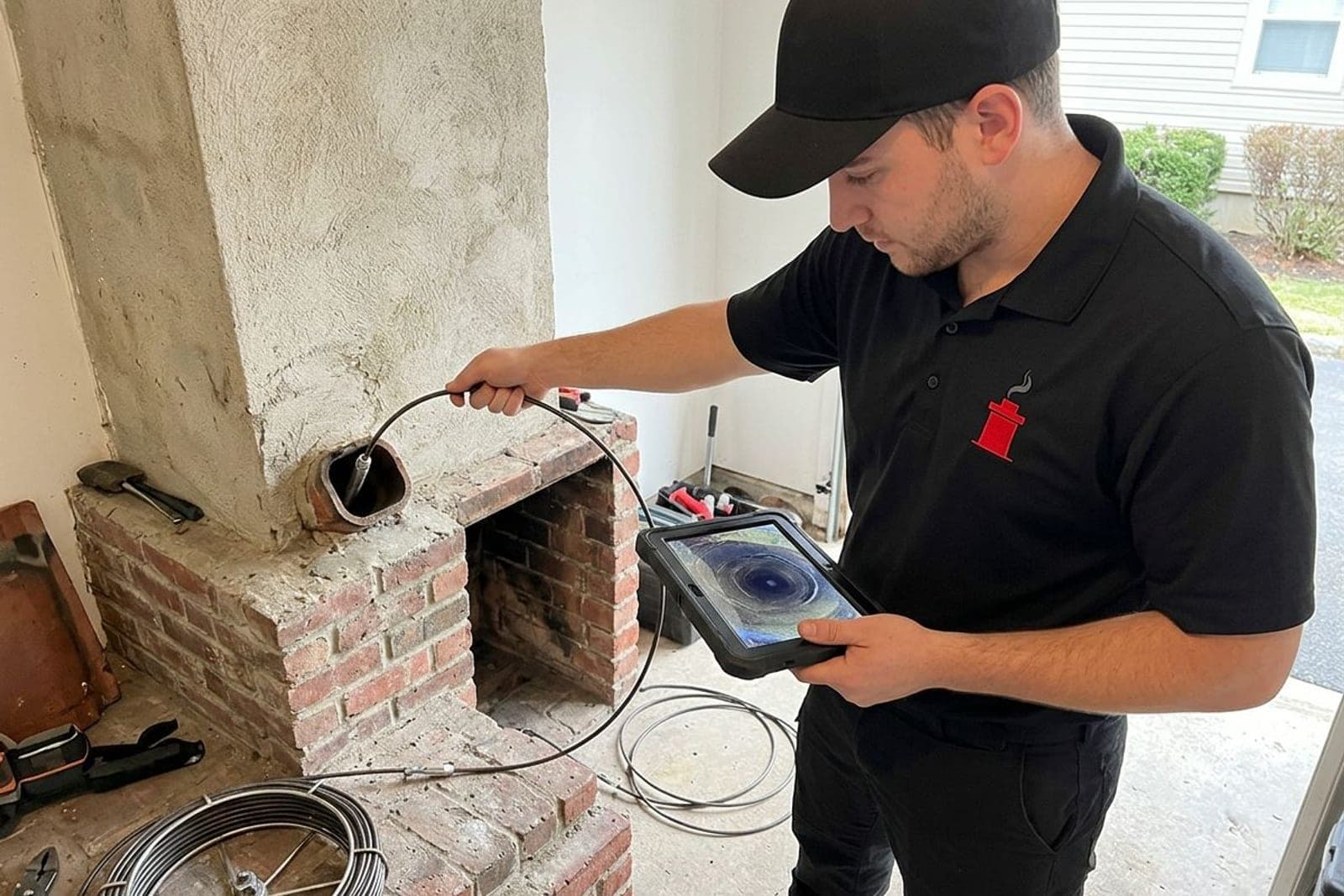
- Camera or visual inspection of the flue liner's condition
- Check of the damper for proper operation and seal
- Inspection of the crown and cap for visible damage
- Removal of any blockages, including nests or debris
- A written report noting anything found that needs repair
Professional, clean, no-mess service.
Signs Your Freehold Chimney Needs Sweeping
- It's been a year or more since your last professional sweep
- A strong, sooty smell coming from the fireplace, especially in humid weather
- Visible black flakes or soot falling into the firebox
- Reduced draft or smoke drifting into the room when a fire is lit
- A damper that's harder to open or close than it used to be
- Any sign of a Stage 2 or 3 creosote glaze — a shiny, tar-like coating
If you notice smoke backup or stage-3 creosote, book immediately.
Book nowWhy Regular Sweeping Matters in Freehold
Timing a sweep around a rental in Freehold is worth planning for: the Code Enforcement Division runs a landlord registration program, and scheduling an annual sweep around tenant turnover, rather than after a new tenant's already lit a first fire in an unswept flue, avoids both a safety gap and a scheduling conflict.
How We Sweep a Freehold Chimney
 1
1Inspection
We inspect the flue, damper, and crown to assess creosote stage and overall condition. The on-site inspection is $99 plus tax, deducted in full from the quote if you approve the work.
- 2
Full Sweep
We clear creosote, soot, and any blockages from the full length of the flue, working from both the firebox and the exterior cap as needed.
 3
3Written Report
We document what we found, including any repair needs, so you have a record for insurance, a home sale, landlord registration, or your own files.
| Warning Sign | What It Means | Urgency for Freehold Homes |
|---|---|---|
| Sooty smell in humid weather | Creosote absorbing moisture in the flue | Moderate — schedule before burn season |
| Black flakes falling into the firebox | Loose soot or early creosote buildup | Moderate — routine sweep should clear it |
| Smoke drifting into the room | Partial blockage or heavy creosote layer | High — affects indoor air quality |
| Shiny, tar-like coating on flue walls | Stage 2 or 3 glazed creosote | Urgent — elevated fire risk |
| No sweep in over a year | Overdue for NFPA-recommended annual service | Moderate — book before next use |
Prices verified on .
Built for Freehold's homes and climate
We treat Freehold — about 35,354 residents — as home turf, together with Marlboro, Manalapan and Colts Neck next door. That is why chimney sweep appointments here fit into an existing route instead of a special trip.
FreeholdMonmouth County, NJ · 40.260, -74.274
Freehold Homeowners' Chimney Sweep Questions
How much does a chimney sweep cost in Freehold, NJ?
Our sweep service typically runs $179 to $399, depending on creosote stage and flue condition. The on-site inspection is $99 plus tax, deducted in full from the quote if you approve the work. Statewide, Angi, HomeGuide, and Homeyou pegged 2026 sweep pricing (drawn from Newark and Hoboken data) around $150 to $400, typically near $250 — a market snapshot, not a substitute for our own number.
Do I need a permit for a chimney sweep in Freehold?
No. Sweeping is routine cleaning, not construction, so it never involves Freehold's construction office. That changes only if the sweep uncovers damage that needs repair.
How often should I have my Freehold chimney swept?
The National Fire Protection Association recommends an annual inspection for every chimney in regular use. Heavier wood-burning habits, or an older masonry flue without a modern liner, can build creosote faster and may warrant checking sooner.
What does a sweep in Freehold usually find in older homes?
In the borough's older housing stock, especially around the courthouse, we more often find masonry-only flues without a modern clay-tile or metal liner. These hold creosote differently than a lined flue, which is why liner condition gets checked as part of every sweep here.
I rent out my Freehold property — when should I schedule a sweep?
Ideally before a new tenant's first fire, not after. The borough's Code Enforcement Division runs a landlord registration program, and coordinating your sweep around tenant turnover avoids both a safety gap and a scheduling conflict.
Can a sweep tell me if my chimney needs repair?
Yes — we check the flue liner, crown, and mortar joints during every sweep and note anything that needs repair in a written report, so you're not guessing between what's cosmetic and what's structural.
Get in touch
- (732) 889-5194
- contact@jerseychimneypros.com
- Based in Lakewood, NJ — serving Freehold

Need your chimney checked in Freehold?
Clear pricing, local scheduling, and honest written recommendations you can trust.

Book your chimney sweep in Freehold
Real open times on our crew's calendar — confirmed instantly.
Chimney Sweep in Freehold