Freehold, Monmouth County
Chimney Cap Installation in Freehold, NJ
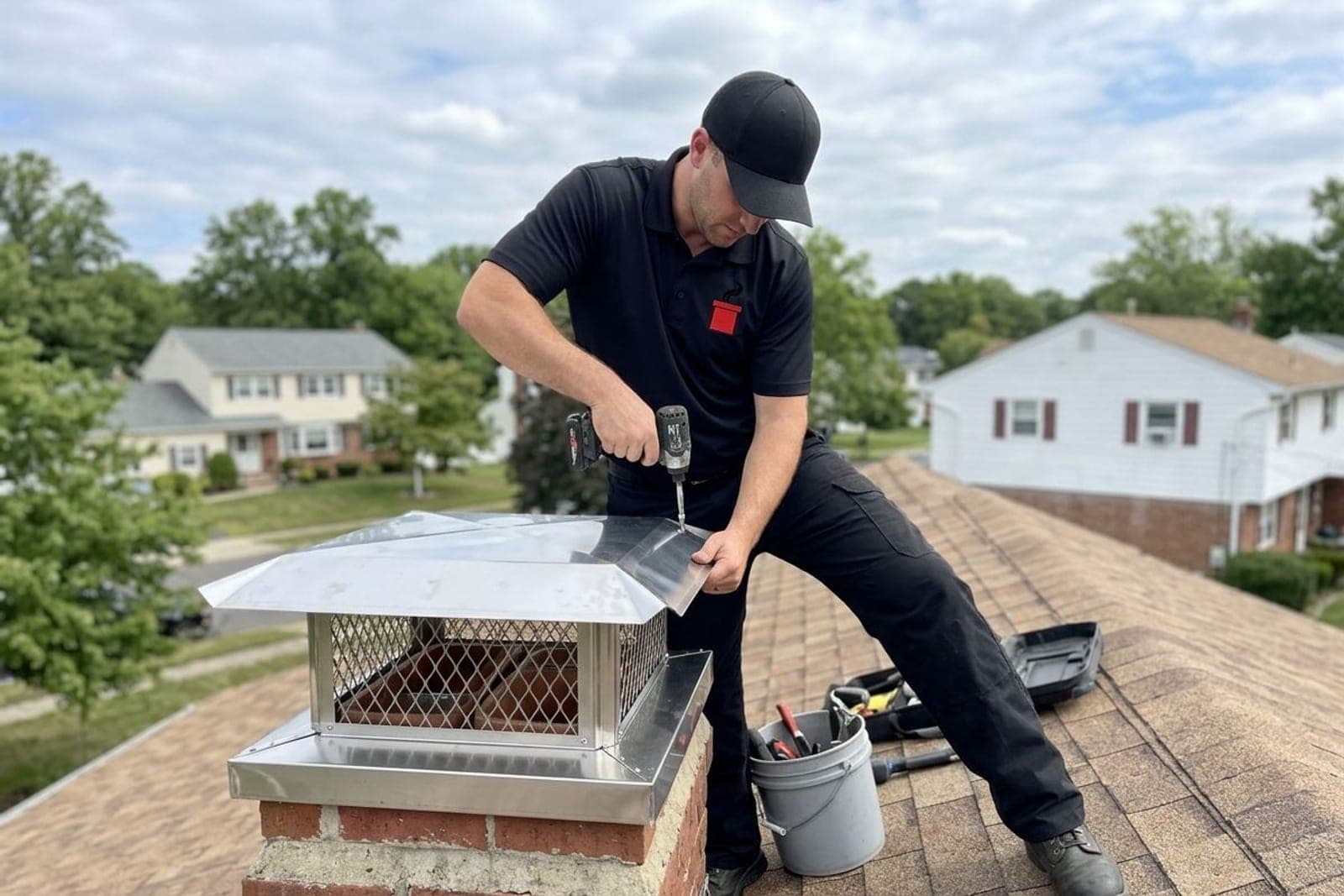
A missing or rusted-out cap turns the flue into an open pipe: rain and blown debris drop straight to the crown, and squirrels or birds move in behind them. What decides how the replacement gets sized in Freehold is which part of the borough the chimney is in — the narrow, tall stacks built into the rowhouse blocks around the courthouse take a different fit than the standard residential-street chimney a few blocks out. We size the new cap off the flue actually on your roof.
Typical investment
$200–$700
- Local crews
- Licensed & insured
- Documented work
- Fast scheduling
- Serving Freehold and the surrounding Monmouth County towns
- $99 inspection, deducted from an approved quote
- Usually on the same Monmouth County route as Atlantic Highlands, Brielle, Colts Neck
Why Freehold homes need chimney cap installation
A Freehold cap job on a rental gets scheduled with one more thing in mind: rental properties in the borough fall under a landlord registration requirement, so we coordinate the visit and any documentation around tenant turnover instead of treating it like an owner-occupied call.
With roughly 35,354 residents, Freehold keeps us busy year-round. We pair it with Marlboro, Manalapan and Colts Neck on the same route, so chimney cap installation in Freehold gets scheduled without a long wait.
Done by licensed crews
Our own team, never a subcontractor sent by a call center.
Written quote up front
You approve the price before any work begins.
Photo-documented
Before and after photos of every fix, in plain English.
Built for the local climate
Salt air, freeze-thaw and coastal wear factored in.
Chimney Cap Installation for Freehold's Downtown and Residential Streets
A cap has one job, keeping weather and wildlife out while letting smoke and combustion gases escape, but the chimney it sits on isn't the same shape or age everywhere in the borough. Downtown, around the courthouse and along the rowhouse-style blocks, stacks tend to run taller and narrower than a mid-century ranch, built that way to clear a roofline shared with the building next door. A cap for one of these has to match the original masonry opening; a generic off-the-shelf diameter will rock in the wind and work itself loose within a season.
We start by measuring the actual flue opening, not the chimney's outer dimensions, and pick mesh spacing that keeps birds and squirrels out without choking the draft. The crown underneath gets checked in the same visit: mounting hardware to a cracked or spalling crown is wasted money, since the cap loosens again as soon as the crown keeps deteriorating, so crown condition gets called out before installation rather than discovered on a second trip.
Central New Jersey's freeze-thaw winters are hard on anything fastened to a crown, and weak or corroded hardware is usually the first thing to fail. We size fasteners for that cycle rather than for a milder climate, which is most of why a cap installed right the first time outlasts a cheaper one by years rather than months.
A cap swap can also be more than a maintenance item here. If it changes the chimney's visible profile, Freehold's Zoning Department treats that as an alteration to a structure requiring its own application, separate from any state construction permit — a step easy to miss coming from a town where the two processes are combined. And if a permit is required at all, New Jersey's newest hearth-work rule applies: as of August 17, 2026, the license number of a master hearth specialist has to be listed on the application, with the sole exception being a homeowner working on their own single-family house.
Because the borough handles its own permitting, we route any paperwork directly rather than guessing which agency has jurisdiction, and we confirm ahead of time whether a given cap job even triggers that paperwork before scheduling install day.
Sizing a Cap to a Rowhouse-Era Flue
The stacks around the courthouse were laid out well before a modern flue liner existed, in a dense rowhouse block built to clear a roofline shared with the structure next door — which usually means taller and narrower than what a residential-street ranch carries. That original masonry opening rarely lines up with a shelf-stock cap diameter, and forcing a generic size onto it leaves gaps a cap's mesh is supposed to close, or a fit loose enough to rattle in the wind until the fasteners give.
Getting the fit right starts with measuring the flue itself rather than the visible top of the stack, and checking whether the crown underneath was built for a single flue or shares the load with a second one — common in the borough's older, denser blocks. We carry cap stock sized for both.
- Source: Borough of Freehold, NJ — Historic Preservation, accessed 2026-09-18
A Visible Cap Change Can Draw a Second Look
Freehold's Zoning Department requires its own application for alterations to a structure, and a cap that changes the chimney's outline from the street qualifies — a separate step from any state construction permit, and one that's easy to miss if you're used to a town where the two are handled together. If the building also contributes to the Downtown, Broad Street, or Peach Orchard historic district, that same visible change can additionally land in front of the preservation commission ahead of the zoning sign-off.
None of this changes what the cap costs to fabricate and fit; it changes how long the paperwork takes before install day. We confirm which of these two reviews, if either, applies to your address as part of the on-site inspection, rather than finding out mid-job.
- Source: Borough of Freehold, NJ — Zoning Department, accessed 2026-09-18
What's Included in a Freehold Chimney Cap Installation
Every chimney cap installation we do in Freehold includes:
- Flue opening measured against your actual masonry, not a shelf-stock diameter
- Cap fabricated in stainless steel or copper to match what that measurement turns up
- Mesh sized to keep animals out while leaving the draft alone
- Crown condition checked first, since hardware fastened to a cracked crown just loosens again
- Old or failed cap pulled off the stack and hauled away
- Final draft test to confirm the chimney is venting the way it should
Professional, clean, no-mess service.
Signs Your Freehold Chimney Needs a New Cap
- Rust streaks or a visibly corroded cap on top of the chimney
- Scratching, chirping, or scurrying sounds coming from inside the flue
- A musty or animal odor drifting from the fireplace or firebox
- Water stains on a ceiling or wall near the chimney chase
- A cap that's bent, tilted, or missing after a storm
- Smoke or downdraft backing into the room more than it used to
If you notice smoke backup or stage-3 creosote, book immediately.
Book nowWhy the Right Cap Matters in Freehold
The main variable in a Freehold cap job isn't the cap itself, it's what it's sitting on — an older, narrower flue opening downtown needs a cap sized and mounted differently than a standard residential-street chimney, and getting that wrong is the single most common reason a cap fails early here.
How We Install a Chimney Cap in Freehold
 1
1On-Site Measurement and Crown Check
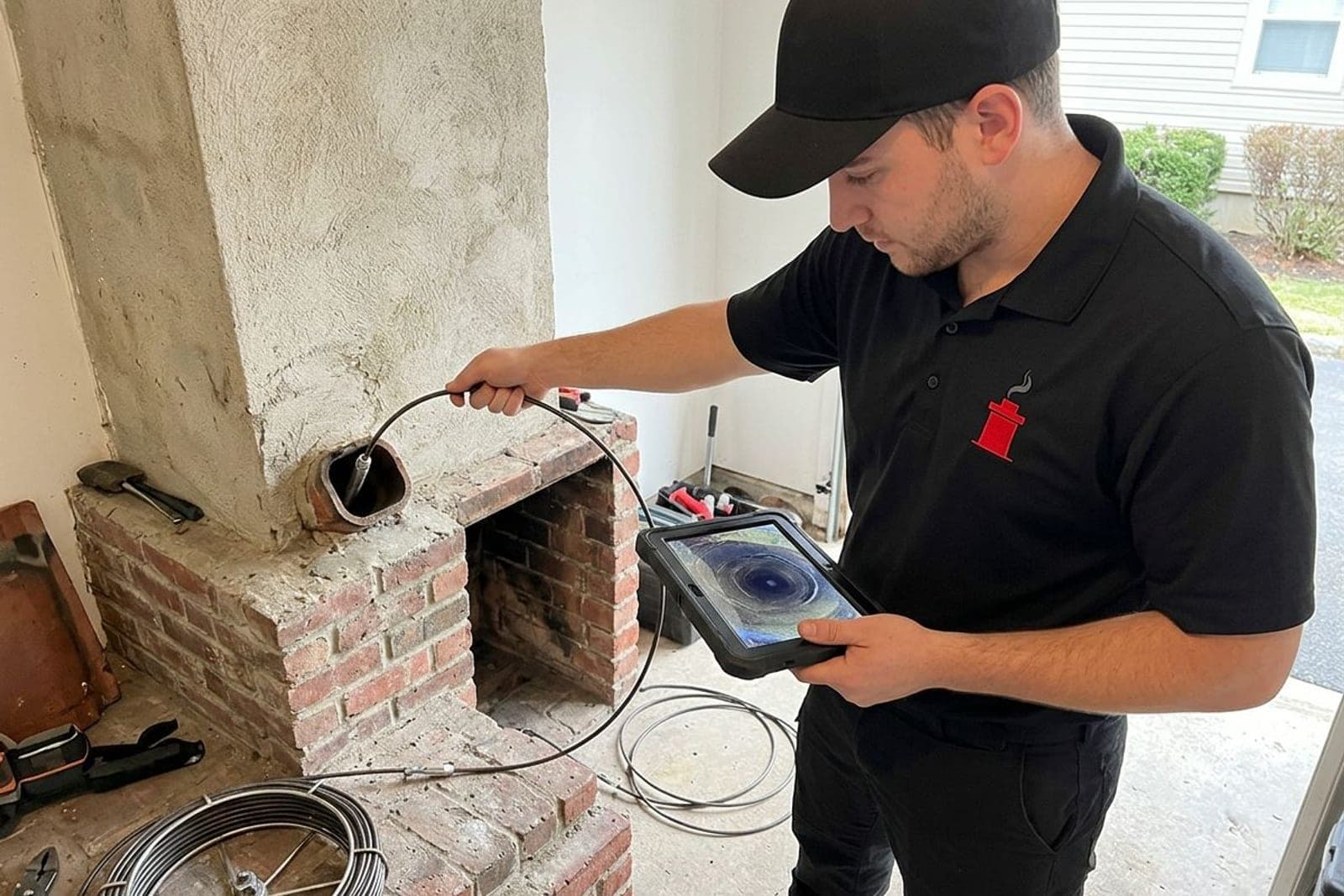
We measure the actual flue opening and check the crown underneath before anything gets ordered. The on-site inspection is $99 plus tax, deducted in full from the quote if you approve the work.
 2
2Cap Fabrication and Install
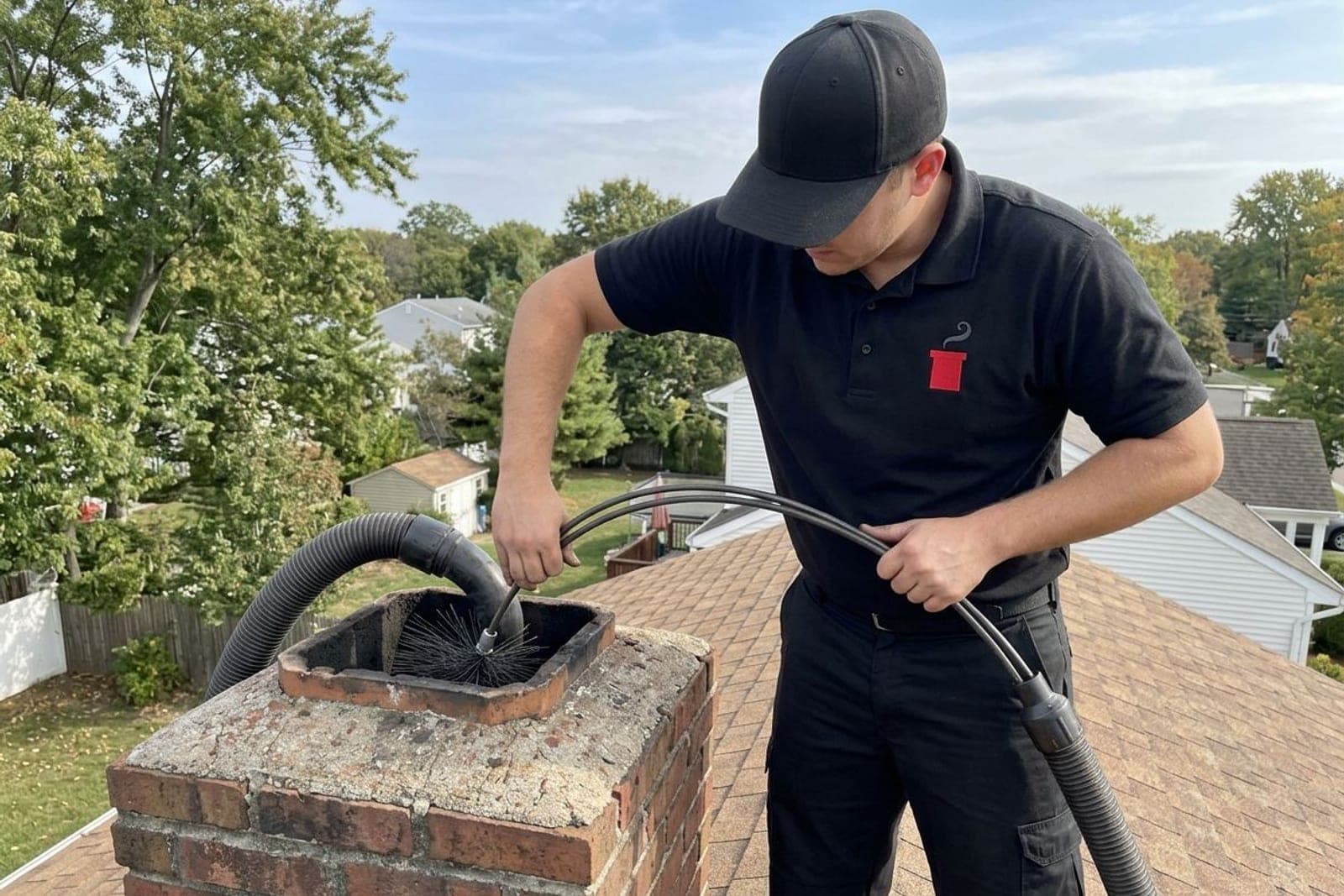
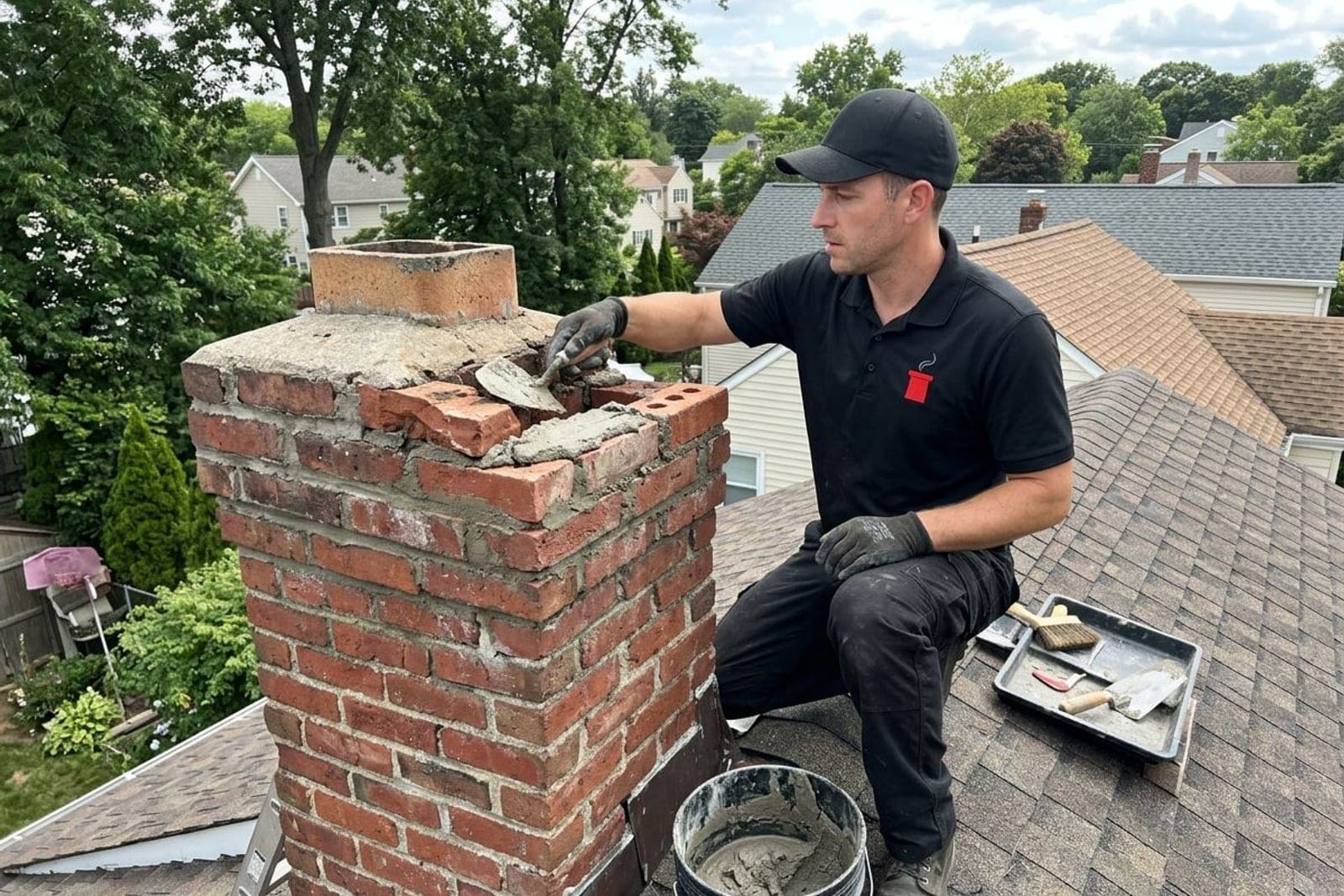
Once you approve the quote, we fabricate a stainless steel or copper cap sized to your flue and mount it with hardware rated for Central Jersey's freeze-thaw winters. If the job needs a permit, our master hearth specialist license number goes on the application.
 3
3Draft Test and Documentation
We run a final draft check with the new cap in place and hand over any paperwork you'll need, including for landlord registration if the property is a rental.
| Warning Sign | What It Usually Means | Urgency for Freehold Homes |
|---|---|---|
| Rusted or corroded cap | Metal fatigue, near end of service life | Moderate — schedule before the next storm |
| Animal sounds in the flue | Uncapped or damaged flue, active nesting | High — blocks draft, fire and odor risk |
| Water stains near the chimney chase | Cap failure letting rain into the flue | High — leads to liner and masonry damage |
| Cap missing after high wind | Fasteners failed or cap wasn't wind-rated | Immediate — flue is fully exposed |
| Persistent musty odor from the fireplace | Moisture pooling on an uncapped crown | Moderate — worsens with every rain |
Prices verified on .
Built for Freehold's homes and climate
With roughly 35,354 residents, Freehold keeps us busy year-round. We pair it with Marlboro, Manalapan and Colts Neck on the same route, so chimney cap installation in Freehold gets scheduled without a long wait.
FreeholdMonmouth County, NJ · 40.260, -74.274
Freehold Homeowners' Chimney Cap Questions
How much does chimney cap installation cost in Freehold, NJ?
Our installed cap jobs run $200 to $700, depending on flue size and whether the crown needs attention first. The on-site inspection is $99 plus tax, deducted in full from the quote if you approve the work. For comparison, HomeGuide and All Point Roofing & Chimney put the statewide market for cap work at $150 to $500 as of September 2026 — a useful benchmark, though not what we bill.
Do I need a permit for a chimney cap in Freehold?
Only if the job changes the chimney's exterior profile — Freehold's Zoning Department treats that as an alteration to a structure requiring its own application, separate from any construction permit. If a permit is needed, the contractor's master hearth specialist license number has to be listed on it, a New Jersey rule in force since August 17, 2026.
Will my chimney cap need historic district approval?
If your home is a contributing building inside any of the borough's three districts — Downtown, Broad Street, or Peach Orchard — a visible cap change can draw a look from the Historic Preservation Advisory Commission, a monthly-meeting body the borough established by ordinance in 2005. We check this before install day, not after.
Why do downtown Freehold chimneys need a different cap than a residential-street home?
Rowhouse-style construction near the courthouse squeezed each chimney to clear the roofline of the building next door, so those stacks tend to be narrower and taller than a mid-century ranch's, sized to an older masonry opening rather than a modern standard flue diameter. A cap has to be measured to that specific opening or it rocks loose in the wind.
I rent out my Freehold property — does that change the cap installation process?
It can affect scheduling. Freehold requires rental properties to go through its Code Enforcement Division's landlord registration process, and we build the visit date and any required paperwork around when the tenant changes, not around a fixed calendar.
How long does chimney cap installation take?
Most single-flue installs, inspection included, run about one to two hours. A multi-flue chimney or one that also needs crown repair takes longer, and we'll give you a specific window once we've seen the roof.
Get in touch
- (732) 889-5194
- contact@jerseychimneypros.com
- Based in Lakewood, NJ — serving Freehold
Need your chimney checked in Freehold?
Clear pricing, local scheduling, and honest written recommendations you can trust.
Book your chimney cap installation in Freehold
Real open times on our crew's calendar — confirmed instantly.
Chimney Cap Installation in Freehold