Lakewood, Ocean County
Chimney Sweep in Lakewood, NJ
A chimney sweep in Lakewood means something different depending on which part of the township you're in: clearing decades of creosote from an older masonry flue, or servicing a factory-built metal chimney behind a fireplace insert in a home built in the last twenty years. We identify which one we're dealing with before we ever touch a brush, because the tools and the risks aren't the same.
Typical investment
$179–$399
- Local crews
- Licensed & insured
- Documented work
- Fast scheduling
- Serving Lakewood and the surrounding Ocean County towns
- $99 inspection, deducted from an approved quote
- Usually on the same Ocean County route as Barnegat Light, Bay Head, Brick
Why Lakewood homes need chimney sweep
Lakewood's mix of long-established residential streets and large new subdivisions means our sweep crews move between two very different chimney types on the same day: masonry flues that have been in service for decades, and factory-built metal chimneys installed within the last few years. Both need the same annual attention, just not the same tools.
Lakewood counts about 135,153 residents, and we cover it end to end — along with Howell, Brick and Farmingdale on the same run. Booking chimney sweep here rarely means waiting for a crew to come from far away.
Creosote removal
Eliminates flammable creosote buildup that can ignite.
Safer venting
Keeps smoke and gases moving up and out — not back inside.
Cleaner fires
Better draft means more efficient, enjoyable fires.
Protection for masonry & flue
Prevents damage from corrosive byproducts and moisture.
Chimney Sweep Service for Lakewood's Older Homes and Newer Subdivisions
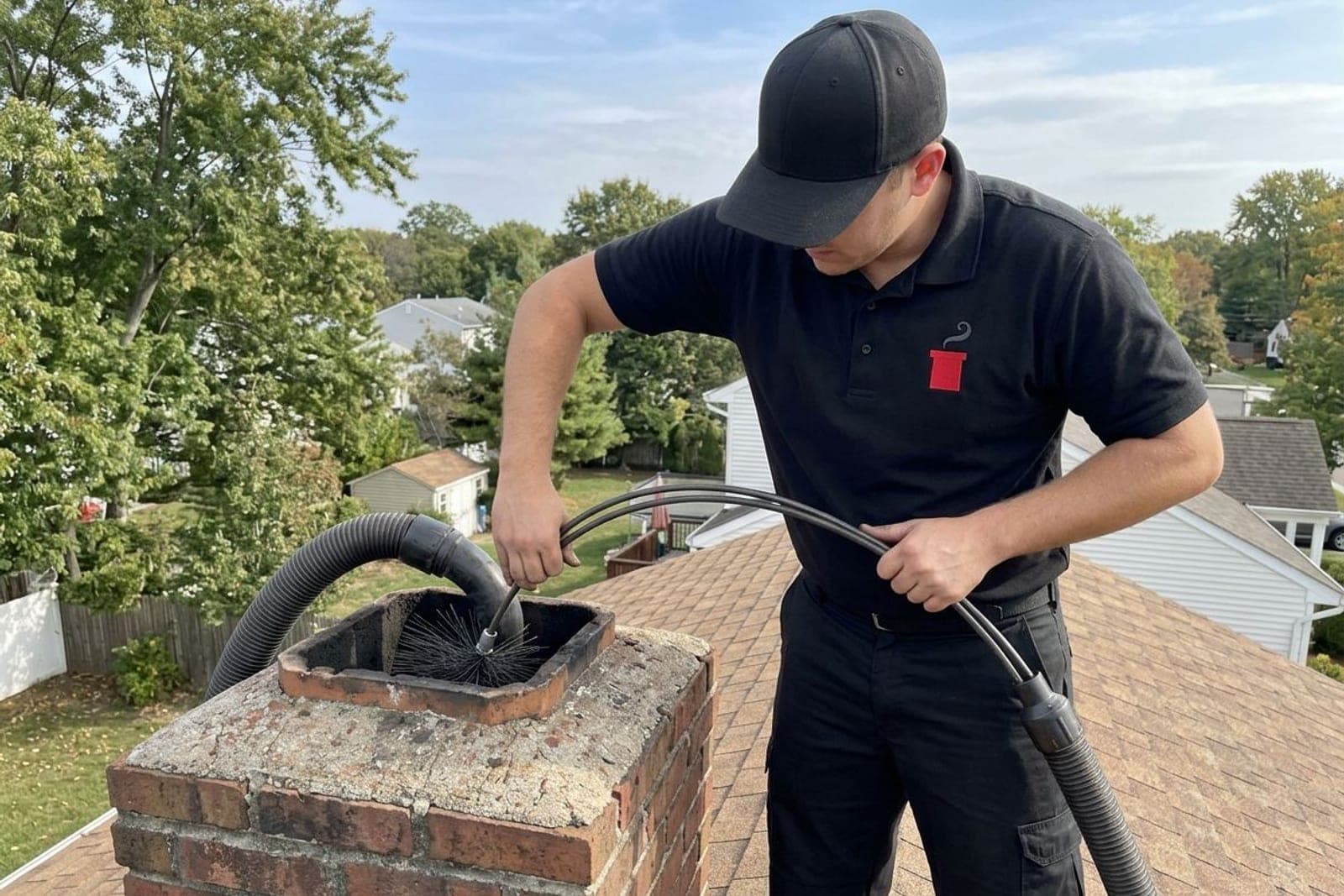
A chimney sweep removes the soot and creosote that build up on the inside of a flue every time you burn wood, and restores the draft that carries smoke and combustion gases safely out of the house. Skip it long enough and two things happen at once: the fireplace draws worse, and the buildup itself becomes a fire hazard. Being among the biggest, fastest-growing townships in Ocean County cuts both ways for Lakewood's housing stock, and the sweeps we run here reflect that split — older, established homes on one side of town, a steady wave of new construction on the other — covering a wider range of chimney types than a town with a single dominant building era.
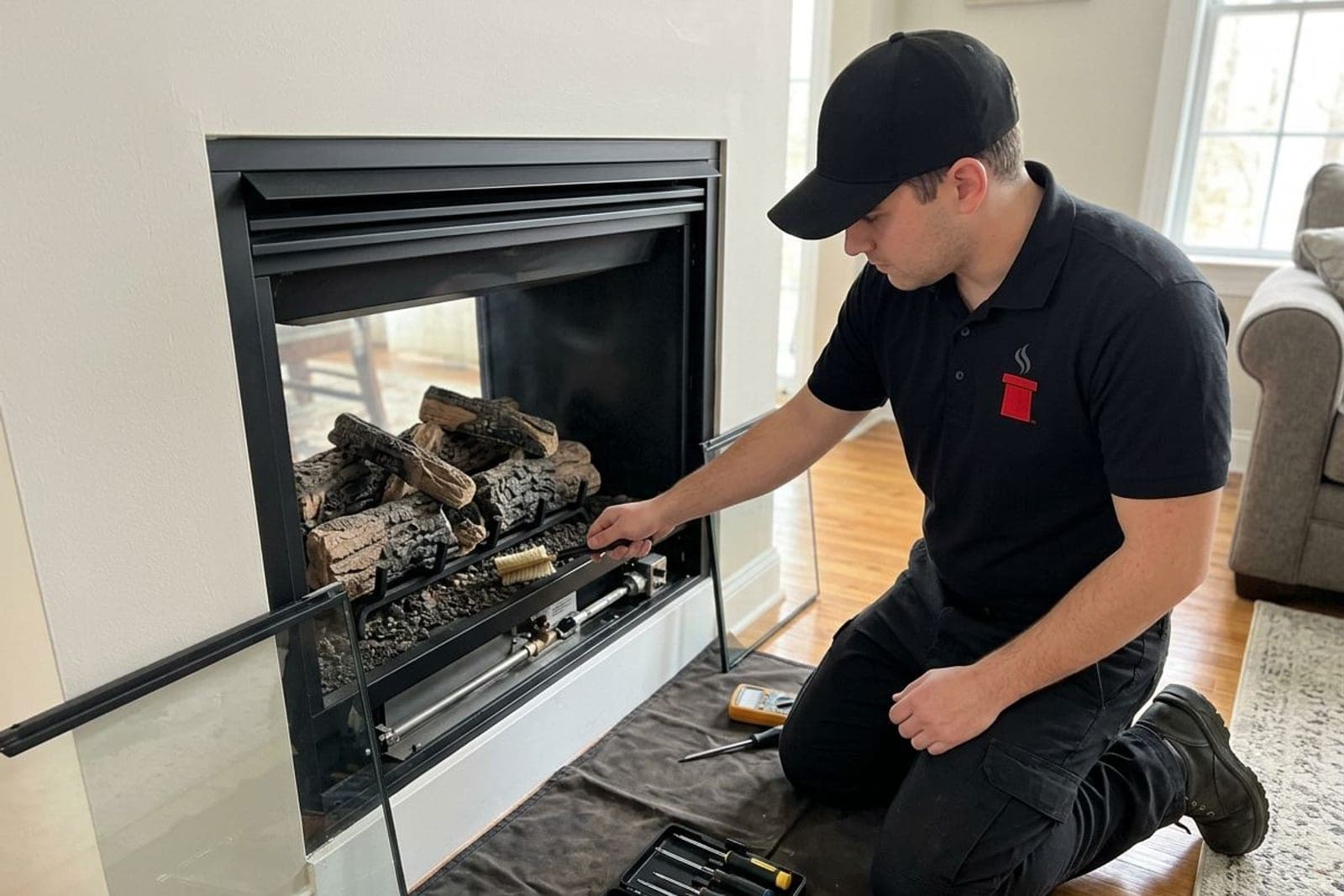
On an older, established Lakewood property, the flue is usually clay-tile-lined or unlined masonry, and creosote clings to rough, porous surfaces the way it doesn't on smooth metal — meaning heavier buildup, more scraping, and a closer look at the liner itself for cracks that decades of heat cycling can open up. On a newer subdivision home, the chimney is more often a factory-built, double- or triple-wall metal system venting a prefabricated fireplace or a gas insert. Those systems still need regular sweeping, but the technique is different: no scraping brick, and a careful check that the metal sections are still seated and sealed correctly rather than an assessment of mortar joints.
Lakewood's Code Enforcement division runs a documented resale and rental process, and it includes its own smoke-detector-and-carbon-monoxide application and a landlord identity statement registration required for one- and two-unit dwellings — steps that exist separately from, and in addition to, any state fire-code inspection. A working fireplace or wood stove is part of what that process checks, which is why a sweep in Lakewood so often gets scheduled around a home sale or a new tenant move-in rather than purely by the calendar. We coordinate the visit and paperwork around that timeline when it applies, instead of treating a rental turnover the same as routine seasonal maintenance.
Seasonally, the flue temperature swings that come with Ocean County's spring and fall humidity are part of what turns loose, flaky soot into the harder, glazed creosote that's much more work to remove. Add a nor'easter or a stretch of unusually cold weather that pushes a household to lean on a wood-burning fireplace or stove for supplemental heat, and buildup that would normally take a full season to accumulate can show up in half that time.
Once a year is the floor, not the target: NFPA 211, the national fire-code standard covering chimneys and vents, sets an annual inspection and sweep as the minimum, more often if the fireplace or stove sees regular use — and creosote itself doesn't build up on a fixed schedule, moving from a light, flaky first-degree layer to a harder, tar-like second stage and eventually to a glazed, highly flammable third-degree coating that ordinary brushing can no longer fully strip. Catch it before that last stage and it's a routine visit; miss it and the job needs specialized tools instead.
Whether your Lakewood chimney is a fifty-year-old masonry stack or a factory-built system installed with the house next door, the goal of a sweep is the same: a flue that vents completely and burns cleanly through the winter. Scheduling before the heating season starts, rather than after the first cold snap, is what keeps a routine visit routine.
Factory-Built Flues Behind Lakewood's Newest Front Doors
The same zero-lot-line minor-subdivision rules that shaped Lakewood's newest streets also shaped how close a factory-built chimney's exterior termination sits to the house next door — often nearer to the property line than it would be on an older, wider suburban lot. That's one more reason we check clearance before servicing a newer home's system here, not just draft.
A detached garage or outbuilding on one of these newer lots needs its own permit, too, and it can carry its own small factory-built flue — one more chimney on the same property that's easy to forget needs an annual sweep of its own.
- Source: Township of Lakewood, NJ — Planning Board application forms, accessed 2026-09-18
Sweeping a Section Built in the Same Few Years
Lakewood's Planning Board has kept a formal growth-management plan on file since well before the current 2017 Master Plan — the 1982-2014 Master Plan and Smart Growth Plan came first — which is part of why whole sections of the township went up on a similar timeline rather than filling in house by house over decades. A batch of chimneys built the same year tends to need sweeping on a similar schedule too, especially the factory-built systems that came standard with that construction wave.
That's what lets a sweep route through a newer Lakewood subdivision efficiently: several stops in the same section, each one a variation on the same handful of flue types rather than a fresh unknown at every address.
- Source: Township of Lakewood, NJ — Planning Board document list, accessed 2026-09-18
What's Included in a Lakewood Chimney Sweep
Every chimney sweep we do in Lakewood includes:
- On-site inspection to identify flue type — masonry, clay-tile, or factory-built metal
- Full removal of soot and creosote from the flue, smoke chamber, and damper
- Protective drop cloths and containment to keep debris out of your living space
- Check of liner or metal-section condition for cracks, gaps, or separation
- Draft test after cleaning to confirm the chimney vents properly
- Documentation you can use for a resale, rental, or landlord registration filing
- Recommendations for repair if the inspection turns up damage beyond soot
Professional, clean, no-mess service.
Signs Your Lakewood Chimney Needs Sweeping
- Visible black or brown buildup inside the firebox or flue opening
- A campfire-like odor from the fireplace, especially in humid weather
- Smoke drifting into the room instead of drawing up the chimney
- A noticeably weaker draft than in previous seasons
- Soot flakes falling into the firebox when you light a fire
- It's been a year or more since the last professional sweep
- You're preparing the property for sale, rental, or a new tenant
If you notice smoke backup or stage-3 creosote, book immediately.
Book nowWhy Lakewood Chimneys Build Up Creosote Between Sweeps
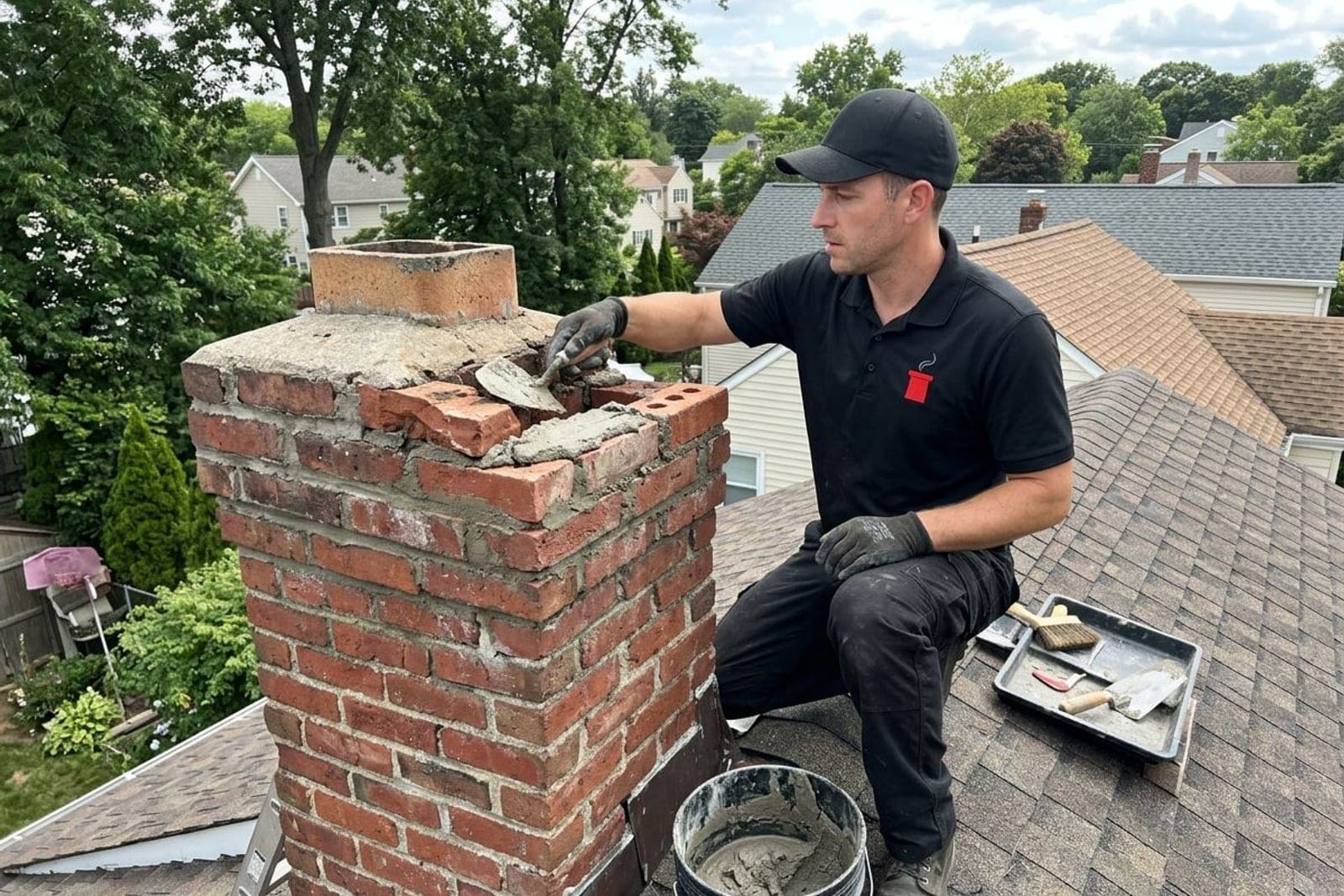
Humidity swings in Ocean County's shoulder seasons, combined with the cooler flue temperatures typical of a chimney that isn't run hard every day, are what push loose soot toward the denser, more adhesive creosote that's harder to remove. Older masonry chimneys in Lakewood's established neighborhoods also carry freeze-thaw wear on top of that buildup, which is why we check mortar condition during every sweep rather than treating the visit as cleaning alone.
How We Handle a Chimney Sweep in Lakewood
 1
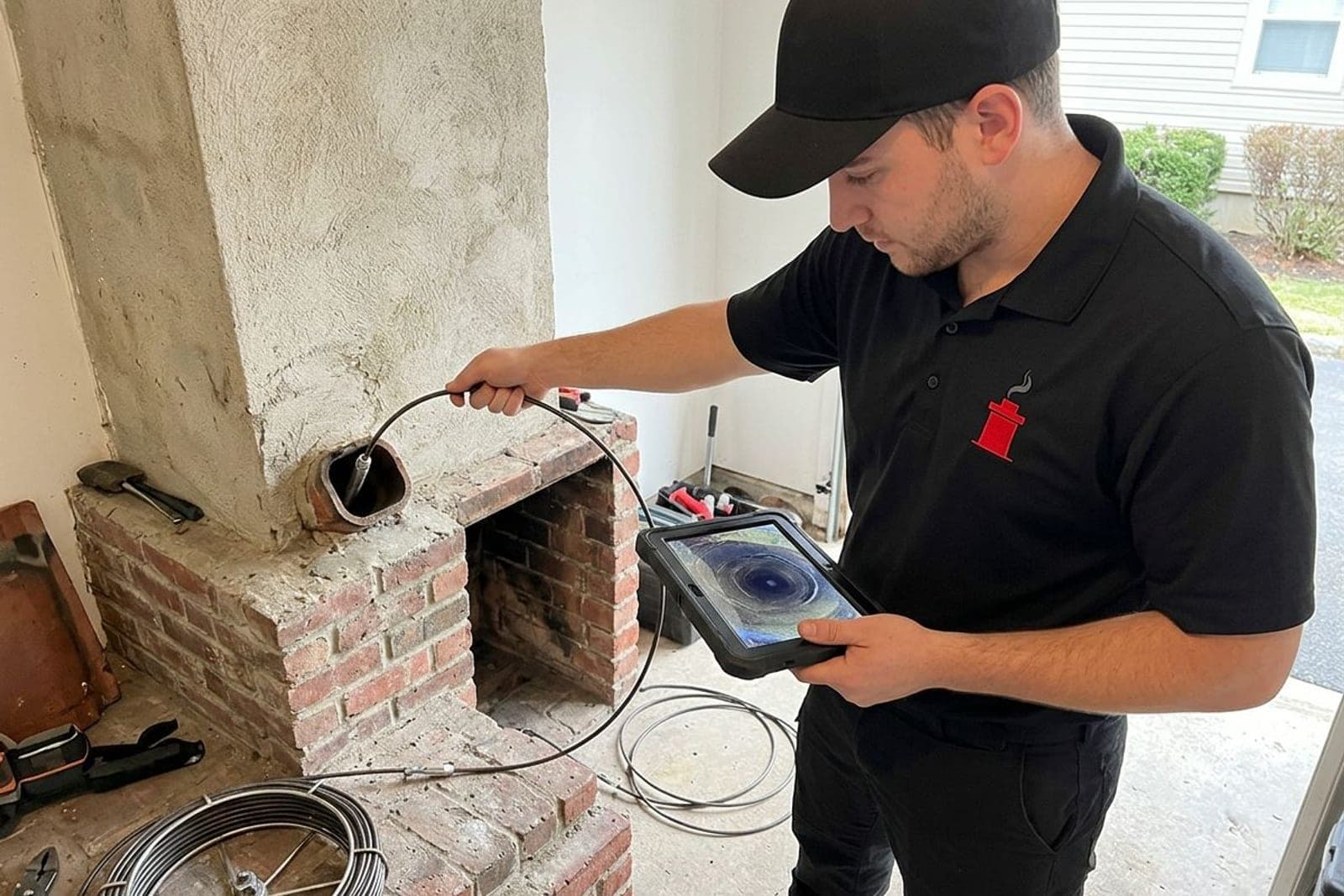
1Schedule Your $99 On-Site Inspection
We identify your flue type — masonry, clay-tile, or factory-built metal — before recommending a cleaning approach. The on-site inspection is $99 plus tax, deducted in full from the quote if you approve the work. The written quote is free, and you approve the price before anything starts.
- 2
Approved Sweep, Matched to Your Chimney Type
Once you approve the quote, we remove soot and creosote using tools suited to your specific flue, protecting your living space with drop cloths throughout.
 3
3Draft Check and Paperwork
We confirm the chimney is drawing properly after cleaning and provide documentation you can use for a resale, rental, or landlord registration filing, if needed.
| Warning Sign | What It Usually Means | Urgency for Lakewood Homes |
|---|---|---|
| Soot or creosote visible in the firebox | Normal buildup from regular burning | Moderate — schedule before heating season |
| Campfire odor from the fireplace | Creosote reacting to humidity in the flue | Moderate — worsens in damp weather |
| Smoke backing into the room | Reduced draft, possible blockage | High — stop use until inspected |
| No sweep in over a year | Creosote likely past first-degree stage | High — book before first cold-weather fire |
| Scheduling a home sale or new tenant | Resale/rental and CO compliance checks apply | Time-sensitive — coordinate with closing or move-in date |
Prices verified on .
Built for Lakewood's homes and climate
Lakewood counts about 135,153 residents, and we cover it end to end — along with Howell, Brick and Farmingdale on the same run. Booking chimney sweep here rarely means waiting for a crew to come from far away.
LakewoodOcean County, NJ · 40.098, -74.218
Lakewood Homeowners' Chimney Sweep Questions
How much does a chimney sweep cost in Lakewood, NJ?
Our chimney sweeps in Lakewood run $179 to $399, depending on flue type and creosote buildup. The on-site inspection is $99 plus tax, deducted in full from the quote if you approve the work. For comparison, Angi, HomeGuide, and Homeyou each surveyed the statewide market in 2026 and landed on a broader $150-to-$400 band, with North Jersey metro pricing running above the Shore; take that as general industry context, not our own number.
How often should a Lakewood chimney be swept?
NFPA 211 calls for an annual inspection and sweep at minimum, more often if you burn wood regularly. Homes in Lakewood's older neighborhoods with masonry flues tend to build up creosote faster than newer factory-built metal chimneys, so we adjust the recommended interval to your specific setup.
I'm selling or renting my Lakewood property — does that affect the sweep?
It can. Lakewood's Code Enforcement division runs a documented resale and rental process that includes a smoke-detector-and-carbon-monoxide application and a landlord identity statement for one- and two-unit dwellings. We schedule the sweep and provide documentation timed to a closing date or move-in rather than treating it as routine maintenance.
Does a factory-built chimney in a newer Lakewood home still need sweeping?
Yes. A factory-built metal chimney behind a fireplace insert or gas unit still collects soot and needs annual attention, but the technique is different from a masonry flue — no scraping brick, and a check that the metal sections remain properly seated and sealed.
What are the signs my Lakewood chimney needs sweeping?
Visible soot in the firebox, a campfire-like odor, smoke drifting into the room instead of up the flue, or simply more than a year since the last professional sweep are the clearest signs. Any of these means creosote has likely moved past the easiest stage to remove.
How quickly can Jersey Chimney Pros schedule a sweep in Lakewood?
Most sweep requests here move fast, on-site visit included, and we can typically get on your schedule within a few days. Mention a sale closing or a tenant move-in date up front and we'll build the visit around it.
Get in touch
- (732) 889-5194
- contact@jerseychimneypros.com
- Based in Lakewood, NJ — serving Lakewood

Need your chimney checked in Lakewood?
Clear pricing, local scheduling, and honest written recommendations you can trust.

Book your chimney sweep in Lakewood
Real open times on our crew's calendar — confirmed instantly.
Chimney Sweep in Lakewood