Point Pleasant Beach, Ocean County
Chimney Sweep in Point Pleasant Beach, NJ
Chimney sweeping in Point Pleasant Beach isn't just about creosote — salt air and a lot of seasonal, intermittent use both change how often a flue actually needs attention here. Jersey Chimney Pros prices every sweep after an on-site look at your specific chimney, starting with an on-site inspection.
Typical investment
$179–$399
- Local crews
- Licensed & insured
- Documented work
- Fast scheduling
- Serving Point Pleasant Beach and the surrounding Ocean County towns
- $99 inspection, deducted from an approved quote
- Usually on the same Ocean County route as Barnegat Light, Bay Head, Brick
Why Point Pleasant Beach homes need chimney sweep
Point Pleasant Beach's roughly 4,763 residents share the borough with a much larger share of seasonal and rental housing, and that mix shows up directly in our sweep scheduling. A wood-burning fireplace used steadily all winter needs different attention than one that sits closed from Labor Day to Memorial Day, and we treat the two differently rather than sweeping on a fixed calendar.
Point Pleasant Beach counts about 4,763 residents, and we cover it end to end — along with Brielle, Point Pleasant and Bay Head on the same run. Booking chimney sweep here rarely means waiting for a crew to come from far away.
Creosote removal
Eliminates flammable creosote buildup that can ignite.
Safer venting
Keeps smoke and gases moving up and out — not back inside.
Cleaner fires
Better draft means more efficient, enjoyable fires.
Protection for masonry & flue
Prevents damage from corrosive byproducts and moisture.
Maintaining Safe Chimneys for Point Pleasant Beach Homes
A chimney sweep is the single most effective thing a homeowner can do to prevent a chimney fire, and in Point Pleasant Beach it does double duty: clearing the flammable creosote that builds up from burning wood, and giving us a close look at how the coastal climate is treating your chimney's metal and masonry components. Both matter here in ways they don't in every town we serve.
Salt air carried off the Atlantic doesn't just corrode caps and flashing — it also raises humidity levels around the flue, and higher humidity is one of the conditions that speeds up creosote accumulation. A fireplace that would go two seasons between sweeps a few towns inland can build up a meaningful glaze of creosote in a single Point Pleasant Beach winter.
The National Fire Protection Association's Standard 211 recommends an annual inspection for every chimney, fireplace and vent, with sweeping performed whenever that inspection finds it's needed. Creosote itself builds up in stages — a flaky first stage that's straightforward to remove, all the way to a glazed, tar-like third stage that's a serious fire hazard and often needs more than a standard brushing to clear.
A large share of this borough's housing sits closed for stretches of the year — second homes and rental cottages that see heavy weekend use in summer and then go quiet through the fall and winter. A flue that's been sitting unused picks up its own problems: nesting material from birds or squirrels, stale draft, and sometimes moisture sitting in a flue that hasn't drawn air in months.
Our sweep pricing runs $179 to $399 depending on the chimney's condition and how much work the flue actually needs; published 2026 New Jersey surveys (Angi, HomeGuide and Homeyou) put the statewide range at $150 to $400, typically around $250, which tracks closely with what we see on the ground here. The on-site inspection is $99 plus tax, deducted in full from the quote if you approve the work.
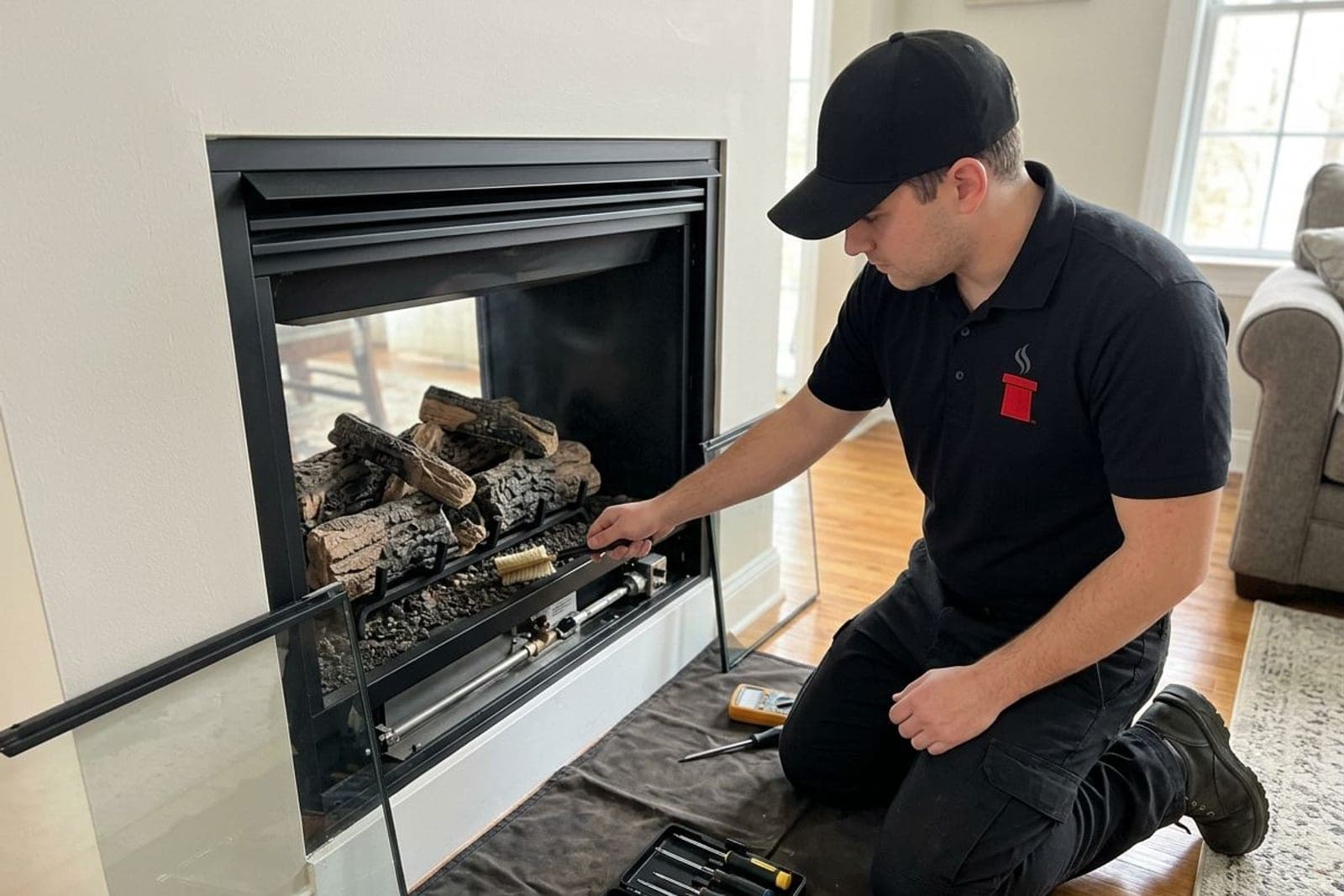
A sweep is different from a full inspection, though the two often happen together: sweeping clears what's already built up, while an inspection evaluates the chimney's structure and liner for damage a sweep alone wouldn't catch. For a Point Pleasant Beach property that's about to be reopened after sitting closed for months, we'd usually recommend both.
Humidity and Salt Air Speed Up What a Sweep Has to Clear
Two things push creosote buildup faster in a chimney here than a few towns inland: the higher ambient humidity that comes with living this close to the Atlantic, and the salt-laden air itself, which corrodes the metal damper and cap components that help regulate airflow through the flue. A damper that isn't sealing properly because of corrosion changes how a fire burns, and that in turn changes how fast creosote accumulates.
We check both on every sweep — not just how much creosote has built up, but whether the cap and damper are still doing their job. A sweep that clears the flue but ignores a corroding damper is only solving half the problem.
A Rerouted Flue Changes How a Sweep Gets Done
A house that was lifted or rebuilt higher after Superstorm Sandy sometimes ended up with a flue rerouted or lengthened to clear the new roofline, instead of running straight up through the original chase it was born with. That changes the geometry our brushes and rods have to navigate, and it's better to know going in than to find out partway through the job.
We check a flue's actual path on a first visit to any home we haven't serviced before, elevated or not, so the sweep itself goes the way it should the first time rather than needing a second trip.
What Your Point Pleasant Beach Chimney Sweep Involves
Every chimney sweep we do in Point Pleasant Beach includes:
- Visual inspection of accessible chimney components before any cleaning starts
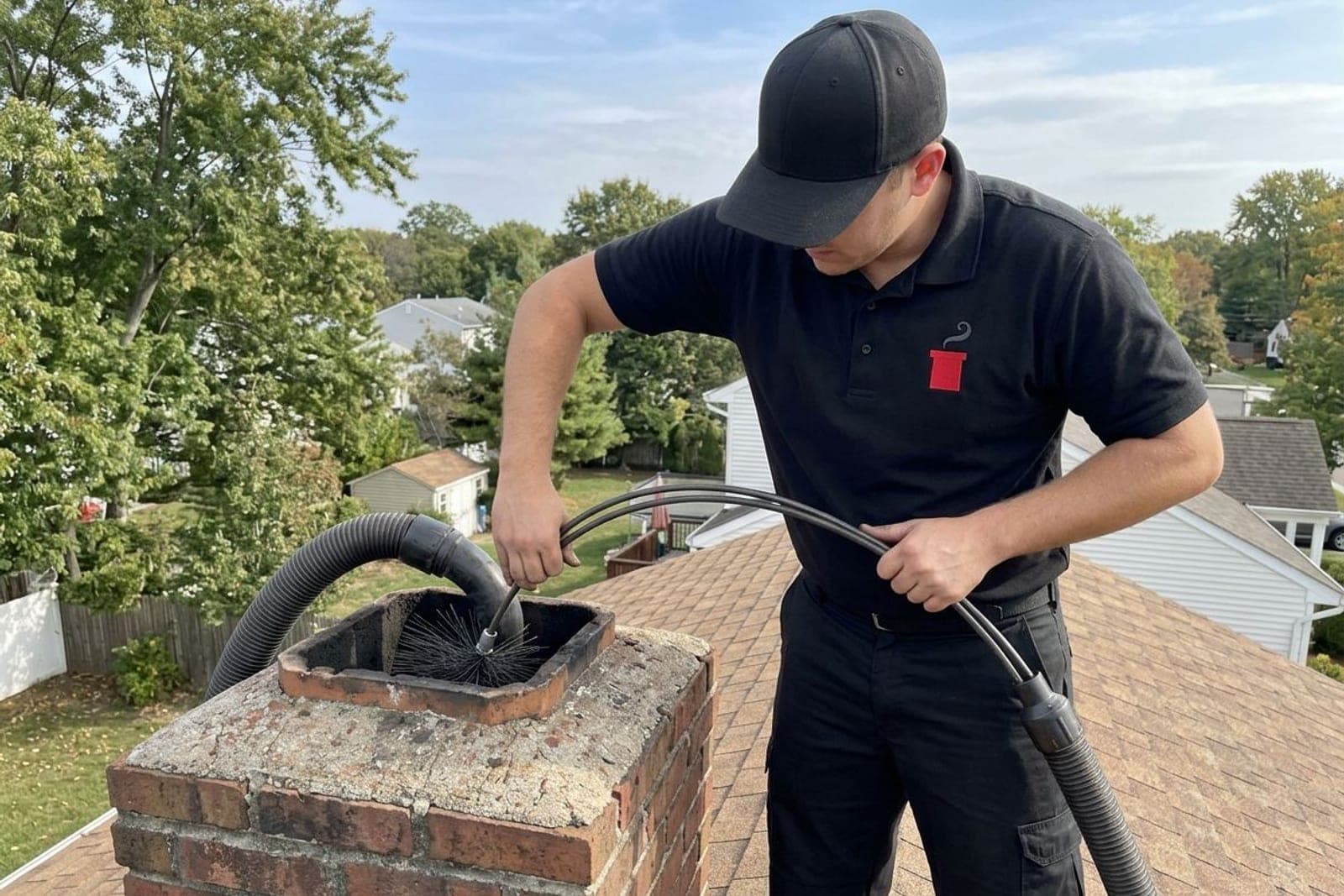
- Removal of creosote, soot and debris from the flue
- Cleaning of the smoke chamber and damper
- Check of the chimney cap for salt corrosion, damage or blockage
- Identification of nesting material or other signs of months of disuse
- Verification of proper draft and airflow after cleaning
- Protective drop cloths and dust containment inside your home
- A written report on what we found and what, if anything, needs follow-up
Professional, clean, no-mess service.
Warning Signs Your Chimney Needs Sweeping
- Smoke backing up into the room when you light a fire
- A strong, persistent odor from the fireplace, especially in humid weather
- Visible creosote or soot buildup inside the firebox
- A fire that's difficult to start or keep going
- Scratching or rustling sounds suggesting an animal in the flue
- Rust on a damper or metal cap that wasn't there last season
- A fireplace that hasn't been used or checked since last spring
If you notice smoke backup or stage-3 creosote, book immediately.
Book nowWhy This Ocean-Shore Borough Needs Regular Chimney Care
Two things drive sweep timing here more than in an inland town: salt-laden humidity, which can speed up creosote buildup and corrode metal dampers and caps, and the intermittent-use pattern of the borough's many seasonal properties, where a flue can go unchecked for months between visits.
The Sweep a Seasonal Property Actually Needs
A fireplace that's used hard every weekend from June through August and then sits closed until the following spring builds creosote on a different schedule than one used steadily through a cold winter — and it's not a schedule a fixed once-a-year calendar captures well. We look at how a specific chimney has actually been used, not just how long it's been since the last sweep.
For rental cottages, the practical answer is usually to schedule around turnover rather than the calendar: a sweep before the season starts catches whatever built up while the fireplace sat idle, and a check partway through a heavy-use summer catches whatever's accumulated since. Both matter more here than in a home that's occupied and used the same way all year.
A chimney sweep job in Point Pleasant Beach — start to finish
 BeforeAfter
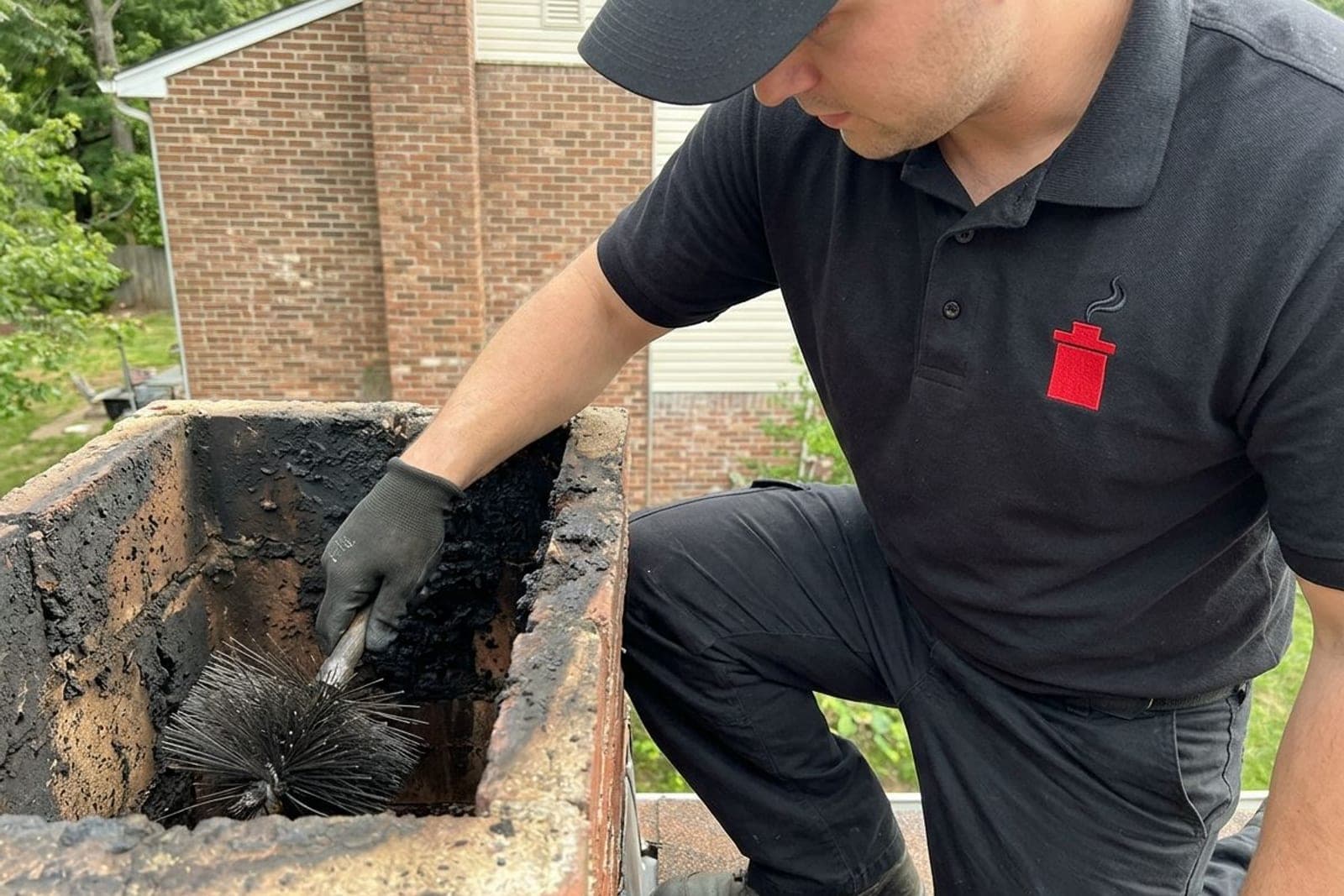
A property manager for a rental cottage a short walk from the boardwalk called us in early October, ahead of the first booking of the fall season. The fireplace hadn't been used since the previous spring, and nobody had checked it since.
- 1
On-site Inspection
$99 plus tax
We examined the flue for creosote buildup from prior use, checked the cap for salt-air corrosion, and looked for any sign of nesting from the months the chimney sat idle.
- 2
Diagnosis & Work Scope
included
We found a moderate creosote layer from the previous season plus a small amount of nesting debris caught just below the cap, likely from early fall before the cap was checked.
- 3
Full Chimney Sweep & Debris Removal
$249
We cleared the creosote buildup, removed the nesting debris, and swept the flue from top to bottom, using drop cloths and a high-filtration vacuum to keep the unit clean.
- 4
Draft Test & Final Check
included
We confirmed the flue was drawing properly and the cap was secure before signing off ahead of the weekend's first guests.
The inspection and sweep together came to $348, in the lower half of our $179-$399 range since the buildup, while real, wasn't severe — and the cottage was ready well before its first booking of the season.
This is a representative crew-written job summary, not a customer review. Photographs of jobs we have actually completed are on our work.
| What You're Seeing | What It Usually Means | What To Do |
|---|---|---|
| Smoke backing into the room | Blocked flue or draft problem | Stop use, schedule an inspection |
| Strong odor from the fireplace | Creosote buildup or animal entry | Book a sweep before next use |
| Visible creosote on firebox walls | High fire risk building up | Sweep needed, sooner rather than later |
| Rust on cap or damper | Salt-air corrosion of metal parts | Have it checked at your next sweep |
| Fireplace unused since last season | Possible nesting or stale draft | Inspect before the first fire |
Prices verified on .
Built for Point Pleasant Beach's homes and climate
Point Pleasant Beach counts about 4,763 residents, and we cover it end to end — along with Brielle, Point Pleasant and Bay Head on the same run. Booking chimney sweep here rarely means waiting for a crew to come from far away.
Point Pleasant BeachOcean County, NJ · 40.092, -74.048
More in Point Pleasant Beach
Nearby towns
Common Questions About Chimney Sweeping Here
How much does a chimney sweep cost in Point Pleasant Beach?
A typical sweep runs $179 to $399, depending on the chimney's condition and how much creosote or debris has built up. The on-site inspection is $99 plus tax, deducted in full from the quote if you approve the work.
Why does salt air affect how often I need a sweep?
Humidity carried in off the Atlantic is one of the conditions that speeds up creosote accumulation inside a flue, and it also corrodes metal dampers and caps faster than in an inland town. Both are reasons we don't recommend sweeping on a fixed calendar here — the chimney's actual condition drives the schedule.
My place is a seasonal rental — does that change how often it needs sweeping?
Often, yes, just not in the direction people expect. Heavy weekend use in summer builds creosote quickly, and then the flue sits unused for months, which is its own risk — nesting material and stale draft both show up on chimneys that go quiet for a season. A sweep timed around the turnover, not a fixed calendar, works best.
Is a chimney sweep the same as an inspection?
No. Sweeping clears creosote, soot and debris that have already built up; an inspection evaluates the chimney's structure, liner and cap for damage a sweep alone wouldn't catch. We recommend both, especially for a property reopening after sitting closed for a season.
How do I know if my chimney needs sweeping right now?
Smoke backing into the room, a strong odor from the fireplace, visible soot or creosote on the firebox walls, or a fire that's hard to keep going are all signs it's time. If your fireplace hasn't been used or checked since last spring, that alone is reason enough to have it looked at before the next fire.
Get in touch
- (732) 889-5194
- contact@jerseychimneypros.com
- Based in Lakewood, NJ — serving Point Pleasant Beach

Need your chimney checked in Point Pleasant Beach?
Clear pricing, local scheduling, and honest written recommendations you can trust.

Book your chimney sweep in Point Pleasant Beach
Real open times on our crew's calendar — confirmed instantly.
Chimney Sweep in Point Pleasant Beach