Beachwood, Ocean County
Chimney Sweep in Beachwood, NJ
Beachwood's homes are mostly older, compact single-family cottages sitting close to the Toms River, where humidity keeps a flue damp longer between uses than it would stay in a drier inland town. Jersey Chimney Pros sweeps and inspects those flues on a schedule built around that climate, not a generic annual reminder.
Typical investment
$179–$399
- Local crews
- Licensed & insured
- Documented work
- Fast scheduling
- Serving Beachwood and the surrounding Ocean County towns
- $99 inspection, deducted from an approved quote
- Usually on the same Ocean County route as Barnegat Light, Bay Head, Brick
Why Beachwood homes need chimney sweep
A flue near the Toms River holds onto moisture longer between fires than one in a drier part of Ocean County, and that changes how creosote behaves inside it. Our technicians check for glazing, not just volume, on every Beachwood sweep.
We treat Beachwood — about 10,856 residents — as home turf, together with Toms River, Island Heights and Bayville next door. That is why chimney sweep appointments here fit into an existing route instead of a special trip.
Creosote removal
Eliminates flammable creosote buildup that can ignite.
Safer venting
Keeps smoke and gases moving up and out — not back inside.
Cleaner fires
Better draft means more efficient, enjoyable fires.
Protection for masonry & flue
Prevents damage from corrosive byproducts and moisture.
Chimney Sweeping for Beachwood's Older Flues
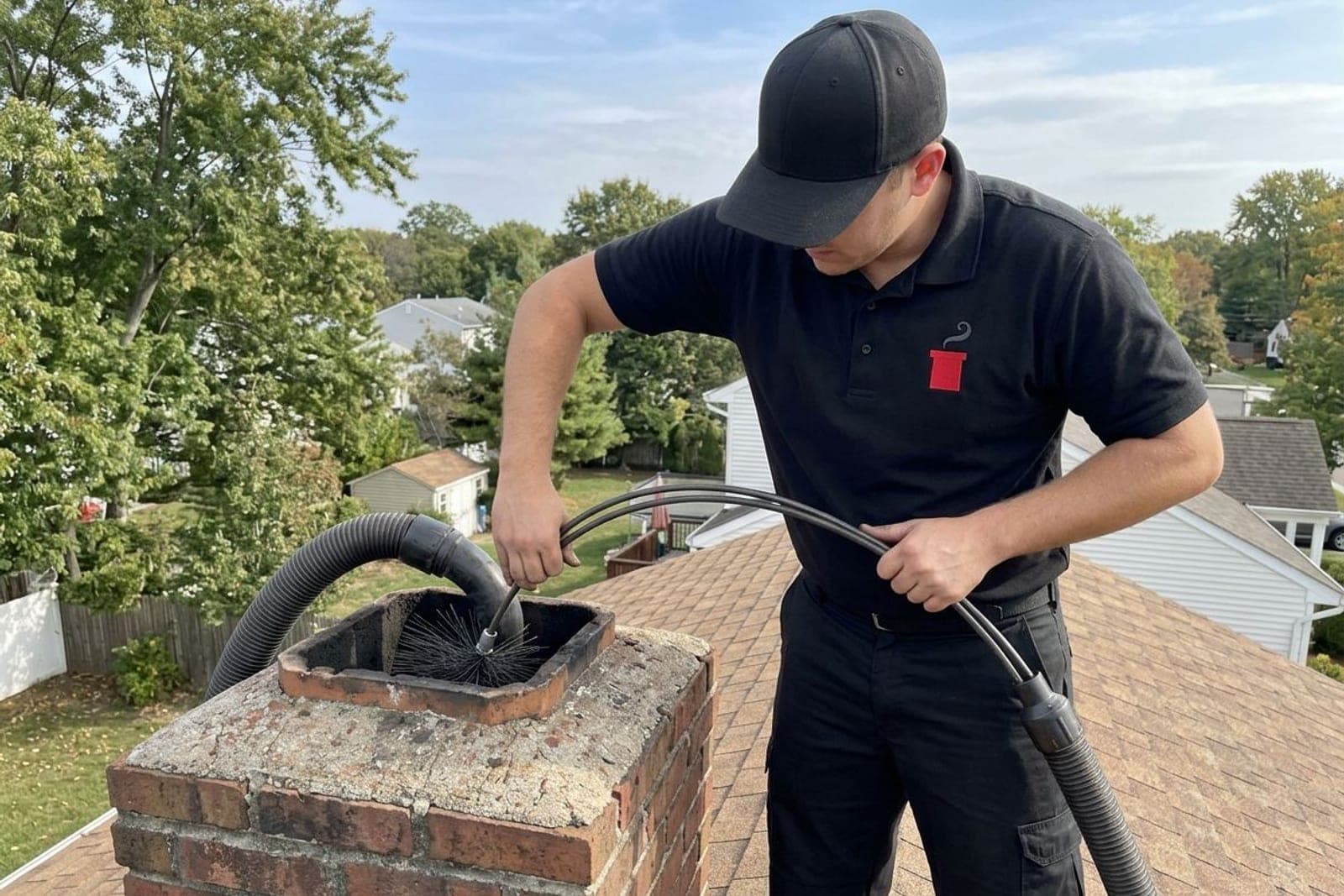
A chimney sweep clears creosote and soot buildup from the flue liner and checks the smoke chamber and damper while the technician is already in there. Creosote is a byproduct of burning wood, and enough of it built up in a flue is the single biggest cause of a chimney fire — the National Fire Protection Association recommends an inspection at minimum once a year for exactly that reason.
In Beachwood, the timing question isn't just about how much a household burns — it's about how fast creosote sets up in a flue that stays damp longer than one in a drier town. Sitting where the Toms River widens toward Barnegat Bay leaves the air here noticeably more humid through most of the burning season than a township fifteen miles further inland would experience.
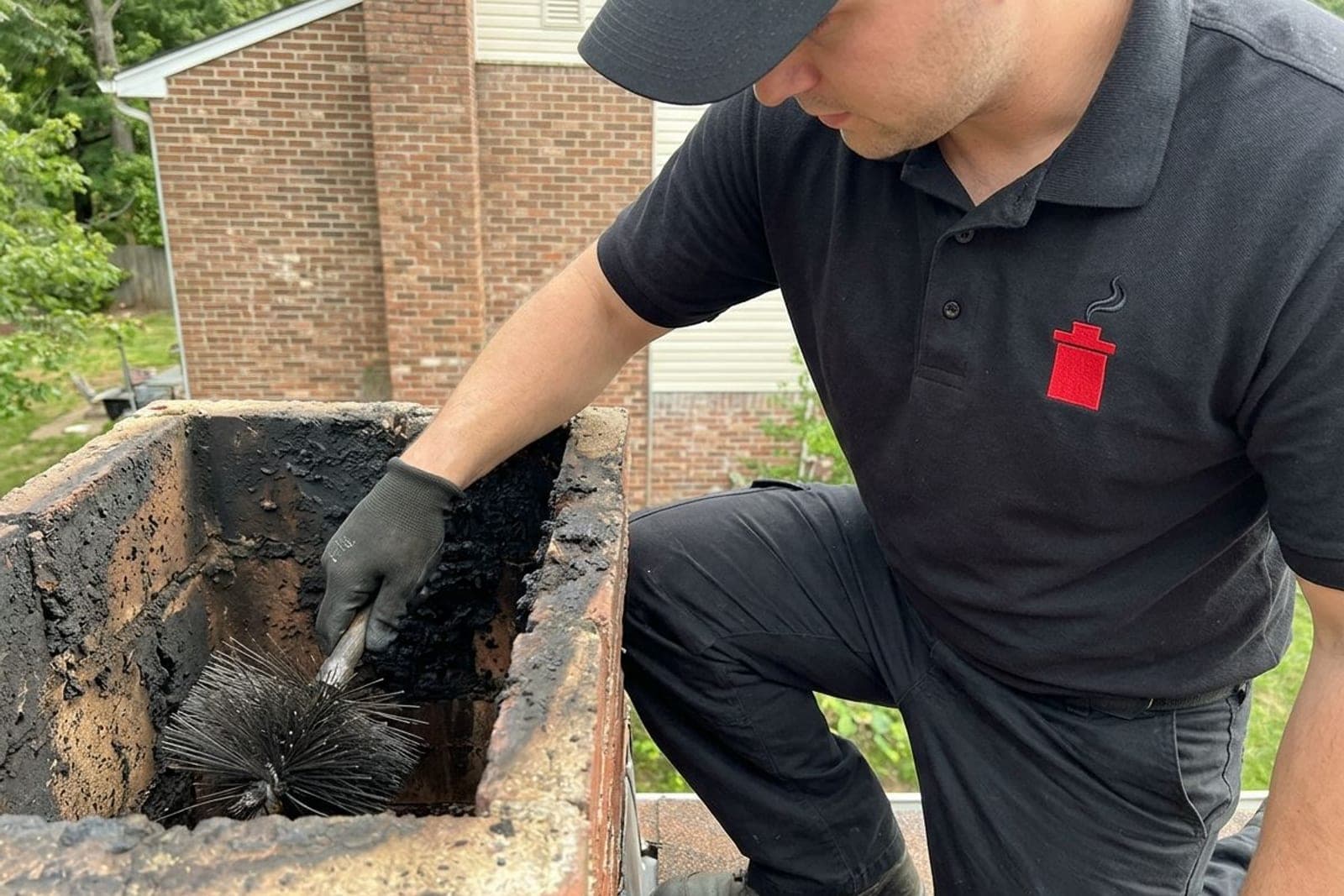
Moist creosote deposits differently than dry creosote does: instead of a loose, flaky soot that brushes out easily, humidity can help it glaze onto the flue wall in a harder, stickier layer, especially in a flue that already runs a little cool because the chimney is on the shaded, water-facing side of the house. That glazed creosote is exactly the Stage 3 condition a standard brush sweep struggles with, and it's why we check flue condition at every visit rather than assuming last year's sweep interval still applies.
Beachwood's older housing stock adds a second variable. Many of the borough's chimneys were built to serve houses from the early-to-mid 20th century, well before today's liner standards, and some have never been relined. A liner that's aging on top of a flue that runs damp is the combination most likely to need more than a routine brush pass — sometimes a rotary or chemical treatment for glazed creosote, which we always price separately and explain before doing.
None of this changes what a sweep costs or how it's booked. It changes what we look for while we're up there, and it's why every sweep in Beachwood includes a real look at the flue's condition, not just a pass with a brush.
Flue Condensation From River Humidity, Not Storm Surge
Beachwood's official water area comes in at about 0.04 percent of the borough — this is a river-and-bay-adjacent town, not one crossed by tidal canals. For a chimney sweep, the relevant risk isn't floodwater reaching the flue; it's the ambient humidity a spot this close to the Toms River and Barnegat Bay carries through most of the burning season.
That humidity is what changes how creosote behaves between sweeps. A flue that stays slightly damp between fires holds creosote in a stickier, harder-to-brush state than a bone-dry flue would, which is why our technicians check for glazing on every Beachwood visit rather than assuming a standard brush pass will clear everything a drier town's flue would release on the first try.
- Source: Beachwood, NJ (Wikipedia), accessed 2026-09-18
A Second Flue in the Detached Garage
Beachwood's original 1914-1915 subdivision plots measured just 20 by 100 feet, and a fair number of homes on those older lots still have a detached garage or outbuilding sitting close to the house — occasionally with its own wood stove and flue rather than a genuine boathouse, since direct waterfront is the exception in a borough with barely any recorded water area.
When that second structure has its own flue, it needs its own sweep on its own schedule, since a garage stove often sees lighter, more irregular use than the main house's fireplace and can go longer between visible warning signs even as creosote quietly builds up. We ask about outbuildings with their own heat source at the time of booking so the visit is scoped correctly from the start.
- Source: History of Beachwood (Wikipedia), accessed 2026-09-18
What a Beachwood Sweep Includes
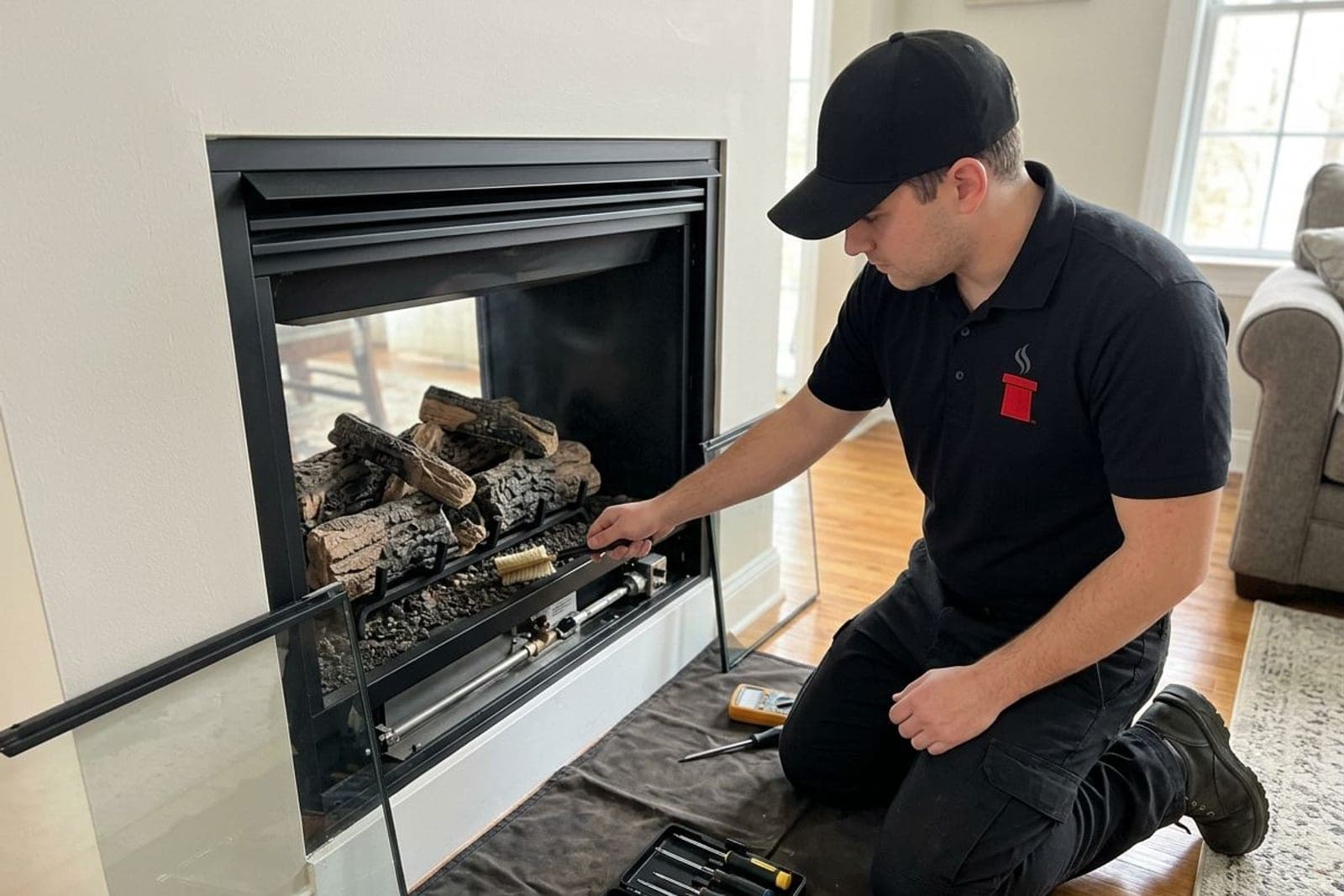
Every chimney sweep we do in Beachwood includes:
- Full brush sweep of the flue from firebox to cap
- Removal of loose creosote and soot buildup
- Level 1 visual inspection of the flue liner and smoke chamber
- Damper operation check
- Check for glazed (Stage 3) creosote that needs more than a brush
- Debris and containment cleanup
- A written summary of what was found
Professional, clean, no-mess service.
Signs a Beachwood Flue Needs Sweeping
- A campfire or smoky smell in the room, especially in humid weather
- Visible soot flaking near the firebox opening
- Reduced draft or smoke drifting into the room
- It's been over a year since the last sweep
- Black, tar-like glaze visible when you look up the flue
- A damper that sticks or won't seat properly
- Any animal noise or nesting material in the flue
If you notice smoke backup or stage-3 creosote, book immediately.
Book nowWhy Humidity Changes Sweep Timing in Beachwood
The humidity that comes with sitting near where the Toms River meets Barnegat Bay changes how creosote sets up in an older, unlined flue. Combined with a housing stock that predates modern liner standards, a Beachwood sweep is as much a liner-condition check as a cleaning.
A chimney sweep job in Beachwood — start to finish
 BeforeAfter
A homeowner a few blocks from the Toms River called after noticing a persistent smoky smell in the living room every time it rained, even though the fireplace hadn't been used in over a week.
- 1
On-site Inspection
$99 plus tax
A look up the flue showed a heavier-than-expected creosote layer with sections starting to glaze, consistent with a flue that had held onto humidity from its position on the shaded, river-facing side of the house.
- 2
Sweep & Level 1 Visual Check
$249
The crew brushed the flue clear from firebox to cap, working the glazed sections with extra passes to fully break up the harder deposits, then rechecked the liner with a light to confirm it was clear and undamaged.
The total for this sweep came to $348. The technician noted the liner's age and recommended the homeowner keep the sweep interval at once a year rather than stretching it, given how quickly creosote had built up since the previous cleaning.
This is a representative crew-written job summary, not a customer review. Photographs of jobs we have actually completed are on our work.
How a Beachwood Sweep Visit Runs
 1
1On-site inspection first
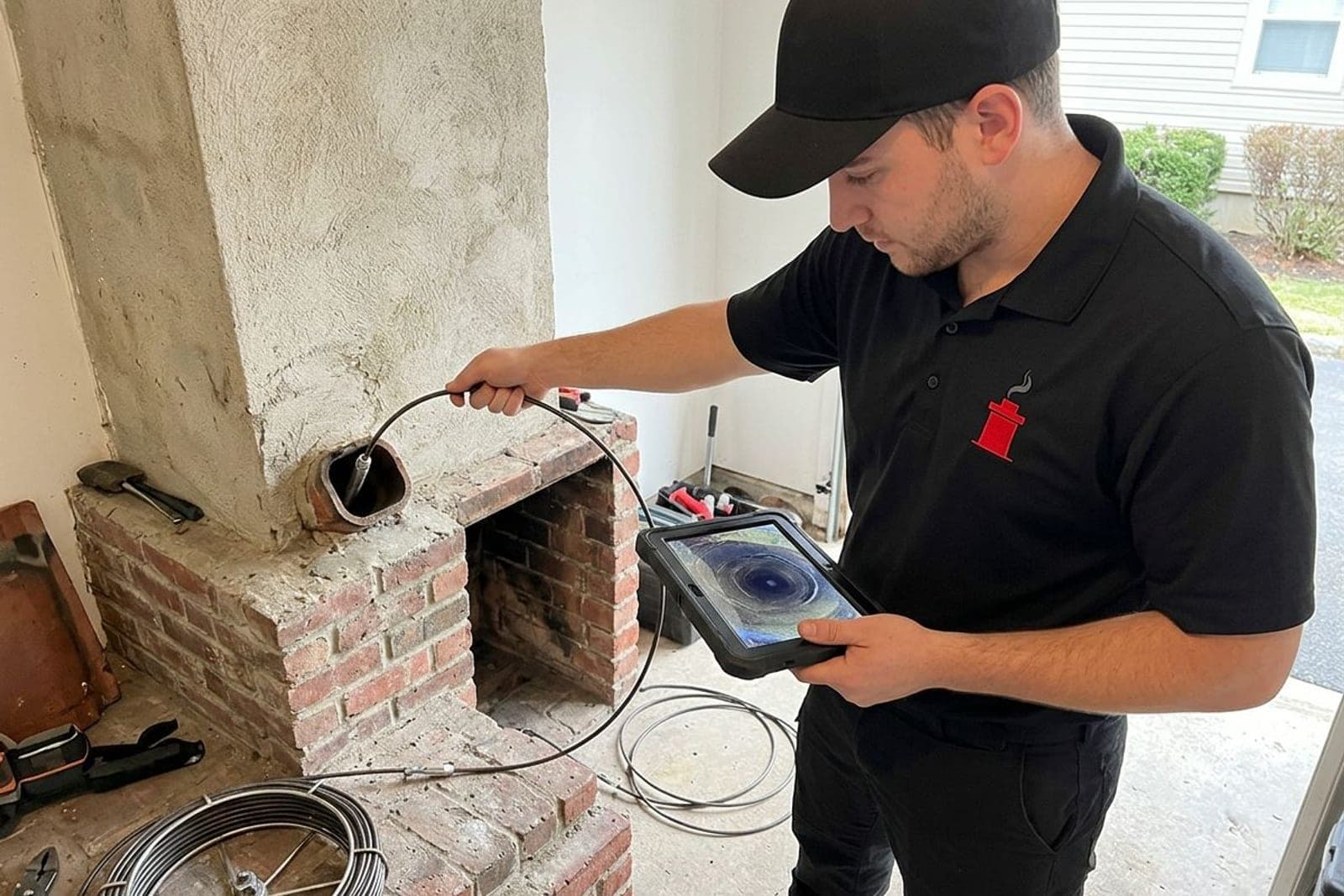
Before brushing anything, the technician looks up the flue with a light to gauge how much creosote is present and whether it's loose or glazed, since a humid-climate flue often needs a different approach than a dry one.
- 2
Full sweep and containment
The flue is brushed from the firebox to the cap with a vacuum running to contain dust, and the smoke chamber and damper are cleared and checked at the same time.
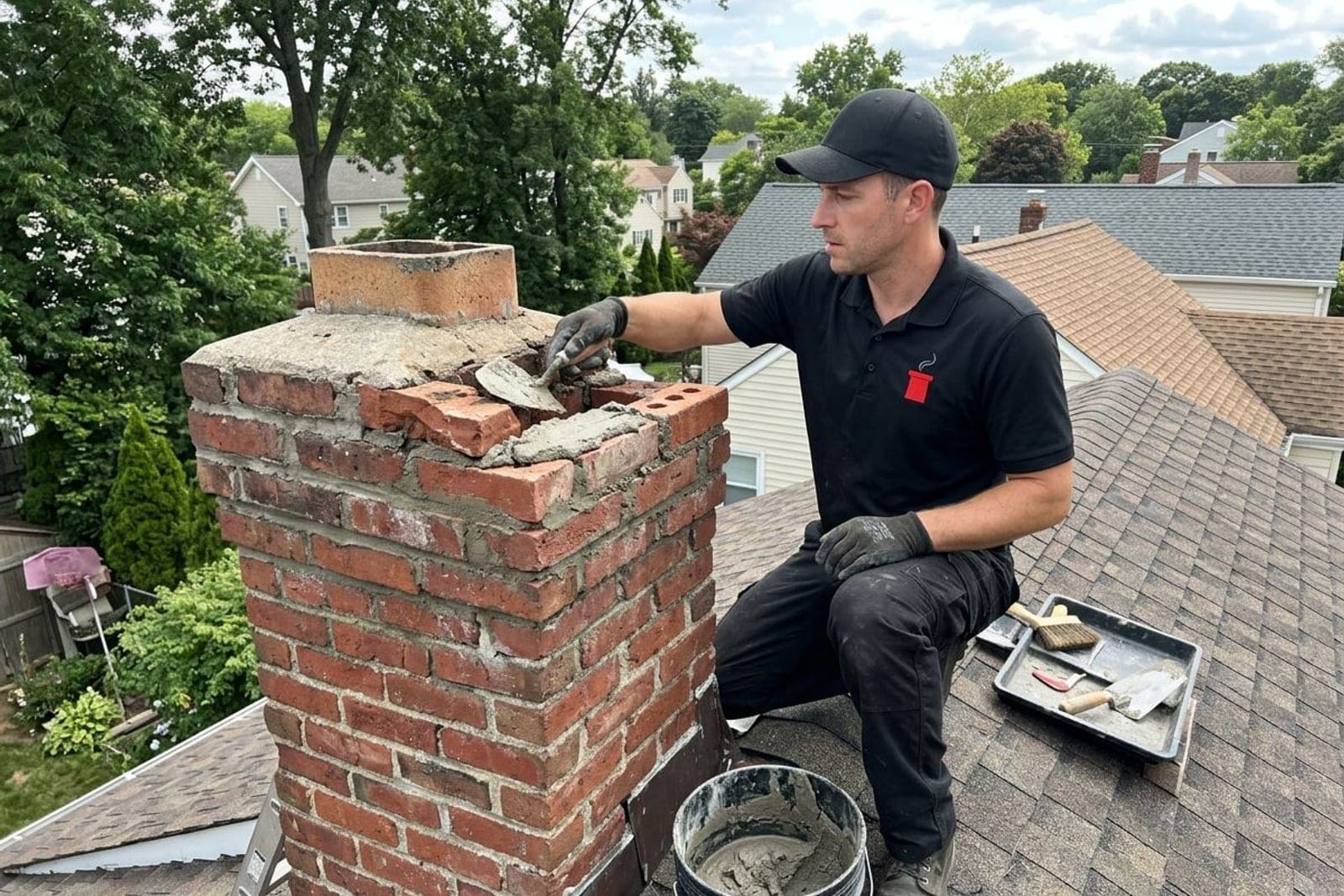 3
3Written summary and recommendation
You get a plain-language summary of what was found — including any glazing or liner wear — and, if something beyond a standard sweep is needed, a separate written quote before that work is scheduled.
| What You Notice | What It Usually Means | How Urgent It Is |
|---|---|---|
| Smoky smell after rain | Damp creosote off-gassing in the flue | Moderate — schedule before next use |
| Flaking black soot | Normal Stage 1 creosote, due for a sweep | Routine — annual maintenance |
| Shiny, tar-like glaze | Stage 3 glazed creosote | High — brush alone won't fully clear it |
| Weak draft, smoke backing up | Blockage or liner obstruction | High — stop using until checked |
| Scratching or chirping sounds | Animal nesting in the flue | Immediate — do not light a fire |
Prices verified on .
Built for Beachwood's homes and climate
We treat Beachwood — about 10,856 residents — as home turf, together with Toms River, Island Heights and Bayville next door. That is why chimney sweep appointments here fit into an existing route instead of a special trip.
BeachwoodOcean County, NJ · 39.936, -74.200
Beachwood Chimney Sweep Questions
Why does Beachwood's climate affect chimney sweep timing?
Sitting near where the Toms River widens toward Barnegat Bay keeps Beachwood's flues damper between fires than a drier inland town's would be. That moisture can cause creosote to glaze rather than stay loose, which is harder to fully remove with a standard brush pass.
How much does a chimney sweep cost in Beachwood?
A professional sweep in Beachwood runs $179 to $399, depending on flue condition and how much creosote has built up. Our on-site inspection is $99 plus tax, deducted in full from the quote if you approve the work. The written quote is free, and you approve the price before anything starts.
How often should a Beachwood chimney be swept?
Once a year is the standard NFPA recommendation, and it holds for most Beachwood homes. A flue that shows early glazing or heavier-than-normal buildup at inspection may need a shorter interval, which we'll flag rather than assume.
What is glazed creosote, and why does it come up so often here?
Glazed (Stage 3) creosote is a hardened, tar-like deposit that forms when creosote doesn't dry out fully between fires — more likely in a humid, river-adjacent flue than a dry inland one. It usually needs more than a single brush pass to fully clear.
Does Beachwood's older housing stock affect how a sweep is done?
Many of the borough's chimneys serve homes built well before current flue liner standards, and some liners have never been replaced. An older liner combined with a damp flue is more likely to show glazing, so we check condition carefully rather than treating every sweep the same.
Do you inspect the liner during a sweep, or is that separate?
A Level 1 visual inspection of the liner and smoke chamber is part of every sweep we do in Beachwood. If we see wear that needs a closer camera-based Level 2 look, we'll explain why and price it separately before doing it.
Get in touch
- (732) 889-5194
- contact@jerseychimneypros.com
- Based in Lakewood, NJ — serving Beachwood

Need your chimney checked in Beachwood?
Clear pricing, local scheduling, and honest written recommendations you can trust.

Book your chimney sweep in Beachwood
Real open times on our crew's calendar — confirmed instantly.
Chimney Sweep in Beachwood