Lincroft, Monmouth County
Chimney Sweep in Lincroft, NJ
Most of Lincroft's colonials and estate homes are full-time residences, and burning a fireplace here most weekends through a cold season is common rather than occasional. That steadier burning schedule means creosote builds up on a different clock than it does in a seasonal property, and it's the reason we treat a Lincroft sweep as more than a once-a-year formality. That first stop is a $99-plus-tax on-site visit, and the fee comes off your bill once you sign off on the sweep.
Typical investment
$179–$399
- Local crews
- Licensed & insured
- Documented work
- Fast scheduling
- Serving Lincroft and the surrounding Monmouth County towns
- $99 inspection, deducted from an approved quote
- Usually on the same Monmouth County route as Atlantic Highlands, Brielle, Colts Neck
Why Lincroft homes need chimney sweep
Because Lincroft sits inland around the freshwater Swimming River Reservoir rather than a tidal shoreline, its chimneys aren't dealing with salt air the way a Rumson or Sea Girt flue does — the sweep issues we see here trace back to how much a fireplace gets used, not the local weather corroding the cap. On the larger colonials common near Brookdale Community College and Thompson Park, that usually means more creosote from more consistent burning, and sometimes more than one flue to clear in the same visit.
We treat Lincroft — about 7,060 residents — as home turf, together with Tinton Falls, Shrewsbury and Red Bank next door. That is why chimney sweep appointments here fit into an existing route instead of a special trip.
Creosote removal
Eliminates flammable creosote buildup that can ignite.
Safer venting
Keeps smoke and gases moving up and out — not back inside.
Cleaner fires
Better draft means more efficient, enjoyable fires.
Protection for masonry & flue
Prevents damage from corrosive byproducts and moisture.
Chimney Sweeps for Lincroft's Actively Used Fireplaces
A wood-burning fireplace that's used as a real, regular heat source — which is more common in Lincroft's larger, full-time colonials than in a shore town's seasonal cottages — deposits creosote faster than an occasional-use fireplace does. Left to accumulate, that creosote moves through predictable stages, and the later stages are glazed, harder to remove, and considerably more flammable. Our sweeps are built to catch that buildup before it reaches that point, not just after a chimney fire risk is already obvious.
Because a number of Lincroft's estate-style properties run more than one fireplace, or a fireplace alongside a furnace flue sharing the same chase, a single visit sometimes covers more than one flue. We scope that during the on-site inspection so you know upfront whether you're looking at a single-flue sweep or a multi-flue visit, rather than getting a surprise once we're on the roof.
Every sweep includes a visual check of the accessible chimney components — the firebox, the damper, the smoke shelf — alongside the brushing itself, and we'll flag anything that looks like it needs more than a routine cleaning, such as a cracked flue tile or a damaged damper, rather than sweeping past it.
We protect the inside of the house the same way on every Lincroft visit: drop cloths at the hearth, a sealed containment setup at the fireplace opening, and HEPA-filtered vacuum equipment to keep soot from spreading into the living space while we work.
When the Fireplace Is a Real Heat Source, Not Just Ambiance
In a lot of Lincroft's larger colonials, the fireplace or wood stove is used often enough through the winter that it functions closer to a real heating source than an occasional amenity — a meaningfully different pattern from a seasonal shore cottage where the hearth sits cold for months at a stretch. That steadier burning schedule is the single biggest factor in how fast creosote accumulates, more than the size of the house or the age of the flue.
We schedule Lincroft sweeps around that reality: a flue that's carrying real heating load through the winter needs its creosote checked more attentively than the industry's baseline once-a-year guideline assumes, and we'll tell you plainly at the inspection if your burning pattern means you're due sooner than the calendar suggests.
More Than One Flue on a Larger Lot
The larger, wooded lots common around the Swimming River Reservoir and Thompson Park sometimes carry a second structure with its own flue — a detached garage with a wood stove, or a pool house with a small fireplace — alongside the main house's chimney.
Any flue that sits unused for long stretches, which is common on an outbuilding used seasonally, is also more likely to pick up an animal nest between visits. We check outbuilding flues for exactly that during a Lincroft sweep, rather than assuming the only chimney on the property is the one over the living room.
- Source: Swimming River Reservoir (Wikipedia), accessed 2026-09-18
What's Included in a Lincroft Chimney Sweep
Every chimney sweep we do in Lincroft includes:
- On-site inspection and visual assessment of the flue
- Full brushing and creosote removal from the flue liner
- Firebox, damper and smoke shelf cleaning
- Camera check of the flue interior where needed
- Removal of animal nests or debris blocking the flue
- HEPA-filtered vacuum containment to protect your home's interior
- Written recommendation for any repair the sweep uncovers
Professional, clean, no-mess service.
Signs Your Lincroft Chimney Needs a Sweep
- It's been more than a year since your last professional sweep
- A smoky smell inside the house when the fireplace is cold
- Smoke backing up into the room when you light a fire
- Visible black, flaky creosote in the firebox
- Unusual scratching or rustling sounds from the chimney
- Slow-burning or hard-to-start fires
- Soot or debris falling into the fireplace on its own
If you notice smoke backup or stage-3 creosote, book immediately.
Book nowChimney Sweep Issues Common to Lincroft Homes
Creosote buildup is the main issue we're clearing on a Lincroft sweep, and on a property where the fireplace is genuinely part of the winter heating routine rather than an occasional amenity, it builds up faster than the industry's once-a-year guideline might suggest. We also regularly find animal nesting in flues that go unused for stretches of the year — a wood stove that's the primary heat source for a home office one winter and sits capped the next is exactly the kind of flue that attracts a bird or squirrel nest between uses.
A chimney sweep job in Lincroft — start to finish
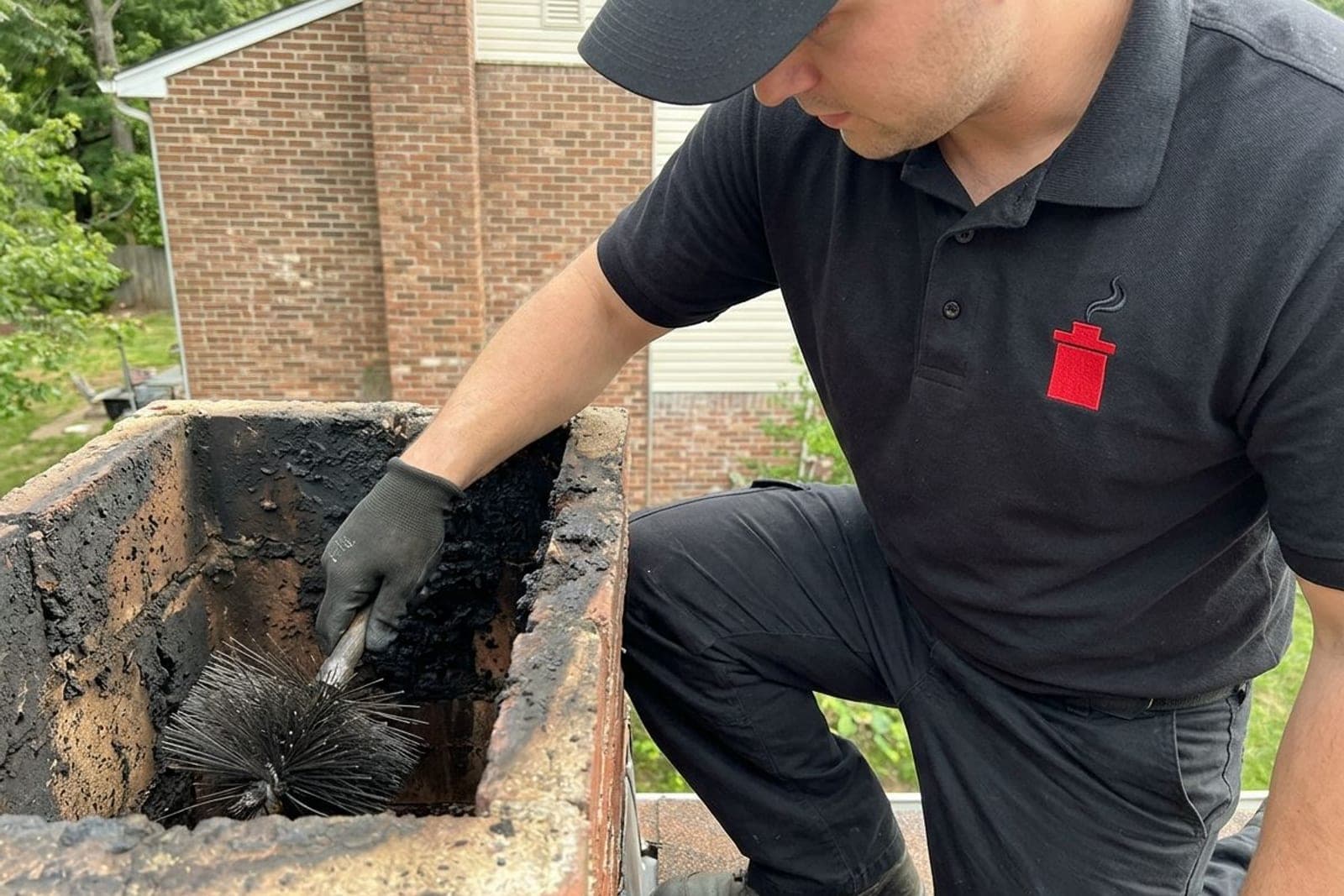 BeforeAfter
A family in a Lincroft colonial near the reservoir called ahead of the first cold snap, saying their main living room fireplace — used most weekends through the winter — was producing more smoke in the room than usual.
- 1
On-site inspection and draft assessment
$99 plus tax
We inspected the firebox and ran a camera up the flue, finding a heavy, glazed layer of creosote built up from a full season of regular weekend burning, along with a partially closed damper restricting draft.
- 2
Full flue sweep and creosote removal
$250
We used rotary brushing equipment suited to the glazed creosote to clear the flue from the firebox to the crown, then freed and adjusted the damper so it opened fully again.
The sweep and damper work came to $349, at the higher end of our $179–$399 range for a single flue given how much creosote had built up over a full season of weekend use.
This is a representative crew-written job summary, not a customer review. Photographs of jobs we have actually completed are on our work.
| Service | Typical Price | Notes |
|---|---|---|
| On-site inspection | $99 plus tax | Deducted from an approved quote |
| Single-flue chimney sweep | $179–$399 | Price depends on creosote buildup and flue condition |
| Additional flue on the same visit | $179–$399 | Common on colonials with more than one fireplace |
Prices verified on .
Built for Lincroft's homes and climate
We treat Lincroft — about 7,060 residents — as home turf, together with Tinton Falls, Shrewsbury and Red Bank next door. That is why chimney sweep appointments here fit into an existing route instead of a special trip.
LincroftMonmouth County, NJ · 40.331, -74.122
Lincroft Chimney Sweep Questions
How often should a Lincroft fireplace be swept?
At least once a year, and possibly more if the fireplace is used regularly through the winter rather than occasionally. Lincroft's larger colonials tend toward the heavier-use side, so we check actual creosote buildup at the on-site inspection rather than going by the calendar alone.
What does a chimney sweep cost in Lincroft?
A single-flue sweep in Lincroft typically runs $179–$399, depending on creosote buildup and flue condition. That's on top of our standard $99-plus-tax visit, credited back to you the moment you approve the sweep.
Do Lincroft homes with more than one fireplace need more than one sweep?
Often, yes. A number of Lincroft's estate-style colonials run two or more flues — sometimes two fireplaces, sometimes a fireplace and a furnace flue sharing a chase — and we scope each one separately during the inspection so you know what a full-house sweep involves before we start.
Can a chimney sweep prevent a chimney fire?
Clearing creosote before it reaches its later, glazed stage is one of the most effective ways to lower that risk, and it's the main reason we don't treat a sweep as a once-a-year formality on a Lincroft fireplace that's actually used through the winter.
What's included in a Lincroft chimney sweep?
The on-site inspection is $99 plus tax, deducted in full from the quote if you approve the work. The written quote is free, and you approve the price before anything starts. From there, the sweep itself covers the full flue, firebox, damper and smoke shelf.
Get in touch
- (732) 889-5194
- contact@jerseychimneypros.com
- Based in Lakewood, NJ — serving Lincroft

Need your chimney checked in Lincroft?
Clear pricing, local scheduling, and honest written recommendations you can trust.

Book your chimney sweep in Lincroft
Real open times on our crew's calendar — confirmed instantly.
Chimney Sweep in Lincroft