Brick, Ocean County
Chimney Repair in Brick, NJ
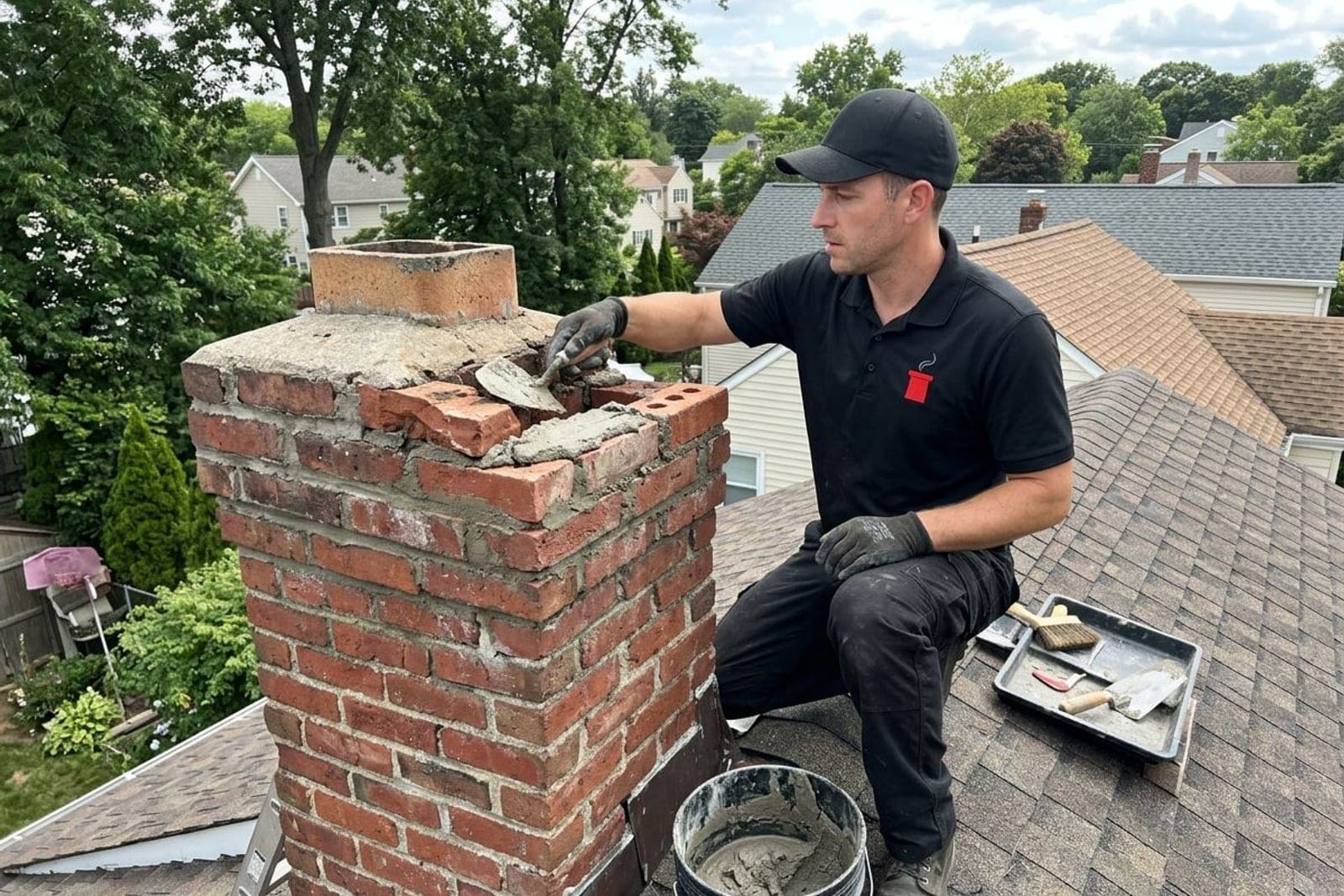
If your Brick chimney is cracking, leaning, or leaking into a wall, the fix usually isn't cosmetic — the chimney is carrying combustion gas or fireplace heat past materials the house was never built to handle forever. We're a fully licensed and insured New Jersey home-improvement contractor repairing chimneys across Brick Township, from the mid-century blocks off Route 70 to the bulkhead lots on the Metedeconk River, and we scope every job against current flood-elevation rules, not just the crack in front of us.
Typical investment
From $350
- Local crews
- Licensed & insured
- Documented work
- Fast scheduling
- Serving Brick and the surrounding Ocean County towns
- $99 inspection, deducted from an approved quote
- Usually on the same Ocean County route as Barnegat Light, Bay Head, Lakewood
Why Brick homes need chimney repair
Brick Township runs along Barnegat Bay and the Metedeconk River, and its chimneys reflect decades of building activity: the township's biggest single construction wave landed in the 1970s, putting roughly 77% of its housing stock up before 1990. Heat has moved on since then — more than four in five occupied Brick homes now run on utility gas, most having converted from the oil heat those older chimneys were originally built to vent.
With roughly 73,605 residents, Brick keeps us busy year-round. We pair it with Point Pleasant, Bay Head and Mantoloking on the same route, so chimney repair in Brick gets scheduled without a long wait.
Done by licensed crews
Our own team, never a subcontractor sent by a call center.
Written quote up front
You approve the price before any work begins.
Photo-documented
Before and after photos of every fix, in plain English.
Built for the local climate
Salt air, freeze-thaw and coastal wear factored in.
Why Brick's Chimneys Need Bayfront-Specific Repair
Most of what we repair in Brick traces straight back to the age of the flue. Of the township's 33,277 homes, 8,047 — the single biggest cohort — went up during the 1970s building boom, and 25,547 in total, or about three of every four, predate 1990: back when a clay-tile-lined or entirely unlined masonry flue was standard construction. Decades of freeze-thaw cycles and combustion byproducts have worked on those flues far longer than a modern liner is rated for, and a lot of what our crews find in Brick is deterioration that started building up long before the current owner bought the house.
Projects in New Jersey's tidal and coastal flood zones have answered to a stricter elevation standard since January 2026, when the state's environmental department adopted the change statewide. On a Brick bayfront or river-front lot, that's one more figure worth checking before a full chimney or masonry-base rebuild gets scoped, not after materials are on order.
A second address on the same lot can mean a second construction standard, too. Out toward Route 35's barrier-island strip, an accessory building — a boathouse, garage apartment, bunk room — sometimes answers to stricter coastal rules than the mainland house it belongs to, and it carries its own wood-burning or gas appliance. That flue gets diagnosed and permitted as its own job rather than folded into the main house's repair.
Heat in Brick has largely moved to gas: Census figures put 81.8% of occupied homes on utility gas and just 1.9% on fuel oil, a shift the region's gas utility's own Ocean County coverage confirms is well underway across the township. A lot of that conversion happened inside a masonry flue that was originally sized for an oil burner decades ago, and an oversized, unlined chimney venting a modern gas appliance is a real repair, not a cosmetic one: it usually means a stainless liner sized to the new equipment.
A repair call in Brick usually starts from one of two places: a masonry chimney that's simply reached the limit of what its original construction era can take, or an old flue that inherited a gas appliance it was never sized for. Either way, the job is narrower than a full rebuild — a crown, a flashing run, a section of liner — fixing the one thing that's actually failed rather than tearing the whole stack down. The signs below cover what we run into most often across Brick's mix of 1970s-era and newer housing; an on-site inspection tells you which one applies to your chimney and puts a firm number on it before anything gets opened up.
Flood Rules and a Brick Chimney Rebuild
Projects in New Jersey's tidal and coastal flood zones have answered to a stricter elevation standard since January 2026, when the state's environmental department adopted the change statewide. On a Brick bayfront or river-front lot, that's one more figure worth checking before a full chimney or masonry-base rebuild gets scoped, not after materials are on order.
We check current flood-elevation numbers with the township before finalizing any large rebuild on a bayfront or river-front address, and put that check in the written quote — not as an afterthought once demolition has already started.
A Boathouse or Carriage House Has Its Own Chimney to Scope
A second address on the same lot can mean a second construction standard, too. Out toward Route 35's barrier-island strip, an accessory building — a boathouse, garage apartment, bunk room — sometimes answers to stricter coastal rules than the mainland house it belongs to, and it carries its own wood-burning or gas appliance. That flue gets diagnosed and permitted as its own job rather than folded into the main house's repair.
We check which construction standard applies to which structure on the property before pricing either chimney, since an accessory building on the barrier-island strip isn't necessarily held to the same rule as the house it sits behind.
What Chimney Repair Covers in Brick
Every chimney repair we do in Brick includes:
- On-site check of the masonry, crown, flashing, liner and firebox, top to bottom
- Crown repair or rebuild, shaped and pitched to shed Brick's rain and handle its freeze-thaw cycles
- Roofline flashing rebuilt or resealed where it meets the chimney, a spot that fails early on older Brick roofs
- Brick repointing and swapping out spalled brick on a masonry stack
- A sized stainless liner insert where a flue built for oil is now carrying a converted gas appliance
- Confirmation of current flood-elevation figures with the township before a large bayfront or river-front rebuild is scoped
Professional, clean, no-mess service.
Signs a Brick Chimney Needs Repair Now
- Cracked or spalling brick visible from the ground or a neighbor's roofline
- Visible cracks or missing chunks of concrete on the crown itself
- A corroded cap, or rust streaks running down below it
- Water stains on a ceiling or wall near the chimney chase after rain
- A smell of gas, soot, or mildew when the fireplace or furnace runs
- Loose bricks or a visibly leaning stack
- A flue liner your last inspection flagged as cracked or undersized for a gas conversion
If you notice smoke backup or stage-3 creosote, book immediately.
Book nowFlood Rules and the Base of a Brick Chimney
Two things make a Brick chimney repair different from an inland job: flood exposure on bayfront and river-front lots, and old flue sizing. New Jersey's statewide flood-elevation rule change (January 2026) is worth checking against before a large masonry rebuild on a flood-exposed property. And a chimney that was sized for an oil furnace decades ago, then quietly inherited a gas appliance during a later renovation, is often venting through a liner that's the wrong size for what's actually burning inside it now.
A chimney repair job in Brick — start to finish
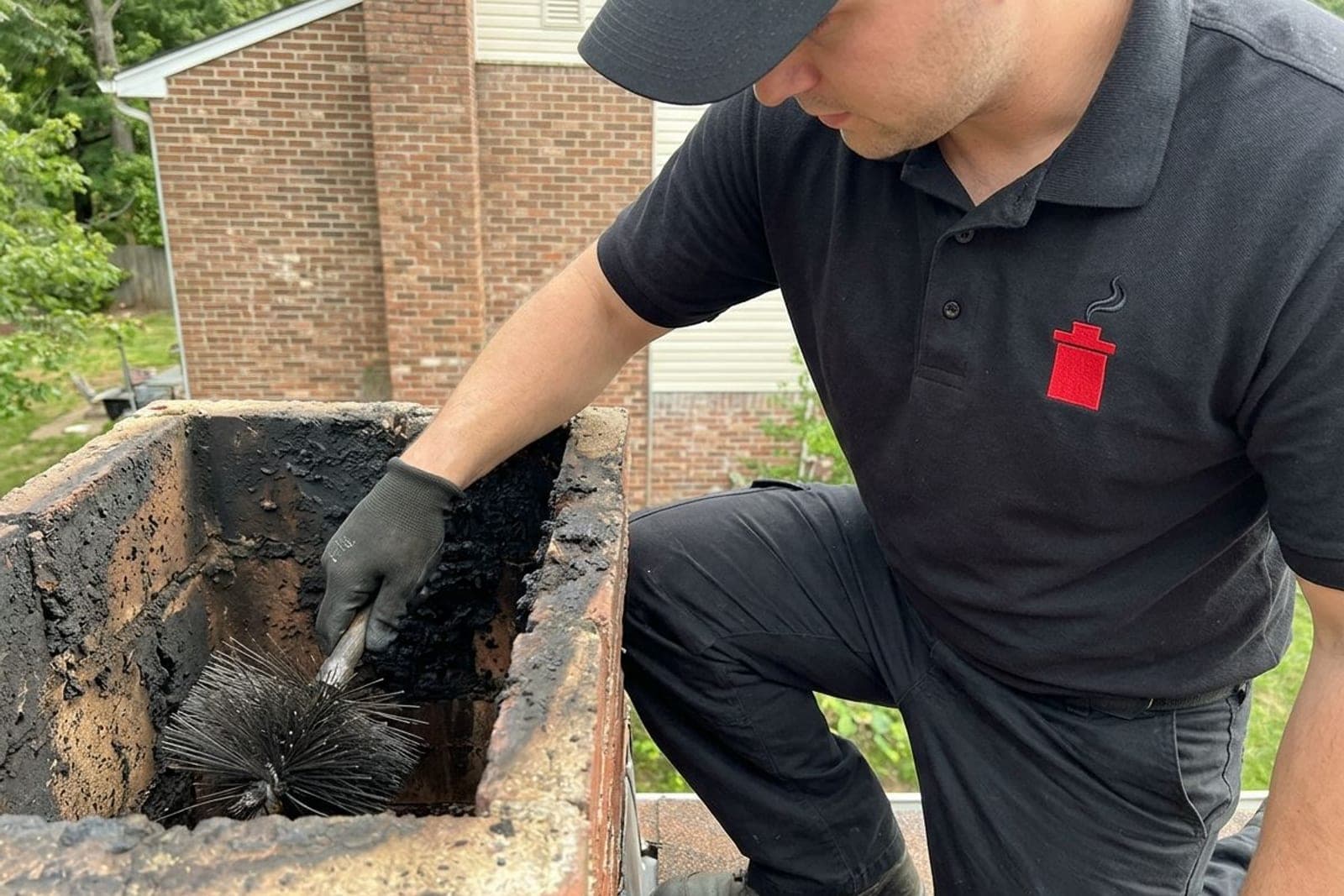 Before
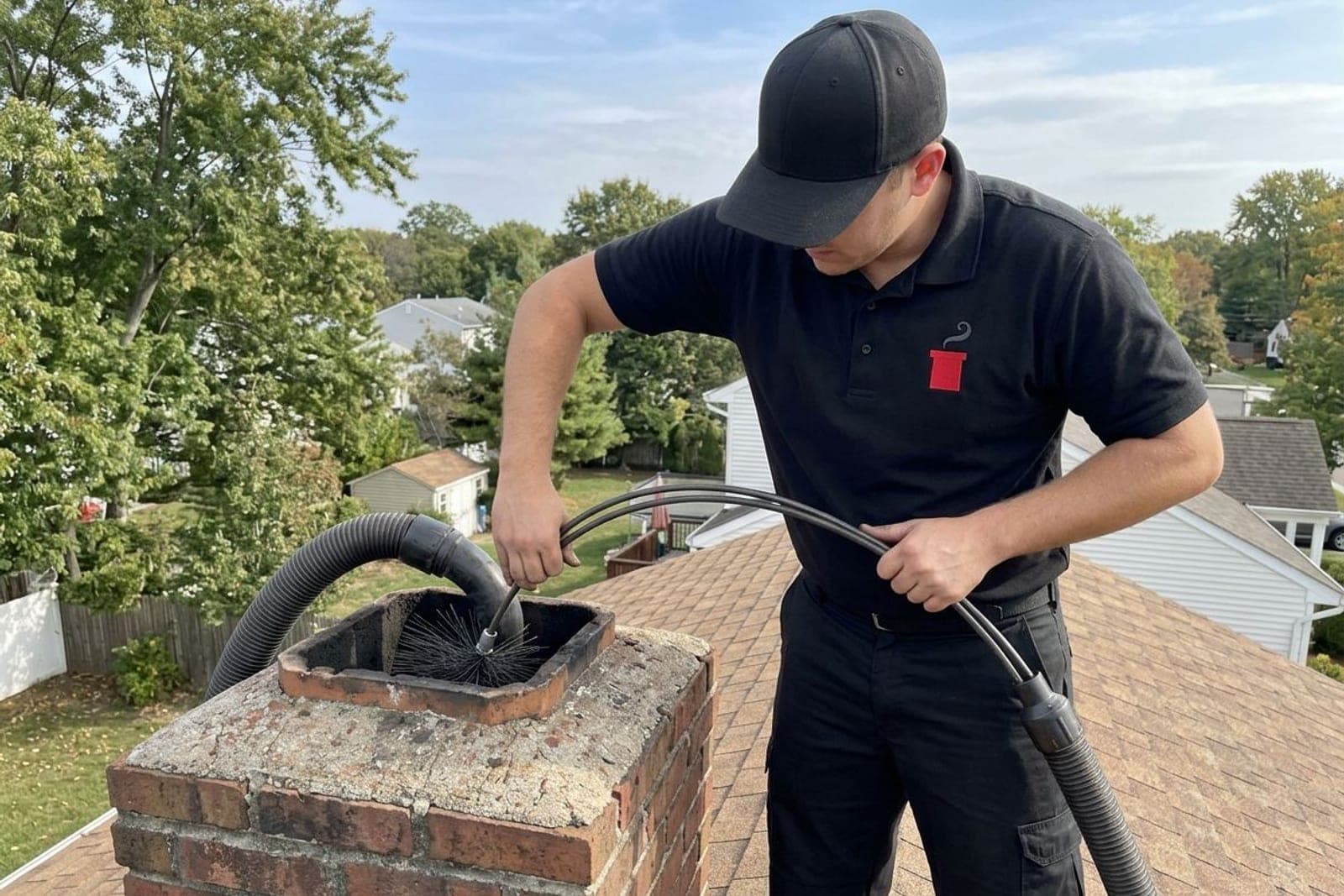 After
AfterA homeowner near the Metedeconk River called after a furnace-replacement crew flagged the chimney flue as too large for the new gas furnace and told them to get it checked before startup.
- 1
On-Site Inspection
$99 plus tax
We confirmed the flue was a clay-tile liner sized decades ago for an oil-fired furnace, now venting a smaller, higher-efficiency gas unit — exactly the kind of mismatch that turns up when a furnace gets replaced without anyone checking the flue it's tied to.
- 2
Stainless Liner Installation
$1,850
We installed a continuous stainless liner sized to the new furnace, insulated it, and sealed the top and bottom connections so the flue vents correctly for the new equipment.
- 3
Final Draft Test
included
We ran the furnace through a full cycle and checked draft and combustion readings at the new liner before signing off.
Total cost for the inspection and liner replacement came to $1,949, and the furnace installer had what they needed to close out their own permit the same week.
This is a representative crew-written job summary, not a customer review. Photographs of jobs we have actually completed are on our work.
How We Repair a Chimney in Brick
 1
1On-Site Inspection
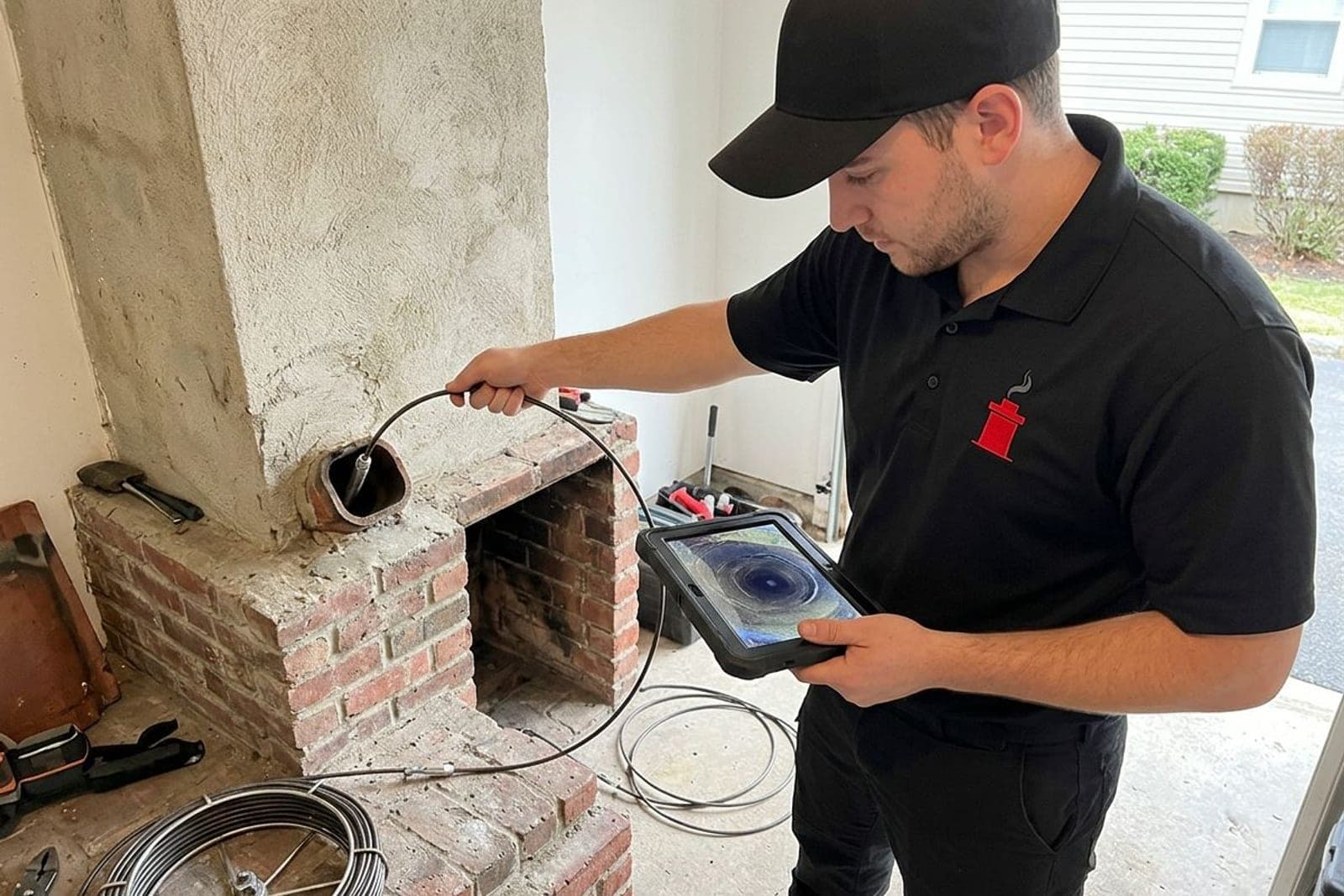
$99 plus tax gets a certified technician on your Brick property to inspect the chimney, top to bottom — masonry, crown, flashing, liner, firebox — and flag anything relevant if the repair happens to coincide with a furnace or water heater swap.
- 2
Detailed Quote
Before anyone touches the chimney, you get the repair spelled out in writing — what it costs and why — with nothing owed just for reading it over. The on-site inspection is $99 plus tax, deducted in full from the quote if you approve the work.
- 3
Repair
Once you sign off, our crew gets to work on exactly what was quoted — masonry, flashing, crown or liner — using materials picked for what Brick's bay air and freeze-thaw cycles put a chimney through, and handling any Township permit paperwork before we close the job out.
| Warning Sign | Likely Cause in Brick | Urgency |
|---|---|---|
| Cracked or missing chimney crown | Rainwater getting past the crown into the flue and brick below it | High — leads to liner and masonry damage |
| Rusted cap or streaking below it | Metal hardware corroding faster in Brick's bay-adjacent air | Medium — worsens with each storm season |
| Spalling or crumbling brick | Freeze-thaw cycling working on brick from one of the township's older construction waves | High — structural over time |
| Water stains inside near the chimney | A leak tracking in through failed flashing or a cracked crown | High — active leak |
| Oversized or corroded liner after a gas conversion | Flue sized for old oil equipment now venting gas | High — carbon monoxide and efficiency risk |
Prices verified on .
Built for Brick's homes and climate
With roughly 73,605 residents, Brick keeps us busy year-round. We pair it with Point Pleasant, Bay Head and Mantoloking on the same route, so chimney repair in Brick gets scheduled without a long wait.
BrickOcean County, NJ · 40.058, -74.110
Chimney Repair Questions From Brick Homeowners
How much does chimney repair cost in Brick, NJ?
In Brick, the age of the flue usually drives the number more than anything else: a straightforward crown or flashing fix on a newer home can land near our $350 starting point, while a full liner swap on one of the township's many pre-1990 chimneys — the era that covers roughly three of every four Brick homes — runs well past it. That's in line with what published pricing data shows elsewhere in New Jersey — chimney repairs running from $150 to $4,000 statewide — but a phone call can't tell you which end of that range your own chimney sits on; only a look at it can. The on-site inspection is $99 plus tax, deducted in full from the quote if you approve the work.
Why does my Brick chimney need a bigger repair than my neighbor's?
Age and construction era vary block by block in Brick. Census figures show the single largest slice of the township's homes were built in the 1970s, and about three in four went up before 1990 — old enough that liner and masonry condition can differ sharply even between similar-looking houses on the same street.
Why does a gas conversion sometimes turn into a chimney-repair job?
Most Brick homes now run on utility gas, but a lot of that conversion happened inside a chimney built decades earlier for an oil-fired furnace or water heater. If that flue never got resized when the new, smaller gas appliance went in, it can end up oversized and poorly drafting — a repair we see often enough in Brick that we check flue sizing on every gas-related call.
Will a chimney rebuild in Brick need to account for flood rules?
Possibly — it depends on whether the address sits inside a mapped coastal or tidal flood zone near the bay or the river. Since January 2026, New Jersey has required new coastal and tidal construction to meet a higher elevation standard statewide. Our written quote flags that check before any large rebuild starts, and we confirm current figures with the township rather than assume an older number still applies.
How is a chimney repair different from a chimney sweep?
A sweep clears out what's built up inside a working flue — creosote, debris, blockages — so it drafts the way it should. Repair is a structural fix: closing a crack, replacing flashing, swapping out a liner that's failed or the wrong size for what's venting through it. On a lot of Brick's older chimneys we end up doing both in one visit, because you can't tell how bad the masonry or liner damage really is until the flue has actually been cleared out and looked at directly.
Get in touch
- (732) 889-5194
- contact@jerseychimneypros.com
- Based in Lakewood, NJ — serving Brick

Need your chimney checked in Brick?
Clear pricing, local scheduling, and honest written recommendations you can trust.

Book your chimney repair in Brick
Real open times on our crew's calendar — confirmed instantly.
Chimney Repair in Brick