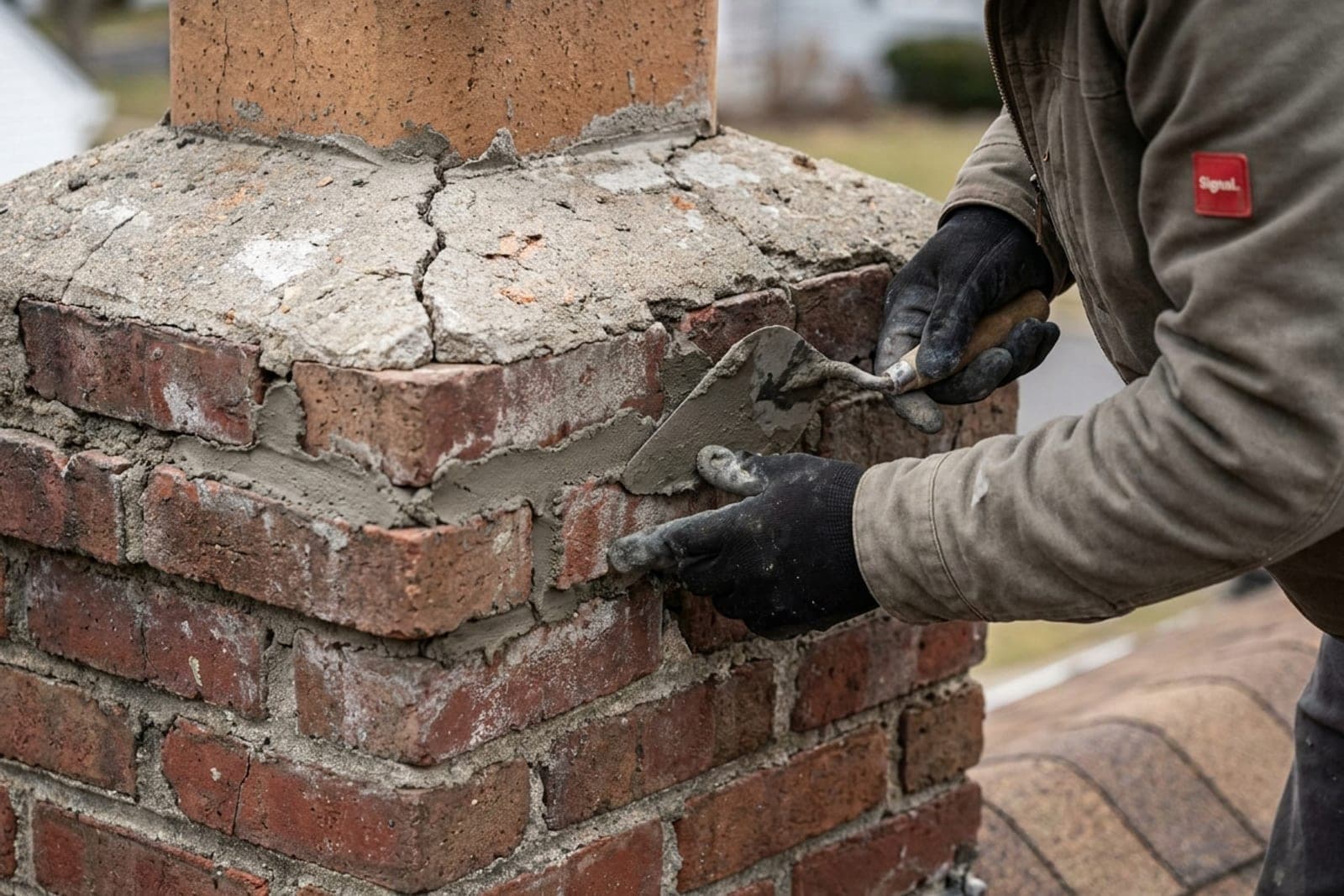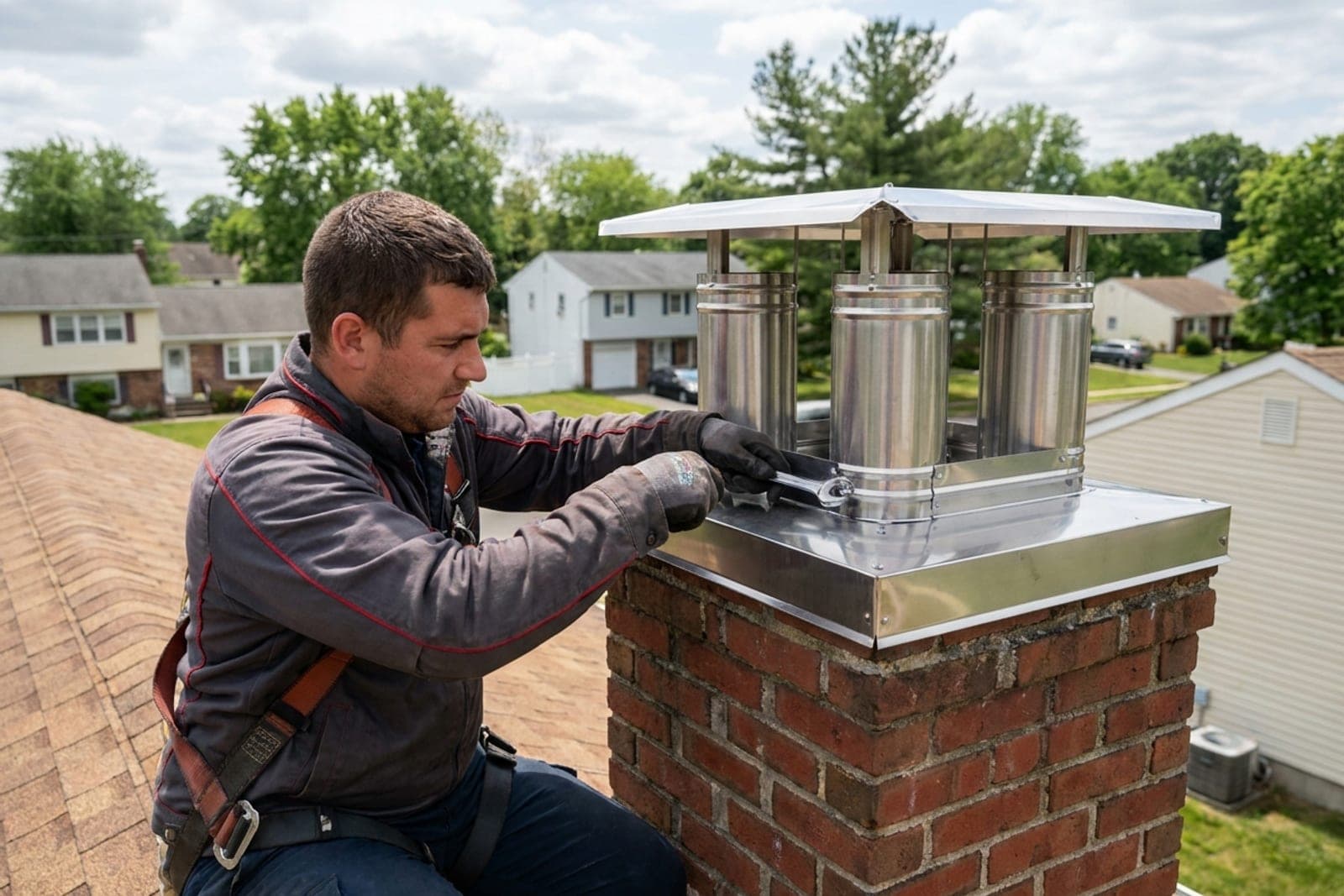
Hello, I'm Scott. Owning a home in North Jersey, especially an older Victorian or rowhome in areas like Jersey City, Montclair, or Elizabeth, means appreciating its character – and understanding its unique needs. A critical, often overlooked component of chimney safety and longevity, particularly with our freeze-thaw cycles, is a properly installed chimney cap.
Why Your North Jersey Chimney Needs a Cap
The harsh reality of North Jersey winters, with their relentless freeze-thaw cycles, makes your chimney's crown and masonry highly vulnerable to water intrusion. Without a cap, rain, snow, and ice penetrate the flue and brickwork, leading to costly deterioration and structural damage over time. This is especially true for the historic, porous mortar common in Bergen, Union, Hudson, and Essex County homes.
Beyond water, an open chimney is an invitation to unwanted guests. Raccoons, squirrels, and birds frequently seek shelter, building nests that can block the flue, create fire hazards, and introduce pests into your home. A proper chimney cap acts as a crucial barrier, preventing animal intrusion and keeping your flue clear of leaves, twigs, and other debris that can impede proper ventilation or spark chimney fires.
Special Considerations for Historic NJ Homes & Converted Flues
Many homes in our service area – from stately Victorian houses in Summit to classic rowhomes in Hoboken – feature chimneys built a century or more ago. The original masonry, while robust for its time, is often more susceptible to the elements than modern constructions. A high-quality chimney cap is the single most effective way to extend the life of these older structures by safeguarding them against direct weather exposure.
Furthermore, countless North Jersey homes, once coal-fired, have had their heating systems converted to natural gas. While efficient, these converted flues can present unique challenges. An oversized flue, designed for coal, might draw too much cool air when venting gas, increasing condensation. While a cap won't solve all condensation issues, it plays a vital role in preventing rain and snow from entering, which exacerbates moisture problems within the flue liner and contributes to premature deterioration.
Choosing & Installing the Right Chimney Cap for Longevity
Selecting the correct chimney cap isn't a one-size-fits-all decision. For the demanding New Jersey climate, we typically recommend durable stainless steel caps, which resist rust and corrosion far better than galvanized options and offer excellent longevity. Copper caps are another premium choice, offering superior aesthetics and durability, often preferred for preserving the historic look of your property. The material and design must complement your specific flue size and type, whether it's a single-flue, multi-flue, or a custom application common in older, larger homes.
Professional installation is critical. Measuring accurately, ensuring a secure fit, and verifying that the cap doesn't impede proper draft are all essential steps. An improperly installed cap can be ineffective, blown off by strong winds, or even create dangerous ventilation issues. Our experts understand the nuances of North Jersey chimney systems, guaranteeing a seamless and safe installation that provides lasting protection.
The Installation Process: What to Expect
When you schedule a chimney cap installation with us, our process begins with a thorough inspection of your chimney's top, evaluating the crown, flue liner, and existing masonry. We then take precise measurements to ensure your new cap fits perfectly. We'll discuss material options that best suit your home's needs and aesthetic.
Installation is typically straightforward and non-disruptive. Our trained technicians arrive equipped with the right tools and safety gear to securely mount your new cap, ensuring it provides optimal protection against the elements and wildlife. Once installed, you'll have peace of mind knowing your North Jersey chimney is well-protected against the common adversaries of weather and critters for years to come.
Related services