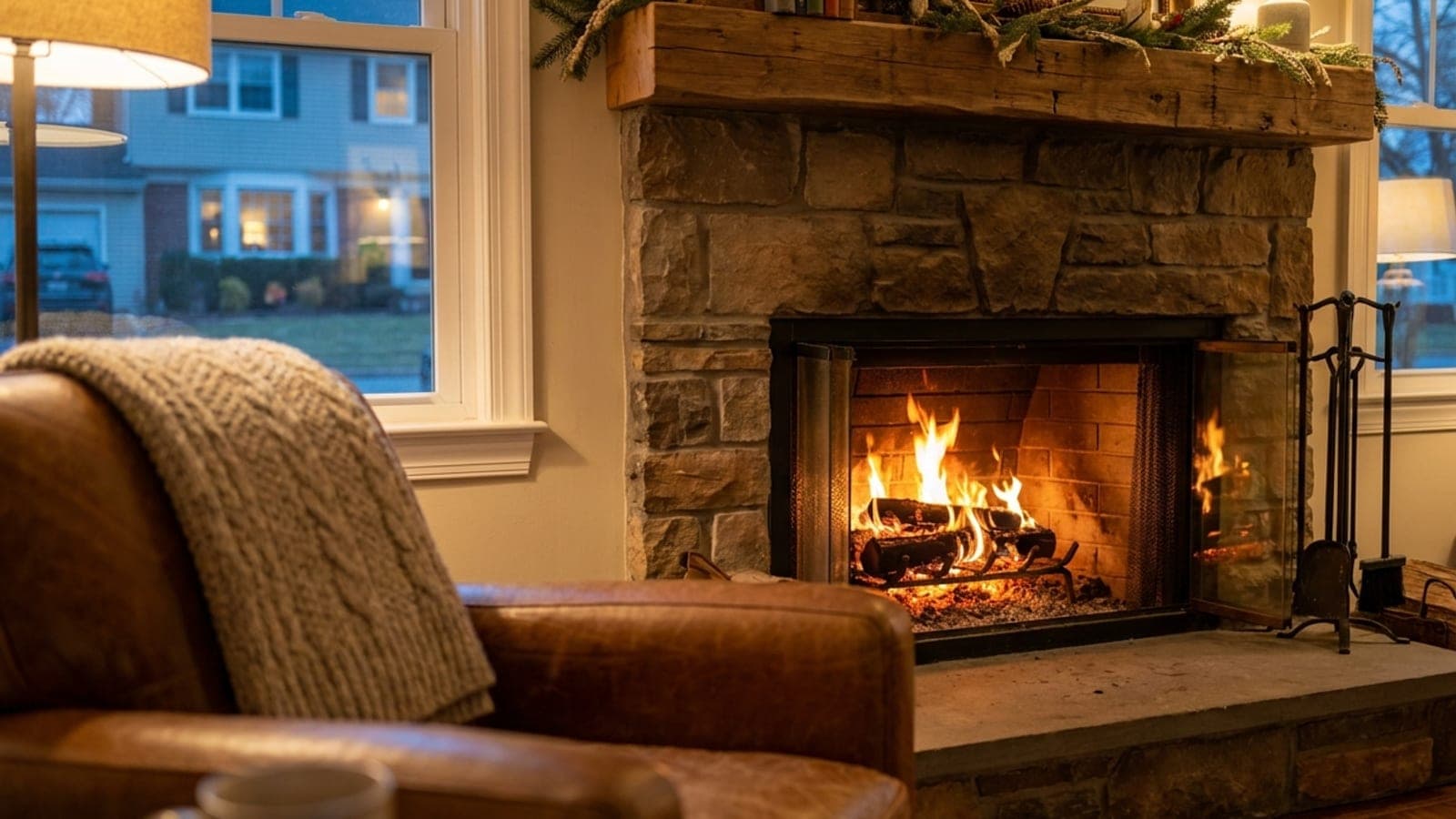
Chimney safety
Your chimney is a fire-and-gas appliance that lives outdoors in salt air and freeze-thaw winters. Here's what actually keeps it safe — in plain English, no scare tactics.
A fireplace feels simple — light a fire, enjoy the warmth. But the chimney behind it is a working safety system. It has to carry flammable creosote and toxic combustion gases up and out of your home, every time you burn. When any part of that path fails — a cracked liner, a clogged flue, a missing cap — the two real risks are a chimney fire and carbon monoxide coming back inside.
On the Jersey Shore those risks arrive faster than most homeowners expect. Salt air corrodes metal and eats mortar; our wet, freezing winters crack masonry from the inside out. The good news: nearly every chimney hazard is predictable and preventable with a yearly check and a few sound repairs. This guide walks through what to watch for and when to bring in a pro.
Start here
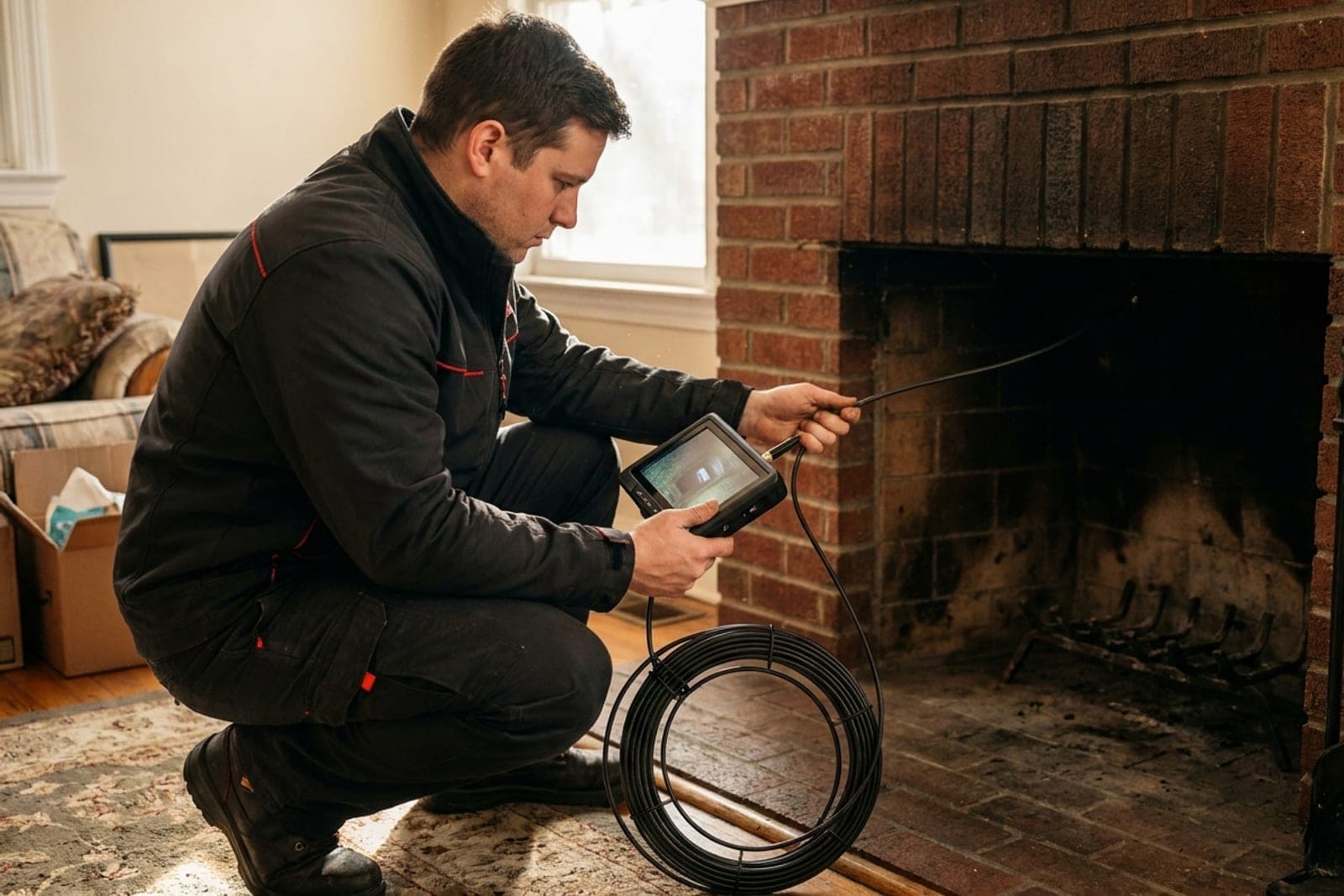
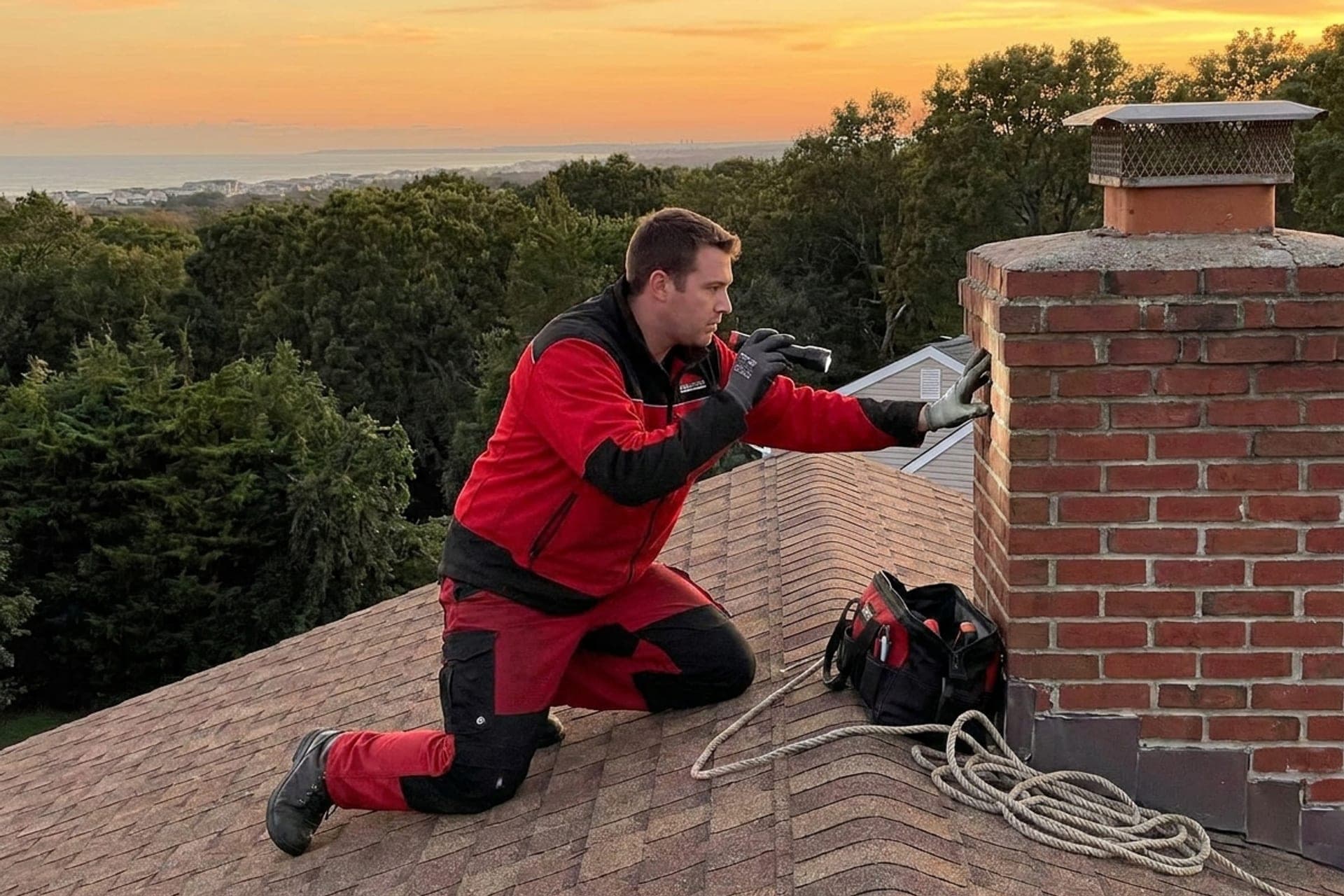
The national fire-safety standard, NFPA 211, recommends that every chimney, fireplace and vent be inspected at least once a year. Most of what fails is hidden — inside the flue, up on the crown, behind the flashing — so a floor-level glance isn't enough. A real chimney inspection uses a camera to walk the entire system and catch small problems before they become expensive or dangerous ones.
An annual check is also the cheapest insurance you'll buy all year: it confirms the flue is clear and the structure is sound before the first cold-weather fire.
The #1 fire risk
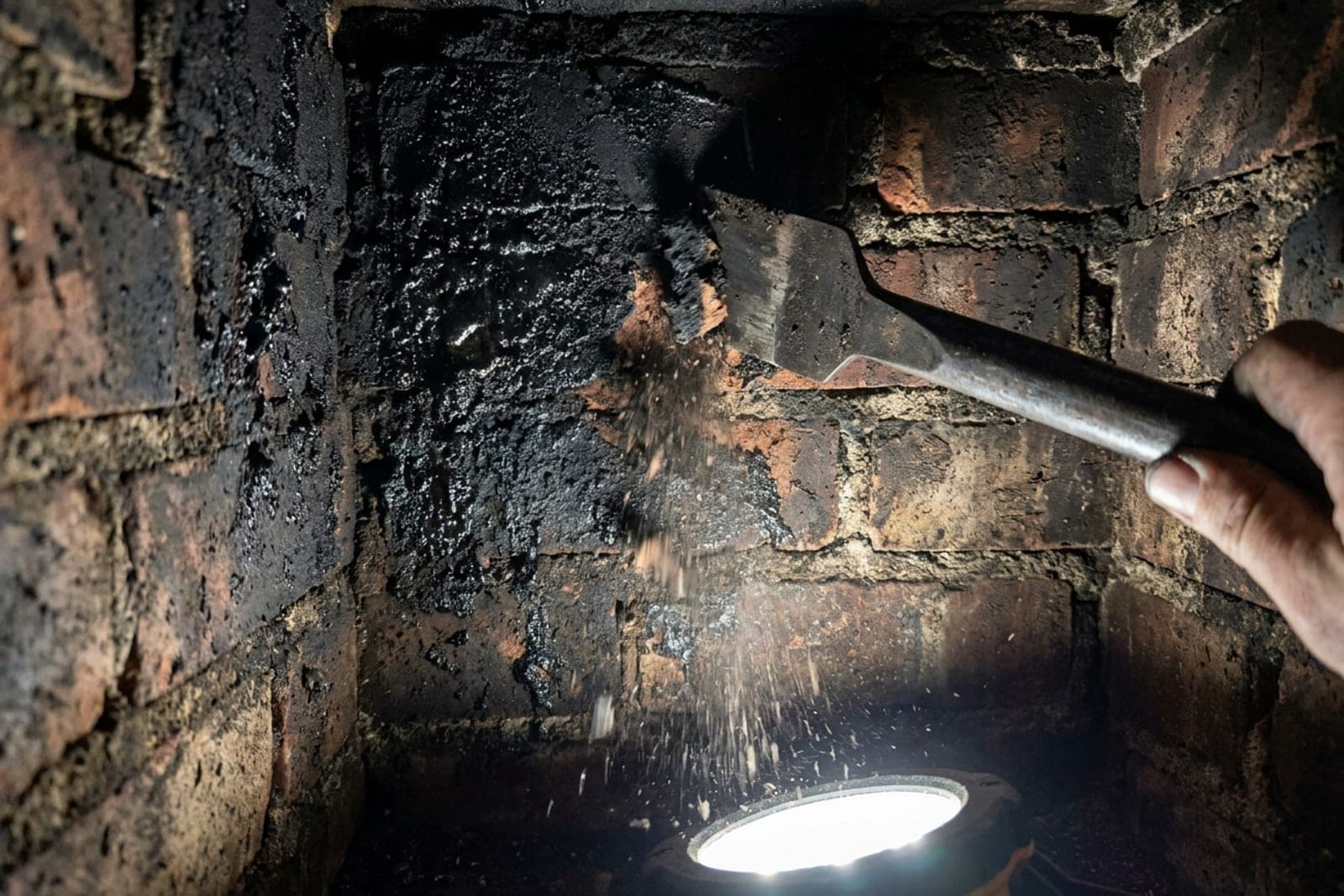
Every time wood smoke cools inside a flue it leaves creosote — a tar-like residue that is highly flammable. It builds in three stages, and the longer it's left, the harder and more dangerous it gets. A glazed Stage 3 layer can ignite into a chimney fire hot enough to crack a liner in minutes.
Burning only seasoned, dry wood slows the buildup, but it never stops it. Regular creosote removal and a routine chimney sweep keep the flue clean and remove the fuel a chimney fire needs.
The invisible risk
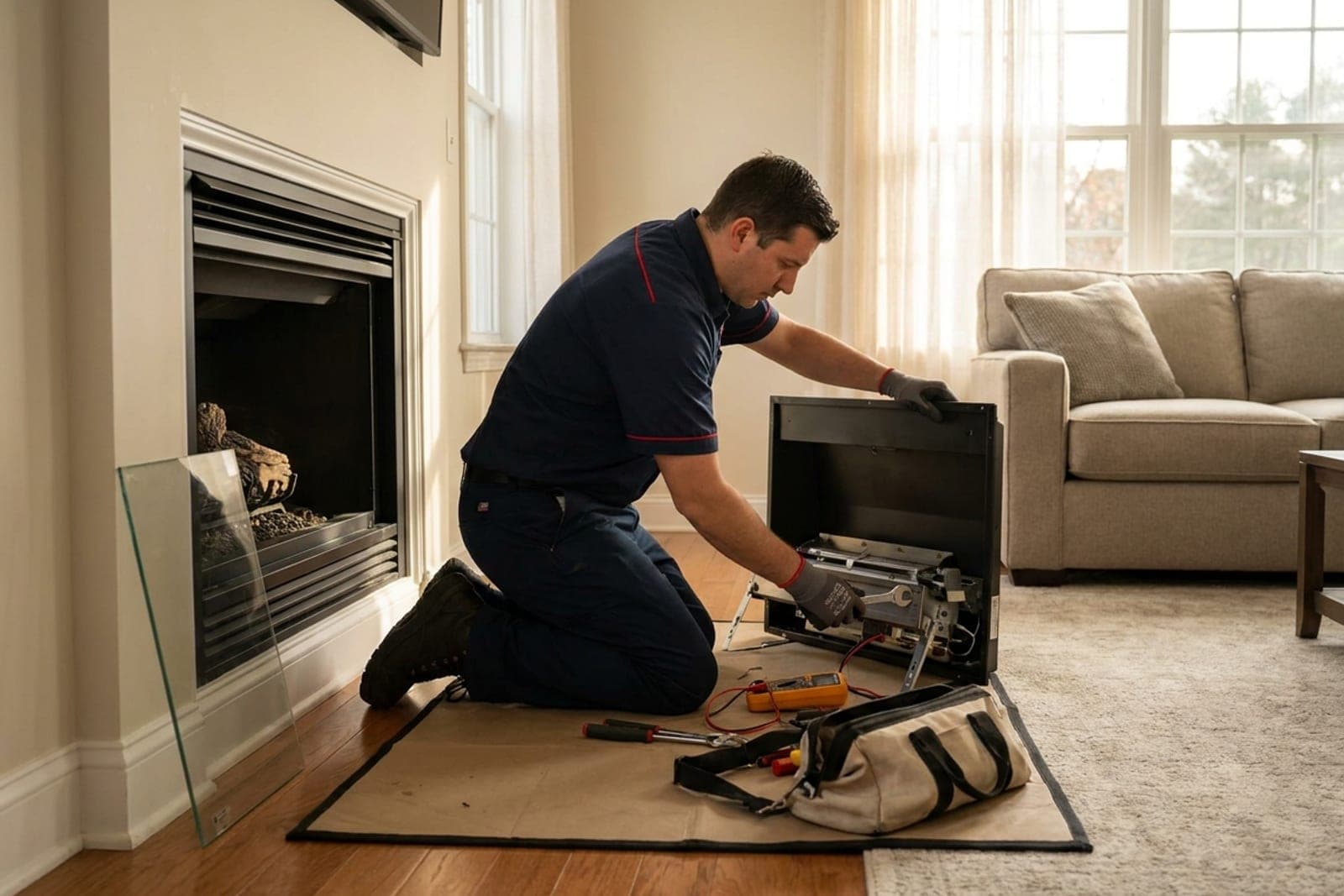
CO is colorless and odorless. A blocked or cracked flue can push it back into your home instead of safely outside — so a sound liner, a clear flue and working CO alarms on every level all matter.
Carbon monoxide, in detail
Any fuel-burning appliance — wood stove, gas fireplace, furnace or water heater that vents through the chimney — produces carbon monoxide as a byproduct. A healthy flue carries that gas up and out. But a flue blocked by a bird's nest, choked with creosote, or cracked so gases leak into a wall cavity can let CO drift back into living space. Because you can't see or smell it, the defenses are layered: a clear, properly sized flue, an intact liner, and a working CO alarm on every floor and near sleeping areas. Test those alarms when you change your clocks, and never run a fuel-burning appliance if you suspect the flue is blocked.
Coastal wear
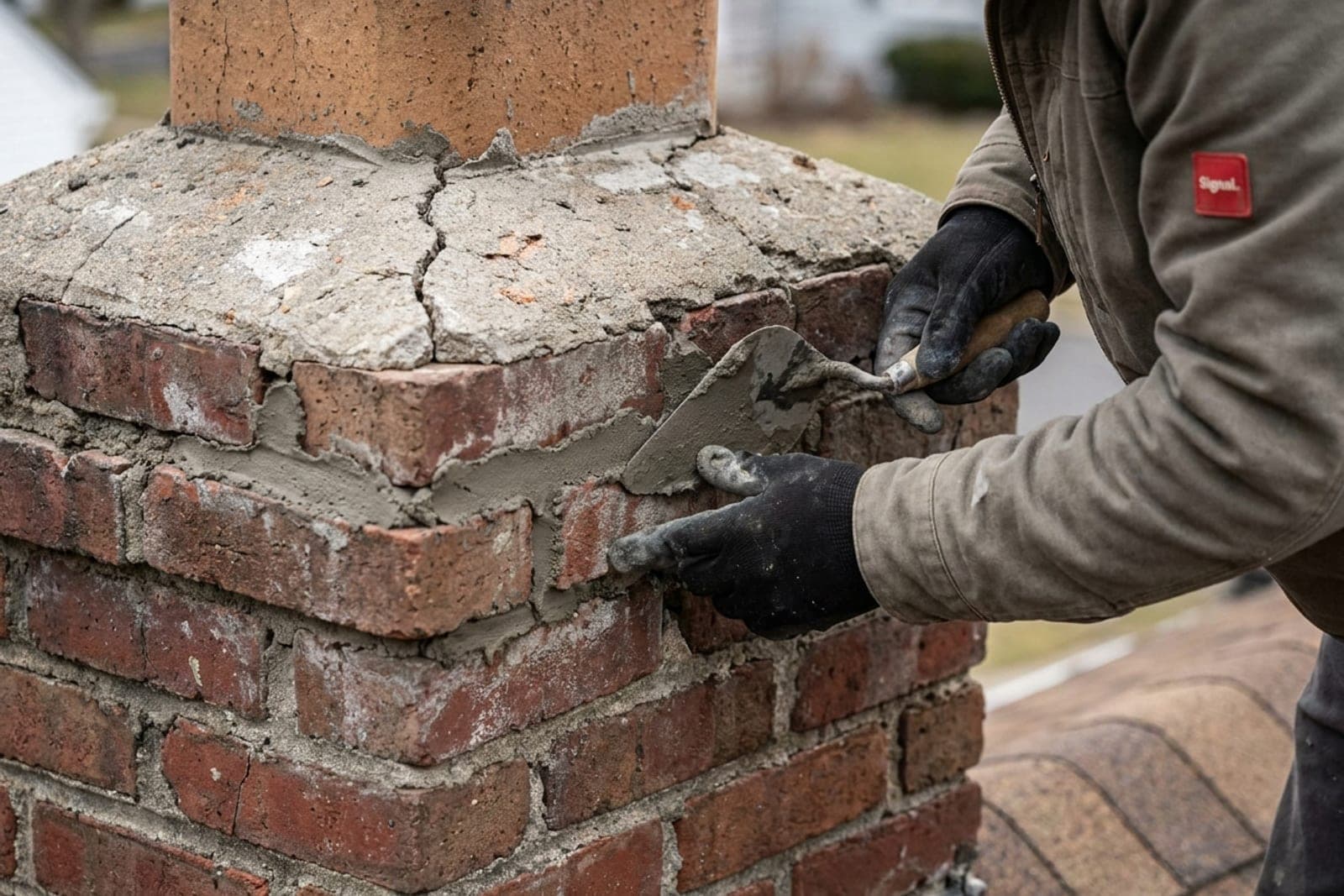
Brick and mortar are porous. When water soaks in and then freezes, it expands and breaks the masonry apart from the inside — the freeze-thaw cycle that defines a New Jersey winter. Near the coast, salt air speeds the decay, attacking mortar and corroding any metal it touches.
Caught early, this is a simple masonry repair — repointing joints or rebuilding a crown. Left alone, water keeps working until it reaches the flue. A breathable waterproofing seal is the most cost-effective way to slow it down.
The flue's last defense
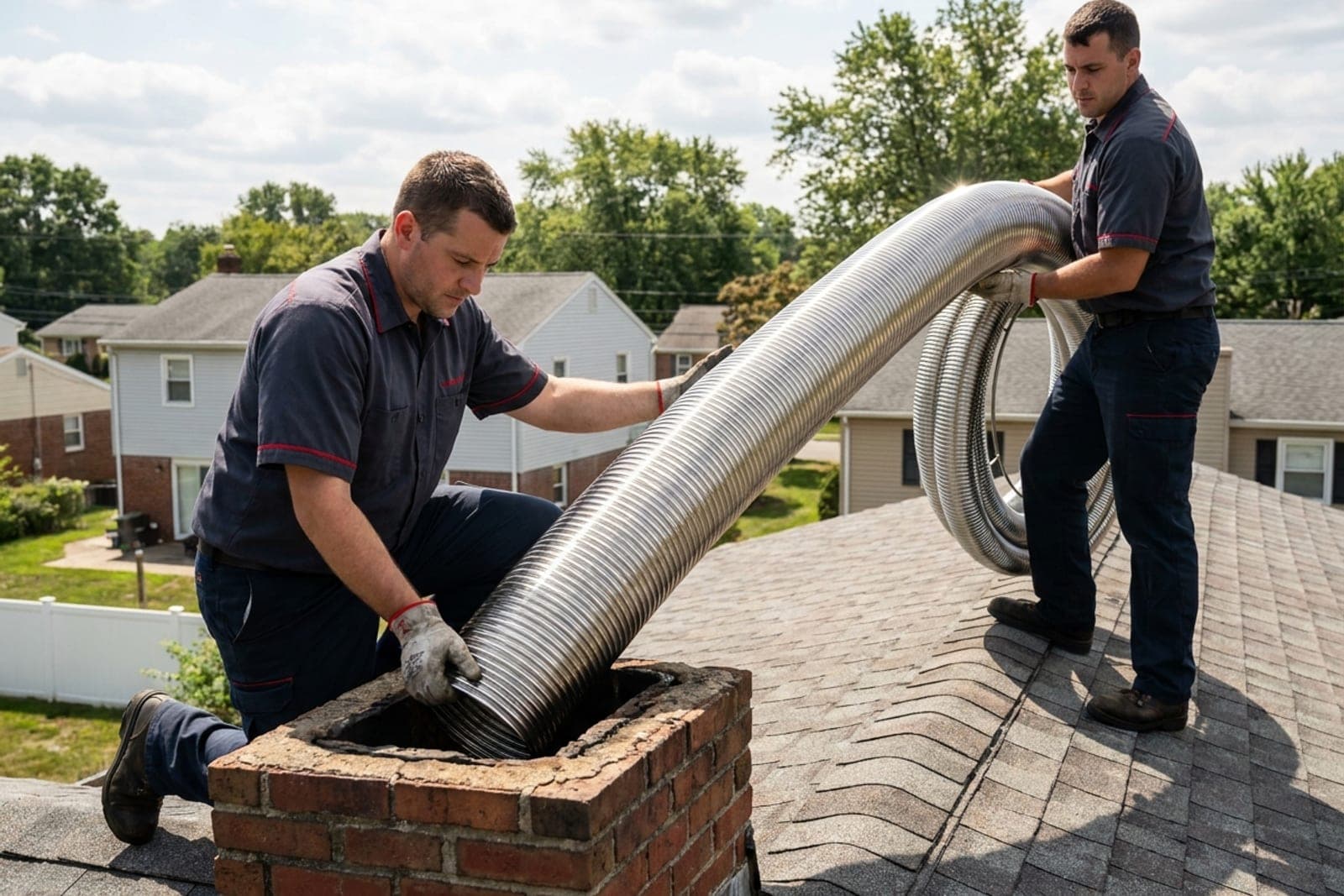
The liner is the sleeve inside your chimney that keeps heat and gases contained. Older clay tile liners crack with age and after a chimney fire; an undersized or deteriorated liner can leak heat toward framing or let combustion gases seep into the home.
A cracked or missing liner isn't a cosmetic issue — it's a safety one. When an inspection finds liner damage, chimney relining with a properly sized stainless liner restores the barrier and the draft.
Keep the weather out
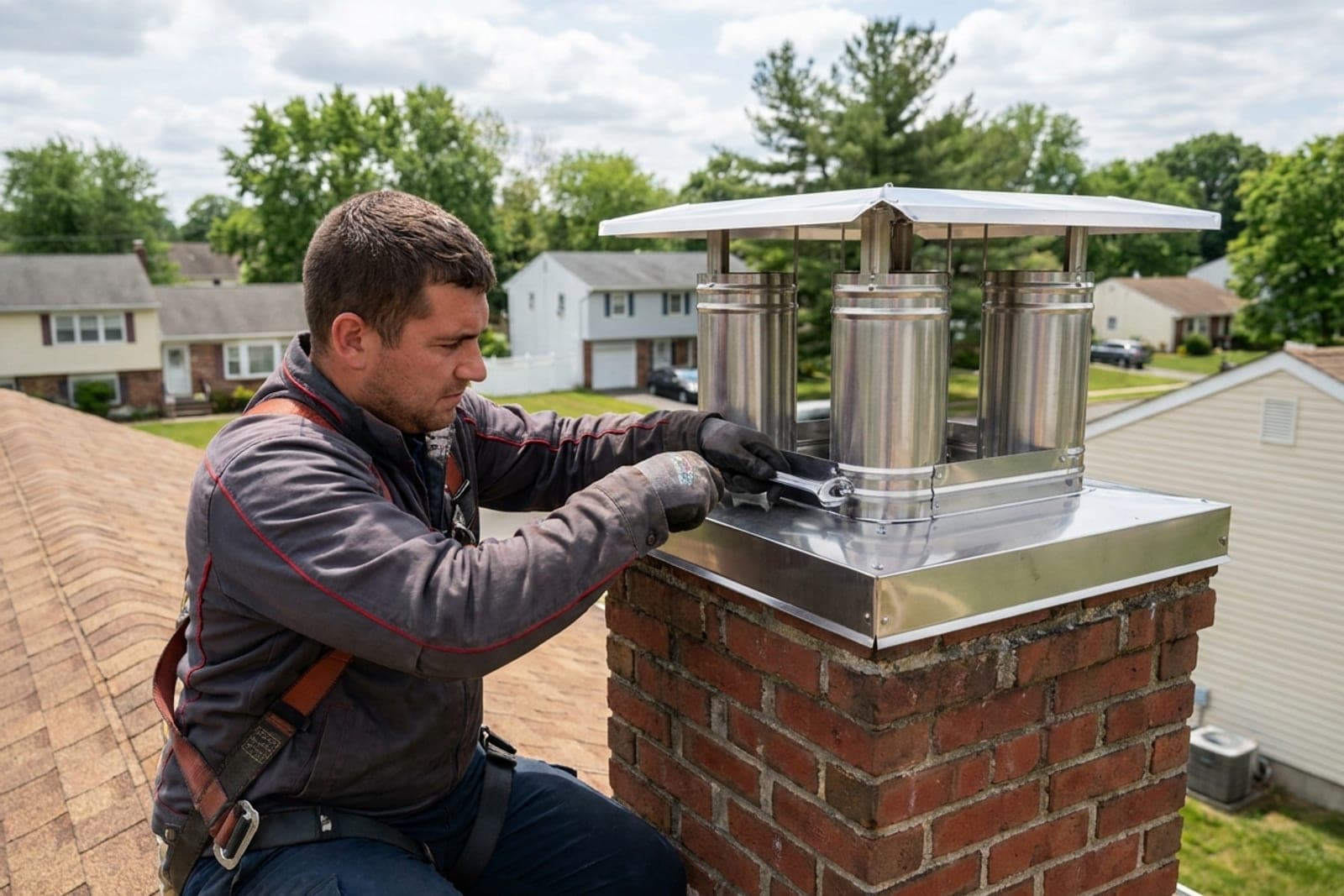
Water is the number-one enemy of a chimney. An open or rusted-out flue lets rain pour straight down onto the liner and damper; failed flashing lets it run into the ceiling and walls around the chimney. A stainless chimney cap also doubles as a spark arrestor and keeps birds and squirrels from nesting in the flue — a common, and dangerous, blockage.
Stay in your lane
A few simple habits keep your home safer between visits. Anything involving the flue, the roof or fuel connections belongs to a trained professional.
Before the first fire
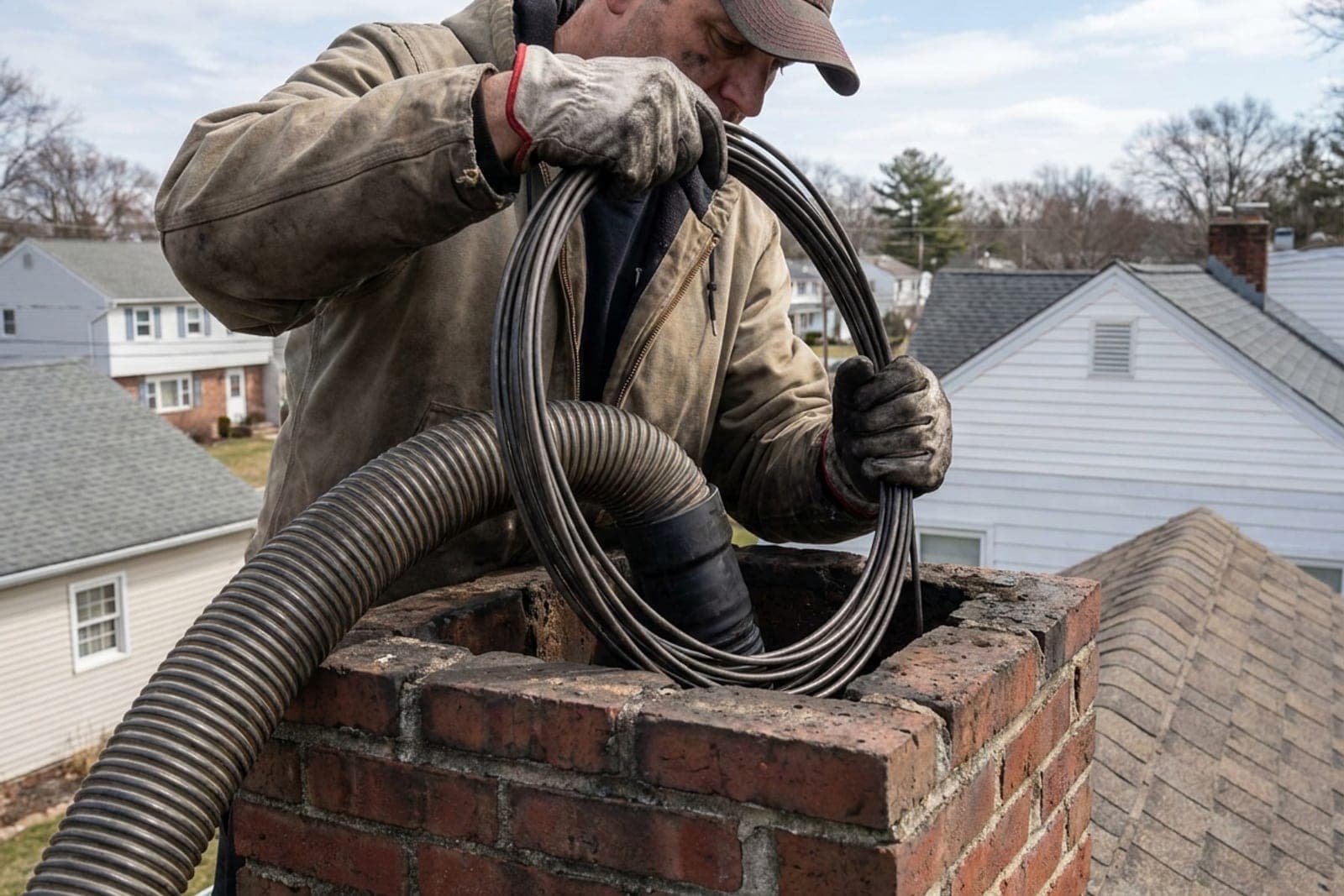
Schedule it in late summer or early fall, before the rush — so any repairs are done before you need to burn.
Remove the season's buildup so the chimney starts winter clean and the draft is strong.
Confirm the cap is intact, the crown isn't cracked, and the flashing is sealed — the three things that keep water out.
Replace batteries and test smoke and carbon-monoxide alarms on every level and near bedrooms.
Stock seasoned, dry hardwood. Wet or green wood smolders, cools fast and lays down creosote quickly.
Keep reading
Practical, no-pressure advice on keeping your chimney safe, efficient and watertight through every Jersey Shore season.
Common questions
Peace of mind starts here
Pick a real open slot on our crew's calendar. Jersey Chimney Pros documents every visit with photos — no payment to book, and you only pay if you approve the work.