As Scott, a chimney safety expert serving Hudson, Essex, Bergen, and Union County, I see firsthand the toll North Jersey's harsh winters take on older masonry chimneys. Protecting your home starts with understanding two critical repairs: chimney crowns and repointing. Neglecting these can lead to significant structural damage and safety hazards.
Why Your North Jersey Chimney Needs Attention
Many homes across Hudson, Essex, Bergen, and Union County boast beautiful, historic architecture – from Victorian multi-families to classic rowhomes. While charming, their chimneys often feature masonry decades, if not a century, old. Originally built for coal-burning furnaces, these flues and their exteriors were engineered for a different era, enduring countless freeze-thaw cycles that slowly degrade mortar and brick.
The conversion from coal to gas heating also changes flue dynamics, potentially altering moisture levels and accelerating wear on older liners and masonry. Coupled with our relentless New Jersey winters, this constant expansion and contraction of moisture within porous materials makes annual chimney maintenance and timely masonry repair absolutely non-negotiable for homeowner safety and structural integrity.
The Vital Role of Your Chimney Crown
Think of your chimney crown as its protective hat. This concrete or stone slab sits atop the chimney stack, directing rainwater away from the flue opening and the sensitive brickwork below. In North Jersey, a cracked or poorly constructed crown is a leading cause of water intrusion into the chimney structure, flue, and even your home's interior.
Common issues we encounter include crowns built from plain mortar (which quickly deteriorates), those with insufficient overhangs, or widespread cracking from age and weather. A proper crown must be cast from durable concrete with appropriate expansion joints, extending beyond the brickwork to effectively shed water. Repairing or replacing a failing crown is a primary defense against costly water damage and further masonry degradation.
Repointing: Strengthening Your Chimney's Structure
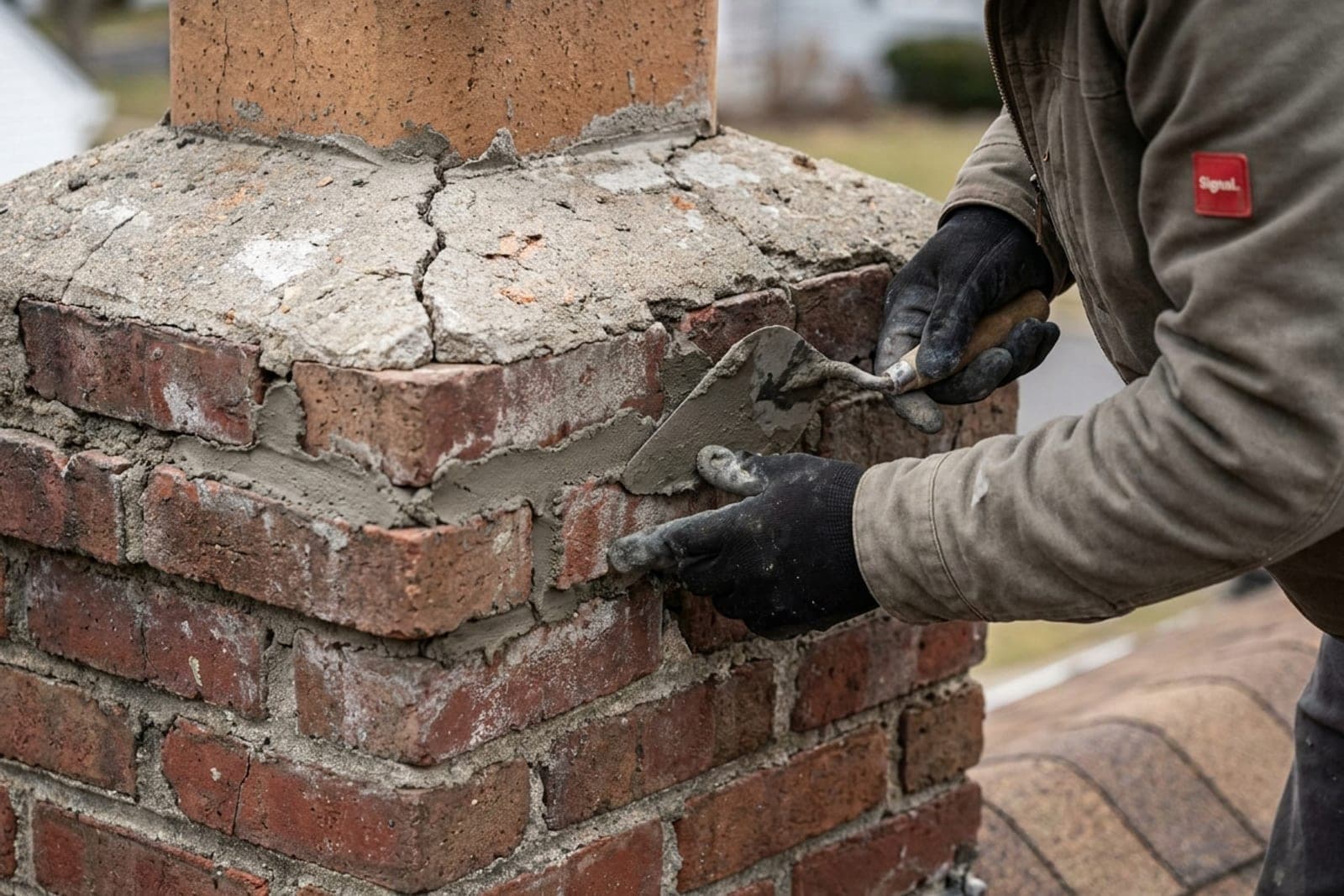
Repointing involves removing deteriorated, crumbling mortar from between bricks and replacing it with fresh, compatible mortar. For older North Jersey homes, the original lime-based mortar often crumbles with age, leaving gaps that allow water to penetrate the chimney's interior. This isn't just an aesthetic issue; compromised mortar joints directly impact the chimney's structural stability.
Effective repointing requires not just skill, but an understanding of historic masonry. Matching the original mortar's composition and strength is crucial to ensure proper curing and prevent damage to softer, older bricks. Improper repointing with overly hard Portland cement can trap moisture, leading to spalling (flaking) of the bricks themselves – a far more expensive problem to rectify.
Spotting Masonry Deterioration: What to Look For
As a homeowner, you can visually inspect for early warning signs from the ground. Look for crumbling or missing mortar joints, especially on the sunny or wind-exposed sides of the chimney. Notice any cracked, chipped, or spalling (flaking) bricks. White powdery residue on the bricks, known as efflorescence, often indicates moisture intrusion.
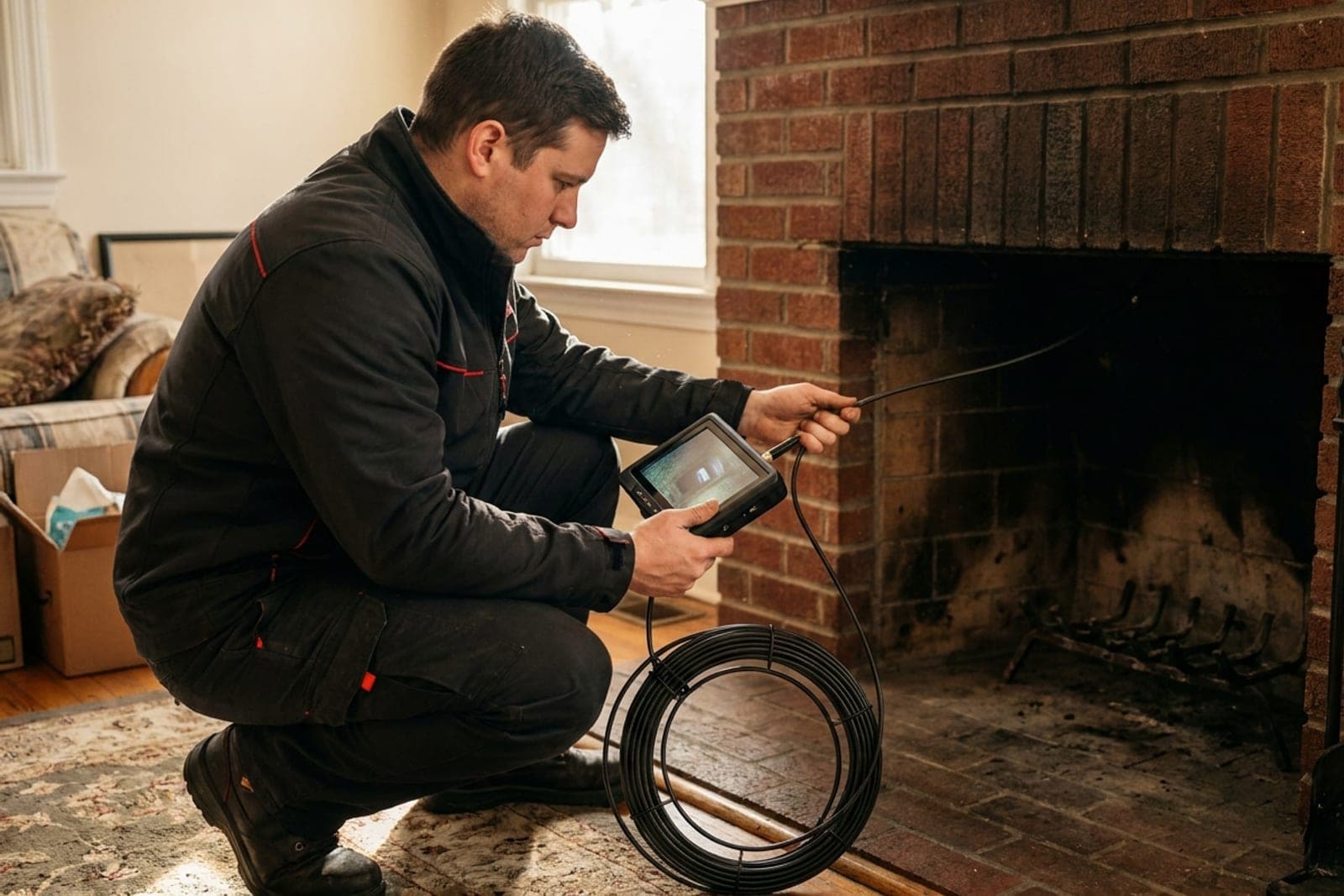
Inside your home, keep an eye out for water stains on the walls or ceiling near the chimney, or unusual drafts around the fireplace. These signs, particularly after heavy rain or snowmelt, signal an urgent need for professional chimney inspection and masonry repair. Addressing these issues promptly can prevent extensive damage and ensure your chimney's safe operation.
Related services