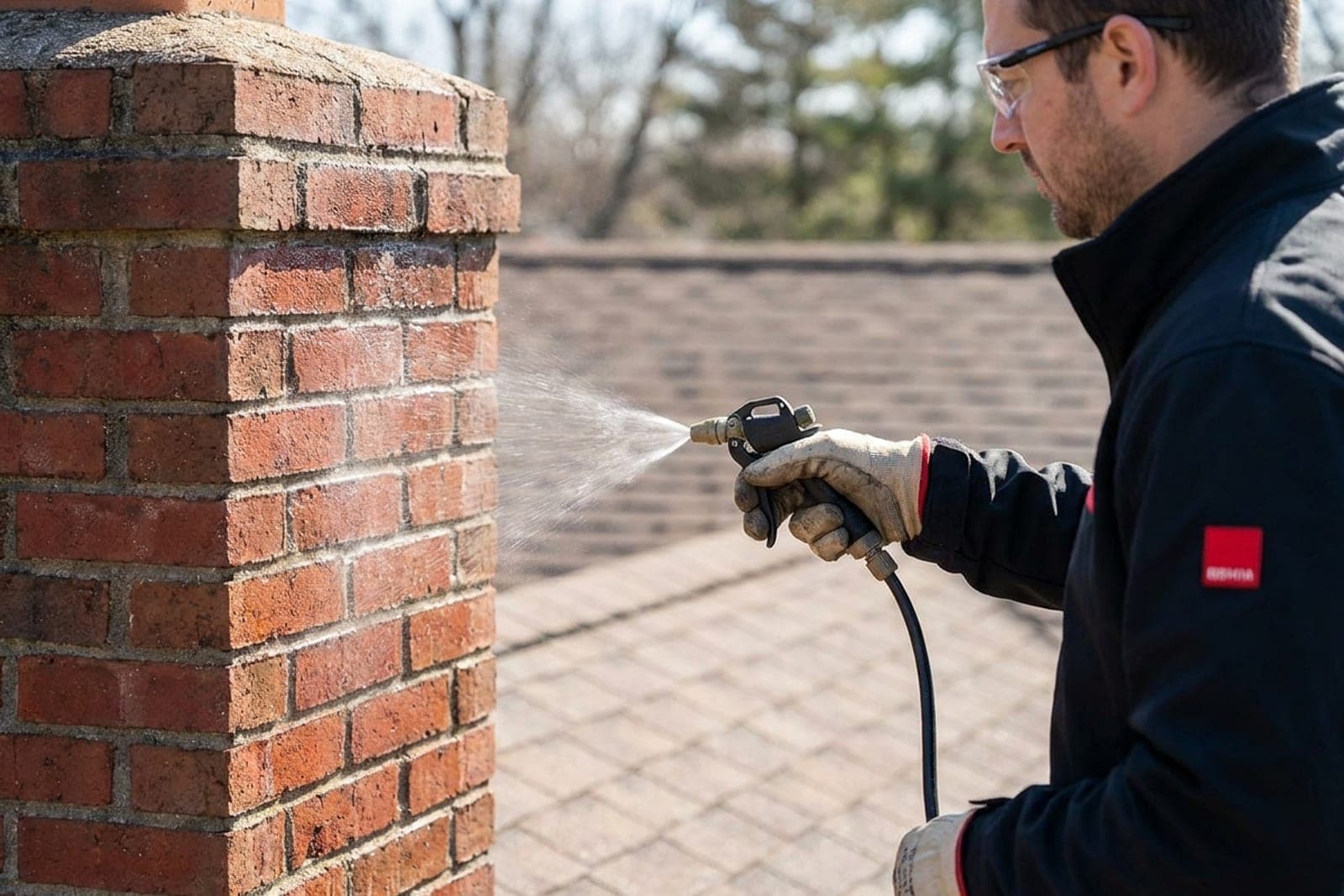
Your chimney stands tall, but for homes in Hudson, Essex, Bergen, and Union County, years of harsh New Jersey winters take their toll. From relentless freeze-thaw cycles to the unique stresses on older, converted flues, your chimney’s masonry is constantly under attack. Ignoring these issues compromises its integrity and, more importantly, your home’s safety.
Why North Jersey Chimneys Need Special Attention
Many of our homes across Bergen, Essex, Union, and Hudson Counties – particularly the charming Victorians and historic rowhomes in areas like Montclair, Hoboken, Summit, and Jersey City – boast chimneys built decades, even a century, ago. These structures were originally designed for coal-burning fireplaces, utilizing specific mortar mixes and flue types. The sheer age of this masonry means it's often past its prime.
Our New Jersey winters are brutal, characterized by frequent freeze-thaw cycles. Water penetrates tiny cracks and porous mortar, freezes, expands, and then thaws, gradually crumbling the masonry from the inside out. This constant expansion and contraction is a primary cause of deterioration in our older, unsealed masonry.
Furthermore, the common conversion from coal to natural gas heating introduces new challenges. Gas exhaust is cooler and more acidic than coal smoke, leading to different forms of condensation and deterioration within the flue. This chemical attack, combined with the structural weaknesses of aging masonry and mortar, accelerates damage not originally anticipated during construction.
The Critical Role of Your Chimney Crown
Often overlooked, the chimney crown is your chimney's first line of defense against the elements. This concrete slab or wash at the top of the chimney is designed to shed water away from the flue opening and the sensitive masonry walls below. A properly constructed crown will extend past the chimney stack by at least two inches, forming a drip edge.
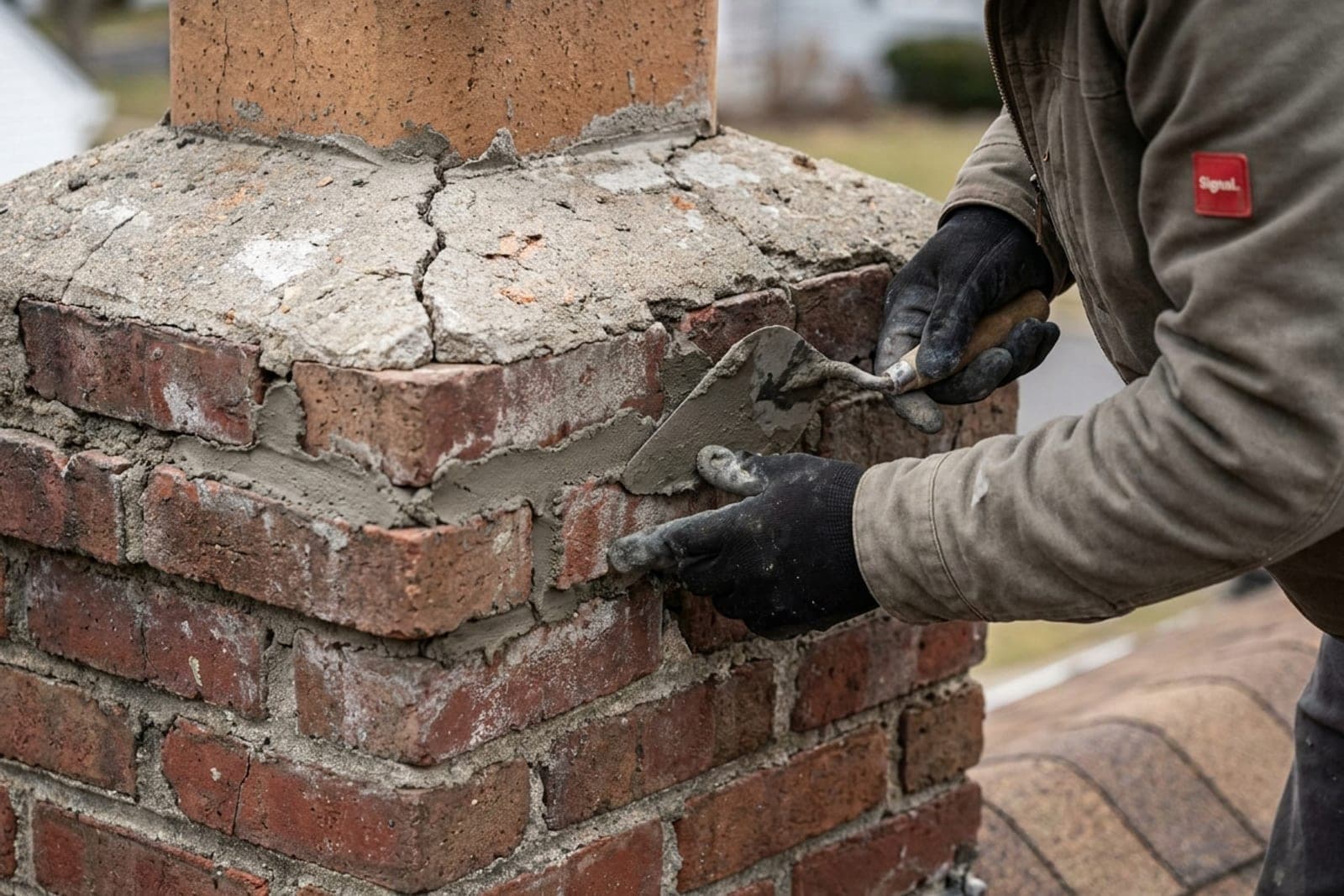
In many older North Jersey homes, we find thin, improperly constructed 'wash' crowns that crack easily. Even well-built crowns can develop cracks over time due to settlement and freeze-thaw cycles. These fissures allow water to penetrate directly into the chimney's interior, causing significant damage to the flue liner, firebox, and even the interior masonry below the crown, leading to costly water leaks inside your home.
Timely crown repair, or even a full crown rebuild, is essential. This often involves removing the deteriorated material and pouring a new, reinforced concrete crown with appropriate overhangs, ensuring proper drainage and long-term protection against New Jersey's weather.
Repointing: Rebuilding the Strength of Your Stack
Repointing, sometimes called tuckpointing, is the process of removing deteriorated mortar from the joints of your chimney's masonry and replacing it with fresh, sound mortar. This isn't just a cosmetic fix; it's a vital structural repair that extends the lifespan of your entire chimney stack by preventing water intrusion and restoring its integrity.
As mortar ages, it becomes brittle and porous. The freeze-thaw cycles common in Hudson, Essex, Bergen, and Union County then cause it to crumble, flake, and fall out. Deteriorated mortar joints compromise the stability of the brickwork, allowing moisture to penetrate deep into the chimney, leading to spalling (the brick surface flaking off) and weakening the structure, making it vulnerable to collapse.
When repointing, it's crucial to use the correct type of mortar. For historic homes, matching the original lime-based mortar's composition and strength is paramount to ensure compatibility and prevent damage to the older, softer bricks. Proper repointing requires skilled masons who understand these nuances, ensuring a durable bond and a chimney that can withstand decades more of North Jersey weather.
When to Inspect and Who to Trust
As a homeowner, look for tell-tale signs of masonry distress: crumbling or missing mortar between bricks, visible cracks in the chimney crown, white powdery residue (efflorescence) on the brickwork, or spalling bricks where the face has flaked off. Any of these indicators mean your chimney needs professional attention. We recommend annual chimney inspections, especially for older homes and those with converted flues, to catch issues early.
Chimney masonry repair is not a DIY task, nor is it a job for just any general contractor. It requires specialized knowledge of chimney construction, flue systems, and local building codes, especially given the unique challenges of North Jersey's historic housing stock. Choose a certified chimney professional with experience in masonry repair, crown rebuilding, and repointing to ensure your chimney is restored safely and correctly.
Related services