Hi, I'm Scott, a chimney safety expert familiar with North Jersey's unique housing challenges. From historic Victorians in Bergen County to classic rowhomes in Union, your chimney faces relentless assault from our freeze-thaw winters. Water intrusion is a silent destroyer, weakening masonry and leading to expensive repairs if left unchecked.
The North Jersey Challenge: Why Waterproofing is Critical Here
In Hudson County's bustling rowhomes or Bergen's grand Victorians, your chimney often dates back a century or more. This older masonry, while robust, is inherently more porous than modern brick. Our notorious North Jersey winters, with their endless freeze-thaw cycles, exploit this porosity. Water seeps in during a thaw, freezes and expands, then thaws again, causing microscopic damage that accumulates over seasons.
Many homes in Essex and Union County also feature chimneys originally built for coal. While updated with gas liners, the exterior masonry remains exposed. Without a proper water repellent, this exterior brick and mortar continually absorb moisture, degrading its integrity and creating pathways for water to reach even properly lined flues over time.
What Water Damage Looks Like (and Costs You)
The first signs are subtle: efflorescence, that white powdery stain on your brick, indicates salts being pushed out by migrating moisture. Left untreated, you'll see spalling – brick faces flaking or popping off – and deteriorating mortar joints, especially common on the exposed upper portions of older chimneys.
Inside, water can lead to musty odors, stained walls near the chimney chase, or even compromised flue liners. For those with coal-to-gas conversions, water damage can accelerate the breakdown of even good liners, as they become exposed to corrosive byproducts and external moisture, leading to costly and critical repairs.
Beyond Sealant: What Effective Waterproofing Involves
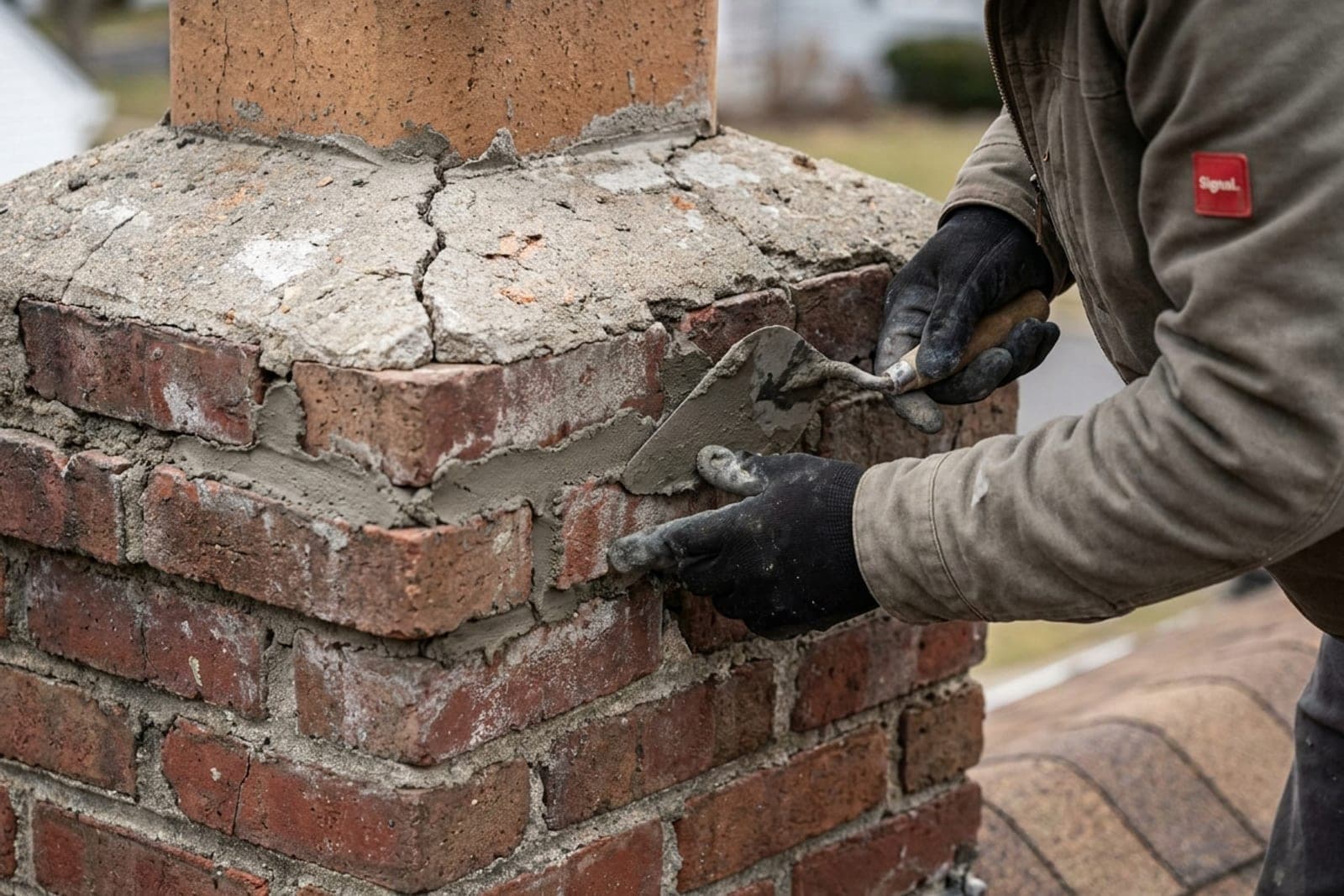
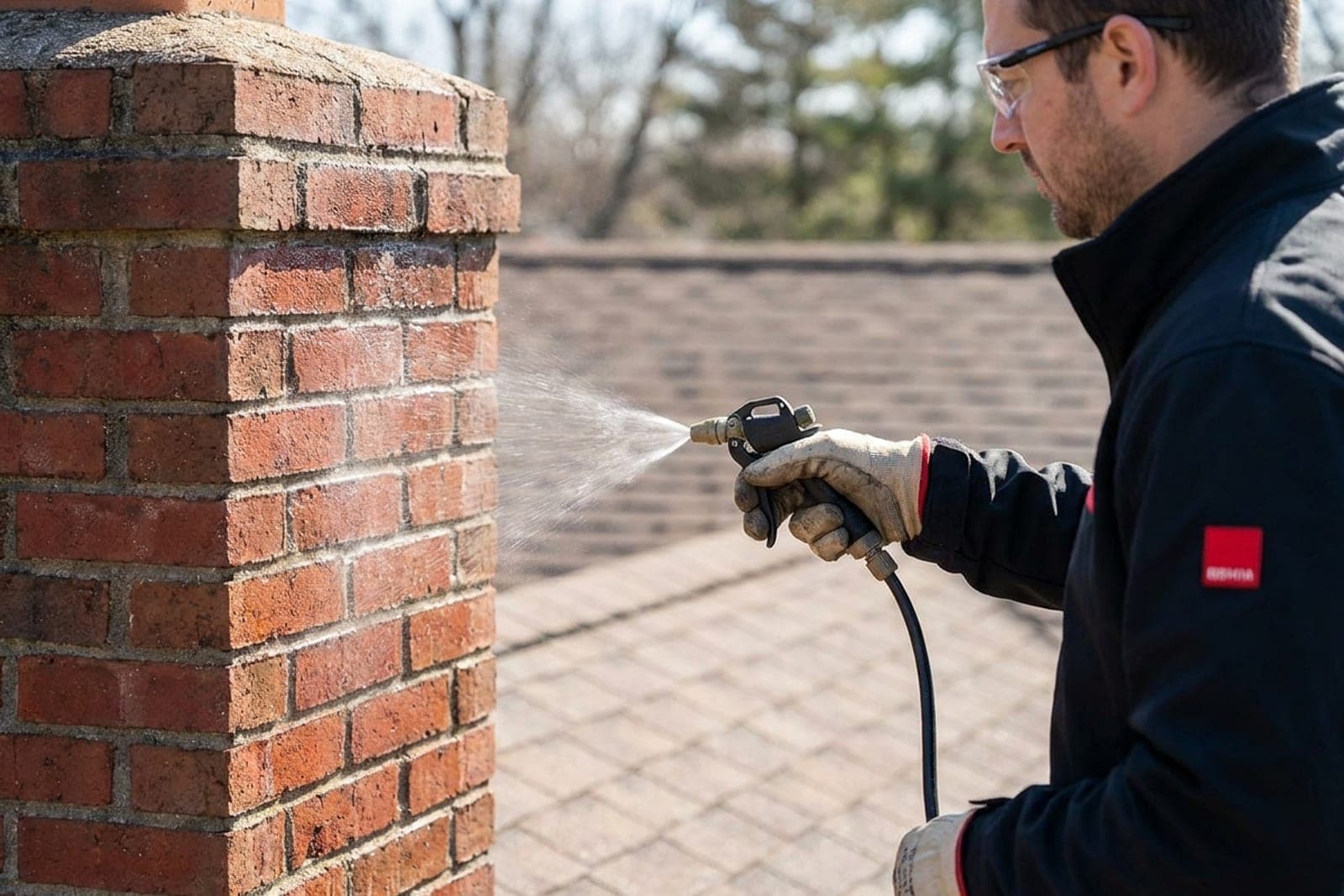
True chimney waterproofing isn't just spraying on a paint-like sealant. It starts with a thorough inspection to identify and repair existing issues: tuckpointing deteriorated mortar, repairing cracks in the crown, and addressing faulty flashing where the chimney meets the roof. Only after these structural repairs are made can we apply a high-quality, breathable water repellent.
Breathable repellents are key for older masonry in Bergen and Union Counties. Unlike cheap sealers that trap moisture inside the brick, these products allow the chimney to 'breathe out' any absorbed moisture while preventing new water from penetrating. This protects the masonry from future freeze-thaw damage without accelerating internal issues.
The Benefits: Long-Term Protection for Your Investment
Investing in professional chimney waterproofing extends the life of your chimney, a vital structural component of your North Jersey home. You prevent costly masonry rebuilds, safeguard your flue liner, and protect your home's interior from leaks and structural compromise. It's an essential maintenance step, especially for the historic homes common across Hudson, Essex, Bergen, and Union Counties, ensuring their longevity and preserving their value.
Related services