As Scott, a chimney safety expert serving Hudson, Essex, Bergen, and Union County, I see firsthand the unique challenges our historic homes face. One of the most critical, yet often overlooked, is creosote buildup – a silent fire hazard in your chimney.
Understanding Creosote in North Jersey's Historic Homes
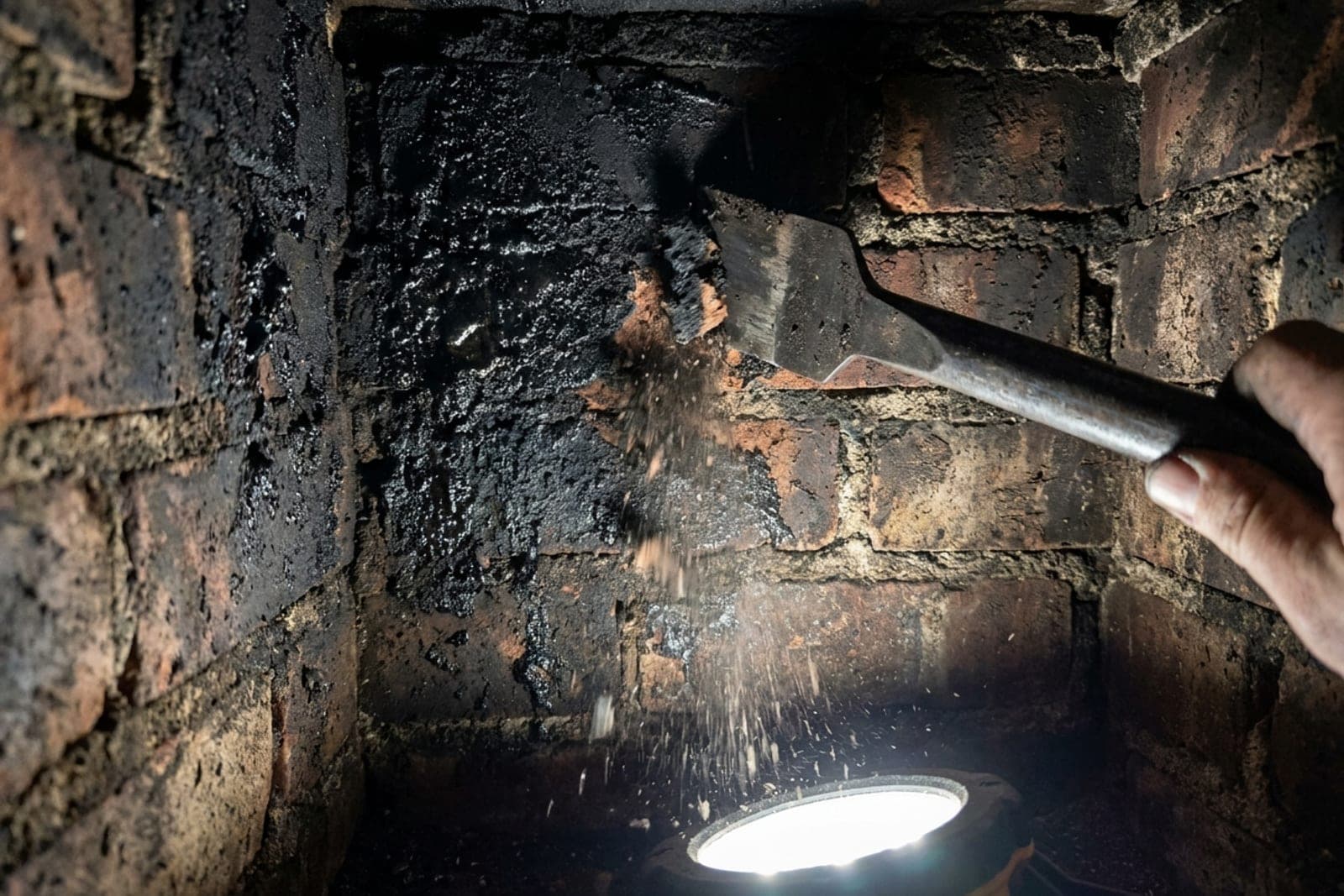
Creosote is a highly flammable residue that forms inside your chimney flue from incomplete combustion. Depending on the conditions of your fire and flue, it can appear as a flaky soot, a crunchy deposit, or most dangerously, a thick, tar-like glaze. All forms are combustible, but glazed creosote is particularly difficult to remove and poses the highest fire risk.
For homeowners in our area with historic Victorian homes, classic rowhomes, or other older masonry structures, creosote is a specific concern. These chimneys often have less efficient designs, wider flues, or may lack modern liners, all of which contribute to less complete combustion and accelerated creosote accumulation. Our long, cold winters also mean more frequent and sometimes less-than-ideal burning habits, exacerbating the problem.
The Freeze-Thaw Cycle & Your Chimney's Vulnerability
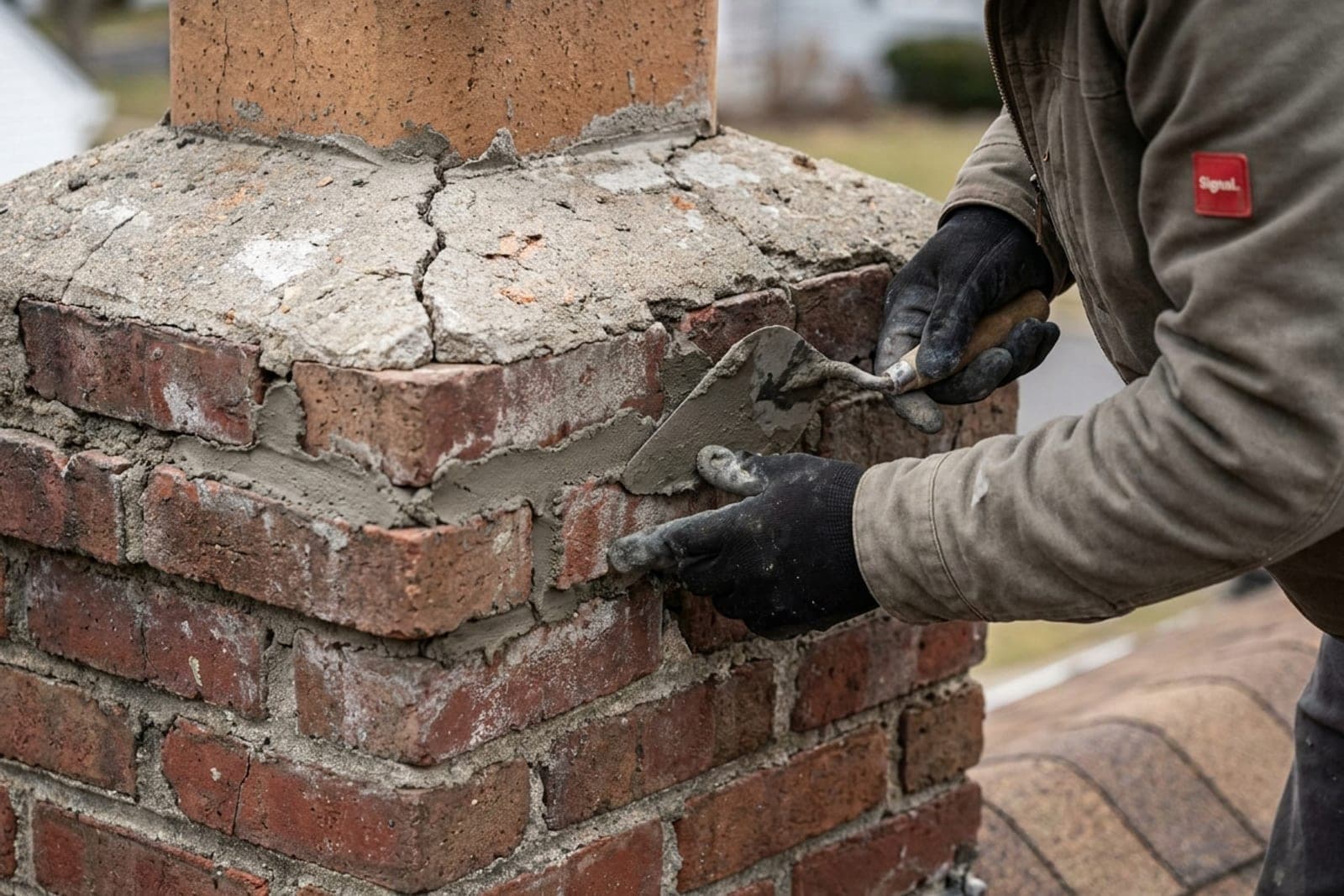
North Jersey winters are notoriously harsh, characterized by extreme temperature swings and persistent moisture. This relentless freeze-thaw cycle takes a significant toll on masonry chimneys. Water seeps into cracks in mortar and bricks, freezes, expands, and then thaws, slowly but surely deteriorating the structure and any existing flue liner.
As your chimney’s interior degrades, surfaces become rougher and more porous. This provides even more anchor points for creosote to adhere, making accumulation faster and removal significantly more challenging. This cycle often leads to water intrusion issues – a common sight in our older brickwork – further complicating chimney maintenance and overall safety.
From Coal to Gas: Hidden Dangers in Converted Flues
Many homes in Hudson, Essex, Bergen, and Union County were originally designed to burn coal, a fuel that leaves behind substantial and stubborn deposits. While most of these homes have long since converted to natural gas, the original coal-era creosote or other residues may still linger within the flue, often unseen.
Furthermore, gas appliance exhaust is cooler and contains more water vapor and acidic byproducts compared to wood or coal. This cooler, moisture-laden exhaust can condense inside an old, unlined, or oversized flue, reactivating old creosote deposits or causing new deterioration. For rowhomes where flues are shared or run closely, these issues can sometimes impact neighboring properties or create complex ventilation challenges.
Why Professional Creosote Removal Isn't Optional Here
While a standard chimney sweep can remove light, flaky soot, it's often insufficient for the thick, glazed creosote prevalent in older North Jersey chimneys. Professional creosote removal employs specialized tools like rotary power cleaning systems, specialized brushes, and even chemical treatments designed to break down and safely remove hardened deposits. Attempting DIY removal, especially with glazed creosote, is not only ineffective but can also damage your flue.
Beyond simply cleaning, a professional assessment includes a thorough inspection for structural damage. Given the age and history of our housing stock – including the impacts of freeze-thaw and fuel conversions – identifying hidden cracks, deteriorating mortar, or compromised liners is crucial. Annual inspections and professional creosote removal are non-negotiable for ensuring the safety and longevity of your home's heating system.
Related services