
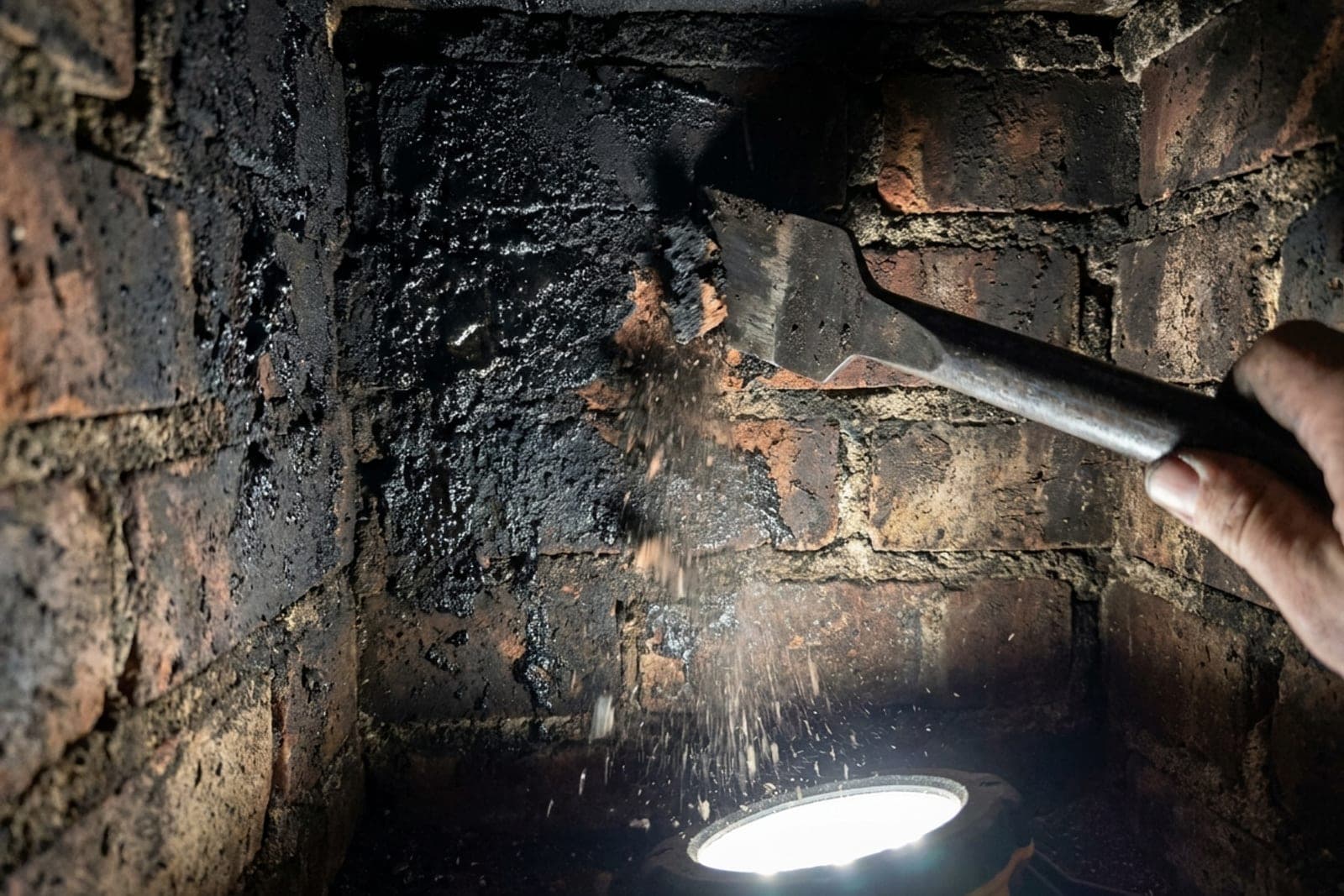
As a chimney safety expert, I regularly see the hazardous impact of creosote in Ocean & Monmouth County homes. This tar-like residue is a ticking fire bomb in your chimney, especially vulnerable given our unique coastal weather patterns and often older housing stock. Understanding creosote and its removal is not just maintenance; it's a critical safety measure for your family.
What is Creosote and Why Our NJ Climate Matters
Creosote is a highly flammable, tar-like byproduct of burning wood. It forms inside your chimney flue as unburnt gases and particles condense. Depending on factors like wood type, burning temperature, and chimney draft, creosote can appear as a powdery soot, a crunchy deposit, or, most dangerously, a hard, glazed, and highly combustible coating.
In our Ocean & Monmouth County environment, cold, damp conditions common during harsh freeze-thaw winters can exacerbate creosote formation by cooling flue gases too quickly. Older shore homes, often with less efficient fireplaces or masonry systems susceptible to moisture intrusion and salt-air corrosion, can further contribute to incomplete combustion and accelerated creosote buildup. This becomes a significant concern when Nor'easters drive moisture deep into chimney structures.
The Real Dangers: More Than Just a Chimney Fire
The most immediate danger of creosote is a chimney fire. These can range from slow-burning fires that may go unnoticed but cause significant structural damage to intense, roaring infernos that can spread rapidly to your home. Even small, undetected chimney fires weaken the flue liner and surrounding masonry, making subsequent fires more likely and more dangerous, especially in the older, less robust chimneys found along our coast.
Beyond fire, creosote can obstruct your chimney's flue, preventing the safe escape of smoke and hazardous gases like carbon monoxide (CO). During winter power outages common with Nor'easters, many homeowners rely on their fireplaces for heat. If your chimney is compromised by creosote buildup, you're not only risking a fire but also potentially exposing your family to lethal CO poisoning.
When & Why You Need Professional Creosote Removal
The Chimney Safety Institute of America (CSIA) recommends annual chimney inspections, and often, cleaning and creosote removal are performed during this service. However, for homes that use their fireplace frequently, particularly during our long, cold winters, or those burning unseasoned wood, more frequent cleaning might be necessary. Glazed creosote, in particular, cannot be effectively removed with standard chimney brushes.
Professional creosote removal utilizes specialized tools, rotary brushes, and often chemical treatments designed to break down hardened creosote. A certified chimney sweep can also identify critical issues unique to our region, such as damage from salt-air corrosion, freeze-thaw cycles, or Nor'easter impacts, which could compromise the chimney's integrity and affect its ability to draft safely. This expertise is vital for maintaining safety in an older, coastal home.
| Service | Cost | Details |
|---|---|---|
| Chimney Inspection | $149 | Annual safety and condition check |
| Creosote Removal | from $200 | Professional removal of hazardous deposits |
| Inspection Credit | See Details | $149 credited to job if work proceeds |
Local Factors Impacting Creosote in Ocean & Monmouth
Our local environment presents unique challenges. Many older shore homes feature large, sometimes open, fireplaces that can be less efficient, leading to lower flue temperatures and increased creosote. The consistent exposure to salt-laden air can accelerate the degradation of mortar and bricks, allowing moisture intrusion that complicates creosote adherence and removal. Furthermore, high winds from Nor'easters can sometimes force debris into chimneys, creating blockages that worsen draft and creosote formation.
Another factor is the common practice of burning easily accessible or 'found' wood, which is often unseasoned and high in moisture content. Burning wet wood significantly increases creosote production compared to dry, seasoned hardwood. These collective factors underscore why a proactive and professional approach to creosote removal is not a luxury, but a necessity for homeowners in Ocean & Monmouth County.
Common questions
- How often should I have my chimney inspected and cleaned in Ocean & Monmouth County?
- The CSIA recommends an annual chimney inspection. Depending on how frequently you use your fireplace, the type of wood you burn, and our local coastal weather conditions, cleaning and creosote removal might be necessary more often than once a year to ensure safety.
- What exactly is glazed creosote, and why is it so dangerous?
- Glazed creosote is a hard, shiny, and highly combustible form of creosote that results from incomplete combustion and low flue temperatures. It's the most dangerous type because it's extremely flammable, adheres stubbornly to the flue, and is very difficult to remove without specialized tools, posing a significant fire risk.
- Can I remove creosote myself to save money?
- Attempting DIY creosote removal, especially for glazed or dense deposits, is generally not effective or safe. Professional chimney sweeps have the specialized tools, training, and experience to safely and thoroughly remove all types of creosote without damaging your flue, which is critical for preventing chimney fires.
- How do Ocean & Monmouth County's unique coastal factors impact creosote buildup?
- Our coastal environment, with its damp air, can lead to cooler flue temperatures and increased condensation, which accelerates creosote formation. Older shore homes often have less efficient fireplaces and masonry degraded by salt air, further complicating safe creosote adherence and removal.
- How much does professional creosote removal cost?
- Professional creosote removal services start from $200. This cost is separate from our $149 on-site inspection fee, though the inspection fee is credited against the total cost if you decide to proceed with the creosote removal work after the assessment.