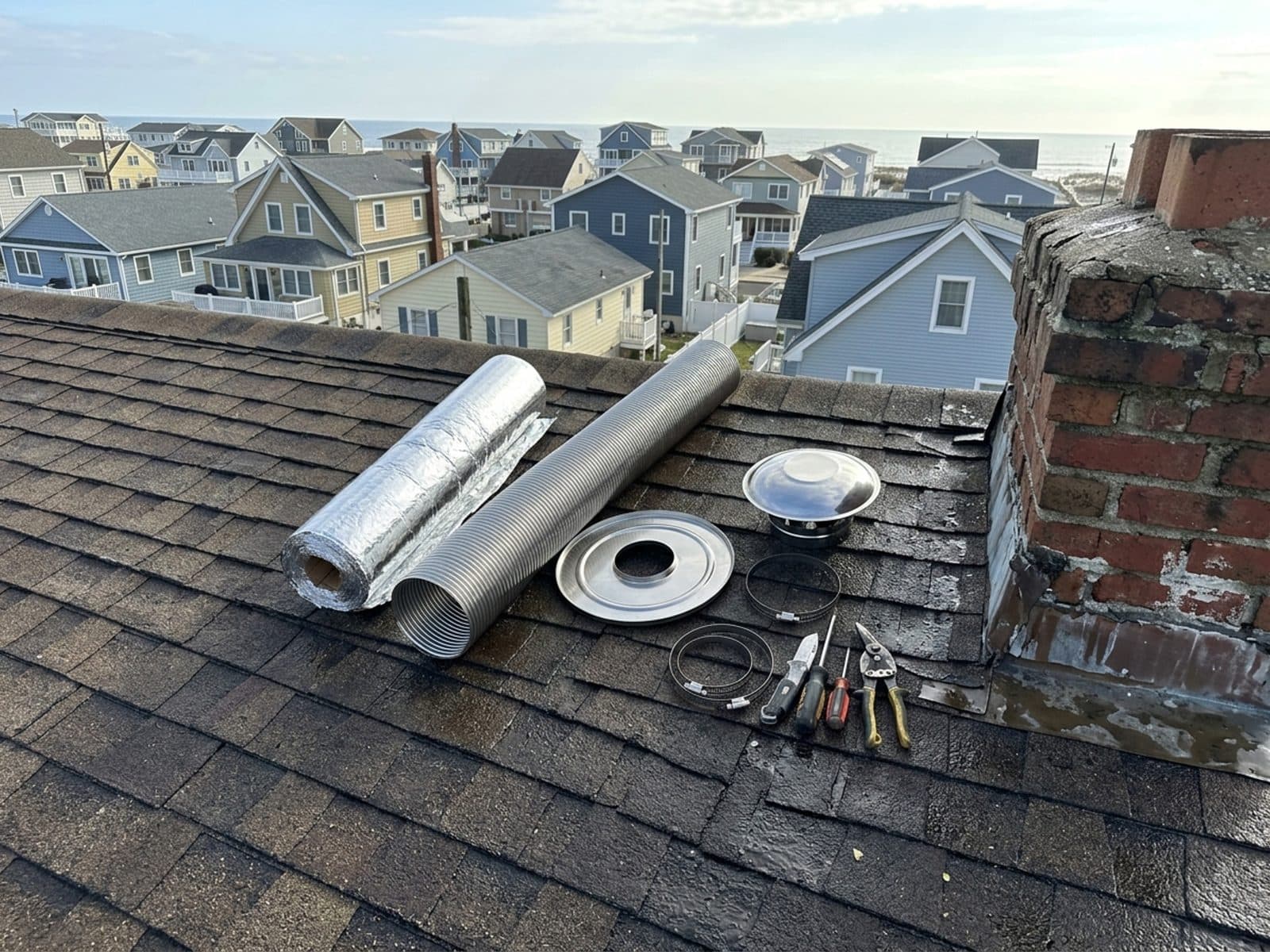
While national averages for chimney liner installation can range from $60 to $200 per linear foot depending on material and complexity, a complete chimney relining job from us starts from $1,500 here in Ocean & Monmouth County, New Jersey. The total cost depends on factors like the liner material, diameter, and the overall complexity of your chimney system.
Different Chimney Liner Materials and Their Costs
The type of liner you need significantly impacts the cost and its suitability for your appliance. Flexible stainless steel liners are very common. Type 316 stainless steel offers superior corrosion resistance, making it ideal for wood-burning appliances and high-efficiency furnaces, and it’s a more durable choice for the varied weather conditions we see on the Shore. Type 304 stainless steel is generally less expensive but suitable for most gas and oil furnaces where corrosion is less of a concern. Aluminum liners are the least expensive option but are strictly for certain gas appliances only; using them for anything else is a fire hazard and not up to code. For masonry chimneys that need significant structural reinforcement, a cast-in-place liner can be formed inside the flue, offering excellent durability but at a higher cost and longer installation time.
Why Liner Diameter is Crucial for Safety and Performance
The diameter of your new chimney liner is not a matter of choice; it's determined by the heating appliance it serves. Furnaces, water heaters, wood stoves, and fireplaces each have specific venting requirements dictated by their manufacturer and fuel type. We always size the liner according to these specifications to ensure proper draft and safe operation. An undersized liner can restrict exhaust flow, leading to dangerous carbon monoxide buildup, while an oversized liner can cause the exhaust gases to cool too quickly. When gases cool too rapidly, they slow down, reducing the draft and causing condensation and creosote buildup, which significantly increases fire risk and can damage the chimney structure over time. Proper sizing ensures efficient combustion and a safe home.
Factors That Influence Your Chimney Relining Investment
While a full chimney relining job starts from $1,500, several factors can push the cost up or down within the overall range. The length of the chimney flue directly impacts material and labor costs. Taller chimneys or those with difficult access will naturally be more expensive. The type of liner material, as discussed, plays a major role; stainless steel is more costly than aluminum, and cast-in-place options are often the most expensive. If your chimney requires significant preparation work, such as clearing heavy creosote buildup or repairing interior masonry damage before the liner can be installed, this will add to the total cost. The complexity of the installation, for instance, navigating tight spaces or unusual chimney configurations, can also increase labor time and thus the price. To get an accurate estimate tailored to your home, we offer an on-site inspection for $99 plus tax, deducted in full from your quote if you approve the work.
| Factor | Impact on Cost |
|---|---|
| Chimney Length | Taller = More Costly |
| Liner Material Type | Stainless > Aluminum |
| Access Difficulty | Difficult = Higher Cost |
| Flue Preparation Needs | Extensive Prep = Higher Cost |
| Full Relining Service | Starts from $1,500 |
Signs You May Need a New Chimney Liner
If you notice issues like smoke entering your living space, a strong odor of smoke or exhaust, or your heating appliance isn't drafting properly, it could indicate a damaged or failing chimney liner. Visible cracks, spalling, or missing mortar joints within the flue are also clear indicators of deterioration. Given the freeze-thaw cycles and sometimes harsh weather in Ocean and Monmouth County, chimney liners can degrade faster than in other regions. Regular chimney inspections are the best way to catch these issues early. Addressing liner damage promptly is crucial for preventing house fires, carbon monoxide poisoning, and further deterioration of your chimney structure. You can learn more about our comprehensive chimney relining services at /services/chimney-relining.
Understanding New Jersey Home Improvement Regulations
As a homeowner in New Jersey, it's important to be aware of regulations protecting you. For any home improvement contract over $500, a written contract is required by law. This contract should clearly outline the scope of work, materials, timeline, and total cost. Deposits for home improvement services in New Jersey are capped at one third of the total contract price. Furthermore, if you sign a contract for home improvement services in your home, you have the right to cancel the contract within three business days without penalty. We adhere to all New Jersey consumer protection laws, ensuring transparency and fairness throughout your chimney relining project. For a detailed breakdown of costs for various services, visit our page at /cost/chimney-relining.
Common questions
How much does a chimney liner cost in NJ?
A complete chimney relining job from Jersey Chimney Pros starts from $1,500 here in Ocean & Monmouth County, New Jersey. National averages range from $60-$200 per linear foot, but your total cost depends on material, diameter, and chimney complexity.
How do I know if my chimney liner is bad?
Signs include smoke entering your home, strong exhaust odors, or your heating appliance not drafting well. Visible cracks, spalling, or missing mortar joints within the flue are also clear indicators of deterioration. We recommend a professional inspection to confirm the condition.
What are the different types of chimney liners?
Common types include flexible stainless steel (Type 316 for wood-burning, Type 304 for gas), aluminum, and cast-in-place options. Each material has different costs and suitability for various appliances and fuel types.
How much does a chimney inspection cost?
An on-site inspection by Jersey Chimney Pros is $99 plus tax.
Why is the liner diameter important?
The diameter of your chimney liner is critical for safety and performance, as it's specifically matched to your heating appliance's manufacturer and fuel type. Proper sizing ensures correct draft, preventing hazardous exhaust issues and optimizing efficiency.
Are there any regulations for home improvement in New Jersey?
Yes, for contracts over $500, a written agreement detailing scope, materials, timeline, and cost is legally required. Also, deposits for home improvement services in New Jersey are capped at one third of the total contract price.