
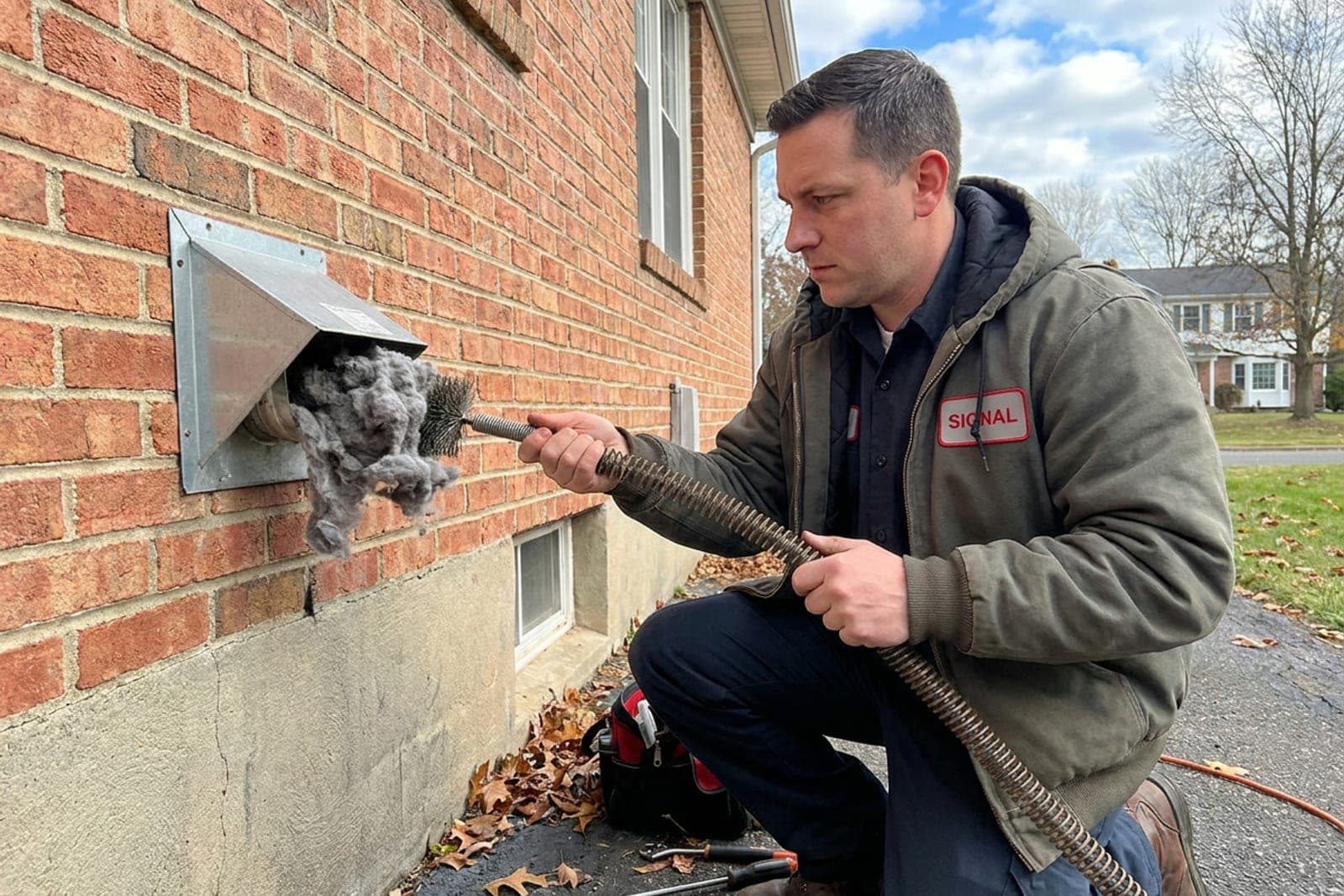
As a chimney and safety expert, I often see neglected dryer vents posing serious risks. For homeowners in Ocean & Monmouth County, the combination of coastal conditions and often older properties makes professional dryer vent cleaning not just a convenience, but a critical safety measure for your family and home.
The Hidden Fire Risk in Your Laundry Room
Your dryer works by forcing hot, moist air out through a vent. Over time, highly flammable lint bypasses the filter and accumulates in the vent line. This buildup chokes airflow, overheats the dryer, and can easily ignite, leading to a house fire. It's a leading cause of residential fires, and many shore homes, with their extensive use and sometimes older infrastructure, are particularly susceptible.
If you have a gas dryer, a blocked vent also prevents exhaust gases, including deadly carbon monoxide, from properly exiting your home. This silent killer can accumulate to dangerous levels, jeopardizing everyone inside. Your dryer's exhaust system needs to be clear to function safely and efficiently.
Why Coastal NJ Homes Face Unique Challenges
Ocean and Monmouth County homes are constantly exposed to salt air. This corrosive environment can silently degrade metal dryer vent ducts, leading to rust, small holes, or weakened joints. These breaches not only allow lint to escape into walls but also create perfect snag points for lint to accumulate rapidly, accelerating blockages and reducing system efficiency.
Our harsh freeze-thaw winters and powerful Nor'easters add further stress. Ice can build up at exterior vent caps, blocking airflow. Strong winds can force debris into unprotected vents or damage vent covers, allowing more lint, leaves, or even pests to enter. Older homes, often with longer or more winding vent runs, compound these issues, making natural blockages and environmental damage more problematic.
More Than Just Lint: Common NJ Vent Obstructions
While lint is the primary culprit, it's not the only one. Shore homes often attract critters. Birds build nests in warm, protected dryer vents, completely blocking airflow. Rodents or insects can also find their way in, drawn by warmth or a perceived shelter. These biological obstructions are tough to remove without specialized tools and can introduce other hazards.
Beyond wildlife, we frequently find improperly installed or damaged ductwork. Flexible vinyl duct, common in older homes, crushes easily and traps lint more effectively than rigid metal. Disconnected sections behind walls or in crawl spaces allow lint to dump into hidden cavities, creating a fire hazard outside the vent itself. Our inspections identify and often resolve these structural issues.
The Professional Advantage: Safety & Efficiency
A thorough dryer vent cleaning goes far beyond what a homeowner can achieve with a vacuum. We use specialized brushes, powerful vacuums, and diagnostic tools to remove stubborn lint, debris, and animal nests from every inch of your vent line, from the dryer connection to the exterior cap. We also inspect the entire system for damage, proper connections, and adherence to safety codes.
The benefits extend beyond fire prevention. A clear vent allows your dryer to operate efficiently, drying clothes faster and reducing energy consumption, saving you money on utility bills. It also prolongs the life of your appliance, reducing wear and tear. Most importantly, it provides peace of mind, knowing your home is safer from preventable hazards.
| Service | Description | Investment |
|---|---|---|
| Dryer Vent Cleaning | Thorough lint, debris, nest removal | $89-$250 |
| On-site Inspection | System check, damage assessment, code adherence | $149 |
| Inspection Credit | Applies to full cleaning service | Full $149 |
Common questions
- How often should I get my dryer vent cleaned?
- For most homes, annual dryer vent cleaning is recommended. However, if you have a large family, frequently use your dryer, or have pets, more frequent cleaning might be necessary to maintain safety and efficiency. Regular maintenance prevents hazardous lint buildup.
- What are the signs that my dryer vent might be blocked?
- Common signs include clothes taking longer to dry, the dryer feeling hot to the touch, excessive lint on clothes after drying, or a burning smell during operation. You might also notice the outdoor vent flap not opening when the dryer is running. These indicate restricted airflow and a potential fire risk.
- Can I clean my dryer vent myself, or do I need a pro?
- While you can clean the accessible lint trap, professional cleaning is crucial for the entire vent line. Experts use specialized tools to remove stubborn lint, debris, and animal nests from every inch, ensuring thorough blockage removal and inspecting for system damage that DIY methods miss.
- Why are Ocean & Monmouth County homes particularly at risk for dryer vent issues?
- Coastal New Jersey homes face unique challenges due to salt air, which corrodes metal ducts and creates snag points for lint. Older properties are also common, with sometimes improperly installed or aging vents. Additionally, wildlife like birds and rodents frequently nest in vents, causing significant blockages specific to our region.
- What's included in a professional dryer vent cleaning service?
- Our professional service includes a thorough removal of lint, debris, and any animal nests from your entire vent line, from the dryer connection to the exterior cap, using specialized tools. We also conduct an inspection of the system for damage, proper connections, and adherence to safety codes, ensuring optimal performance and safety.
- How much does dryer vent cleaning typically cost?
- Our dryer vent cleaning services range from $89 to $250, depending on the complexity and length of your vent system. We also offer an on-site inspection for $149, which is credited against the final job cost if you proceed with the cleaning service.