Hi, I'm Scott. Living here in Ocean & Monmouth County, we know our homes face unique challenges. From corrosive salt air to relentless freeze-thaw cycles and powerful Nor'easters, your chimney takes a beating year after year. If you have an older shore home, or simply want to ensure your fireplace, furnace, or water heater operates safely and efficiently, understanding chimney relining is critical for both the longevity of your system and your family's peace of mind.
Why NJ's Coastal Climate Demands Chimney Attention
Our beautiful New Jersey coast, while picturesque, is tough on chimneys. The constant exposure to salt-laden air accelerates the deterioration of masonry and mortar. This corrosive environment can silently erode your chimney's structural integrity, leading to weakened flue tiles and crumbling mortar joints within the flue itself.
Add to this the brutal freeze-thaw cycles of our winters. Moisture from rain, snow, or even condensation penetrates microscopic cracks in the masonry. When temperatures drop below freezing, this water expands, causing chips, cracks, and spalling that compromise the flue's ability to safely contain combustion byproducts. Older shore homes, often built with less robust flue systems, are particularly vulnerable to these combined stressors and the intense wind and rain from Nor'easters.
What is Chimney Relining and Why It's Crucial
A chimney liner is the innermost layer of your chimney, a protective barrier that runs from the appliance (fireplace, furnace, water heater) up to the chimney top. Its primary functions are crucial: it contains deadly combustion byproducts like carbon monoxide, prevents excessive heat from transferring to combustible materials in your home, and ensures proper draft for efficient appliance operation.
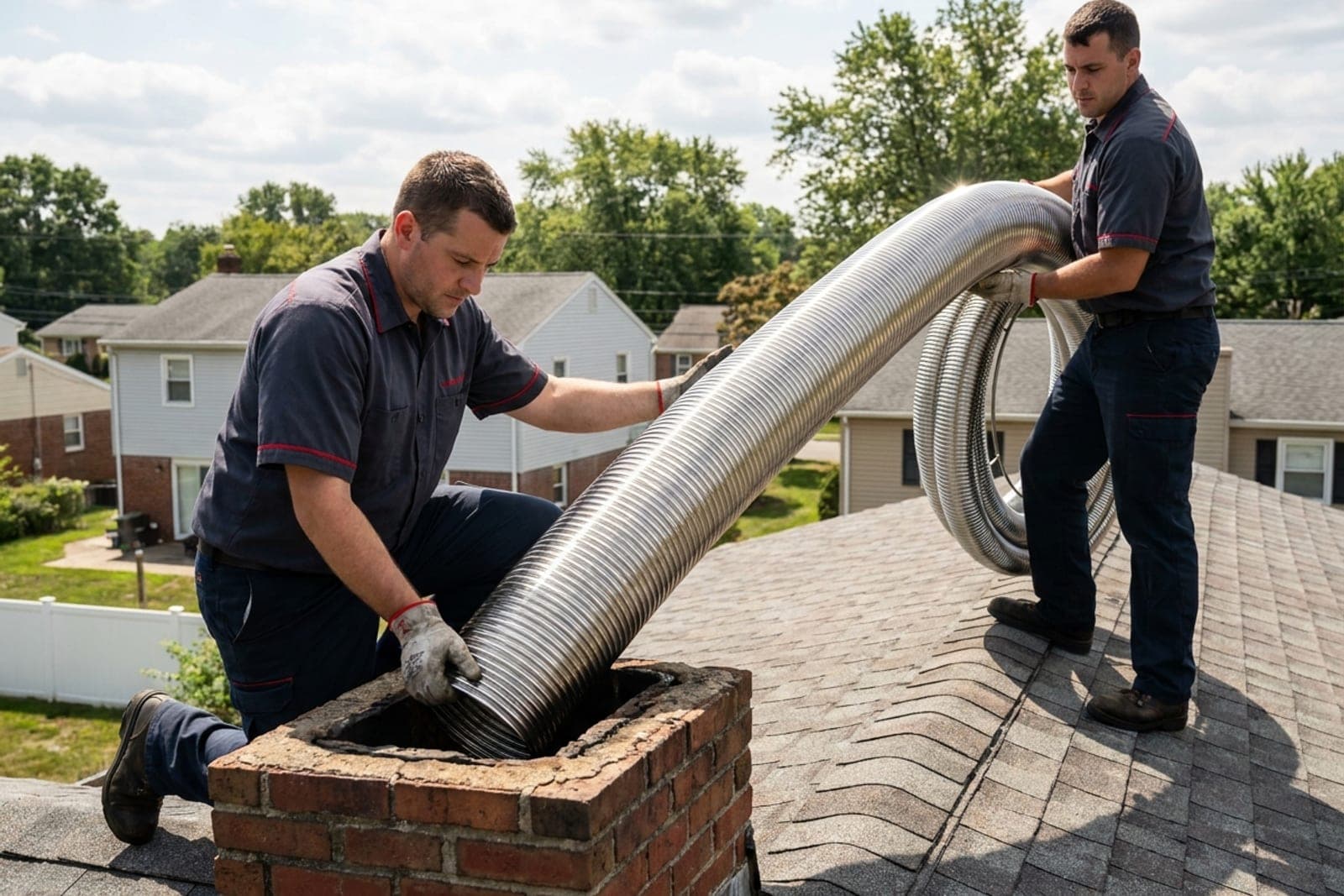
Chimney relining is the process of installing a new, properly sized liner into an existing chimney that has a damaged, deteriorated, or improperly sized original liner. Whether we're talking about stainless steel liners (common for most fuel types), cast-in-place liners (which create a new, monolithic flue), or even replacing traditional clay tiles, relining upgrades your chimney to meet modern safety and efficiency standards, protecting your home where the original structure falls short.
Key Signs Your Ocean & Monmouth Chimney Needs Relining
While a professional inspection is the definitive way to determine if your chimney requires relining, there are often visible clues. Look for cracked, spalling, or missing flue tiles if you can safely view them from the top or through the fireplace opening. You might also notice crumbling mortar joints, excessive efflorescence (white salt deposits) on the exterior, or even small pieces of clay tile in your fireplace or at the base of your flue.
Performance issues are another strong indicator. If you experience poor draft, smoke spilling back into your home, unusual odors, or excessive creosote buildup (especially with wood-burning appliances), these can all point to a compromised or improperly sized flue. Additionally, if you're upgrading to a new, high-efficiency furnace, water heater, or wood stove, the existing flue is often not correctly sized for the new appliance's exhaust requirements, necessitating a new, appropriately sized liner for safe and efficient operation.
| Service | Cost |
|---|---|
| On-site Chimney Inspection | $149 (credited to job) |
| Chimney Relining | From $1,500 |
| General Chimney Repairs | On quote |
| Chimney Sweeping | On quote |
The Undeniable Benefits of a Properly Relined Chimney
Investing in chimney relining offers immediate and long-term benefits for your Ocean & Monmouth County home. Foremost among these is enhanced safety. A sound liner prevents dangerous carbon monoxide and other toxic gases from leaking into your living space. It also acts as a critical barrier, preventing the intense heat from combustion gases or chimney fires from igniting nearby wooden framing in your walls or attic.
Beyond safety, relining significantly improves efficiency and extends your chimney's lifespan. A smooth, correctly sized liner ensures optimal draft, which means your heating appliance burns more cleanly and uses less fuel. It also reduces creosote accumulation in wood-burning systems and protects your masonry from further corrosive damage by isolating it from the harsh byproducts of combustion. This proactive step helps you avoid costlier, more extensive chimney repairs down the line, safeguarding your entire home's heating system.
Ultimately, a properly relined chimney provides unparalleled peace of mind. Knowing that your fireplace, furnace, or water heater is venting safely and efficiently through a robust, modern flue system allows you to enjoy the warmth and comfort of your home, especially during those challenging New Jersey winters, without unnecessary worry.
Common questions
- What's the initial cost to have my chimney checked out?
- An initial on-site inspection by Jersey Chimney Pros costs $149. This fee helps us thoroughly assess your chimney's condition and provide an accurate quote for any necessary work. If you proceed with the recommended services, this inspection fee will be credited towards your total job cost.
- How much does chimney relining typically cost?
- The cost for chimney relining with Jersey Chimney Pros starts from $1,500. The exact price will depend on factors like your chimney's size, height, and the specific type of liner material required for your appliance. A professional inspection will provide a precise estimate for your home.
- Why is a chimney liner so important, especially in New Jersey?
- A chimney liner is crucial for containing harmful combustion gases like carbon monoxide, protecting your home from heat transfer, and ensuring efficient appliance operation. In New Jersey, where corrosive salt air and freeze-thaw cycles damage chimneys, a sound liner prevents dangerous leaks and maintains structural integrity against these harsh conditions.
- How do I know if my chimney needs relining?
- While a professional inspection is the definitive answer, you might notice visible signs like cracked or missing flue tiles, crumbling mortar, or white salt deposits on the exterior masonry. If you see any of these indicators, or if your home has an older chimney, it's wise to schedule an inspection to assess its condition.
- What are the benefits of having my chimney relined?
- Relining your chimney significantly enhances safety by preventing deadly gases like carbon monoxide from entering your home. It also protects combustible materials from extreme heat, reducing fire risk. Beyond safety, a new liner improves appliance efficiency and extends the overall lifespan of your chimney system.
- Does salt air really damage chimneys that much?
- Yes, the corrosive salt-laden air prevalent along the New Jersey coast significantly accelerates the deterioration of masonry and mortar within your chimney. This constant exposure weakens the flue tiles and mortar joints over time, making a robust and intact liner even more critical for protection.