Hi, I'm Scott. Living on the New Jersey coast, we understand the unique challenges our homes face. From the relentless salt air to brutal freeze-thaw cycles, your chimney takes a beating. Chimney relining isn't just a recommendation here; it's often a critical safety and efficiency upgrade, especially for older Ocean & Monmouth County homes.
Why NJ Shore Chimneys Deteriorate Faster
Coastal living, while beautiful, is tough on building materials. Salt-laden air carries corrosive elements directly into your chimney's exterior and, over time, impacts its structural integrity. This constant exposure accelerates the breakdown of mortar joints and flue liners, creating microscopic pathways for moisture and corrosive agents to penetrate deeper.
Beyond the salt, our region endures harsh Nor'easters and volatile temperature swings. The repeated freezing and thawing of trapped moisture inside your chimney's flue causes spalling and cracking, compromising its ability to safely vent combustion byproducts. Many older shore homes also still rely on outdated, unlined, or clay tile liners that are simply not designed to withstand these modern stressors or high-efficiency appliances.
What is Chimney Relining and Why It's Essential
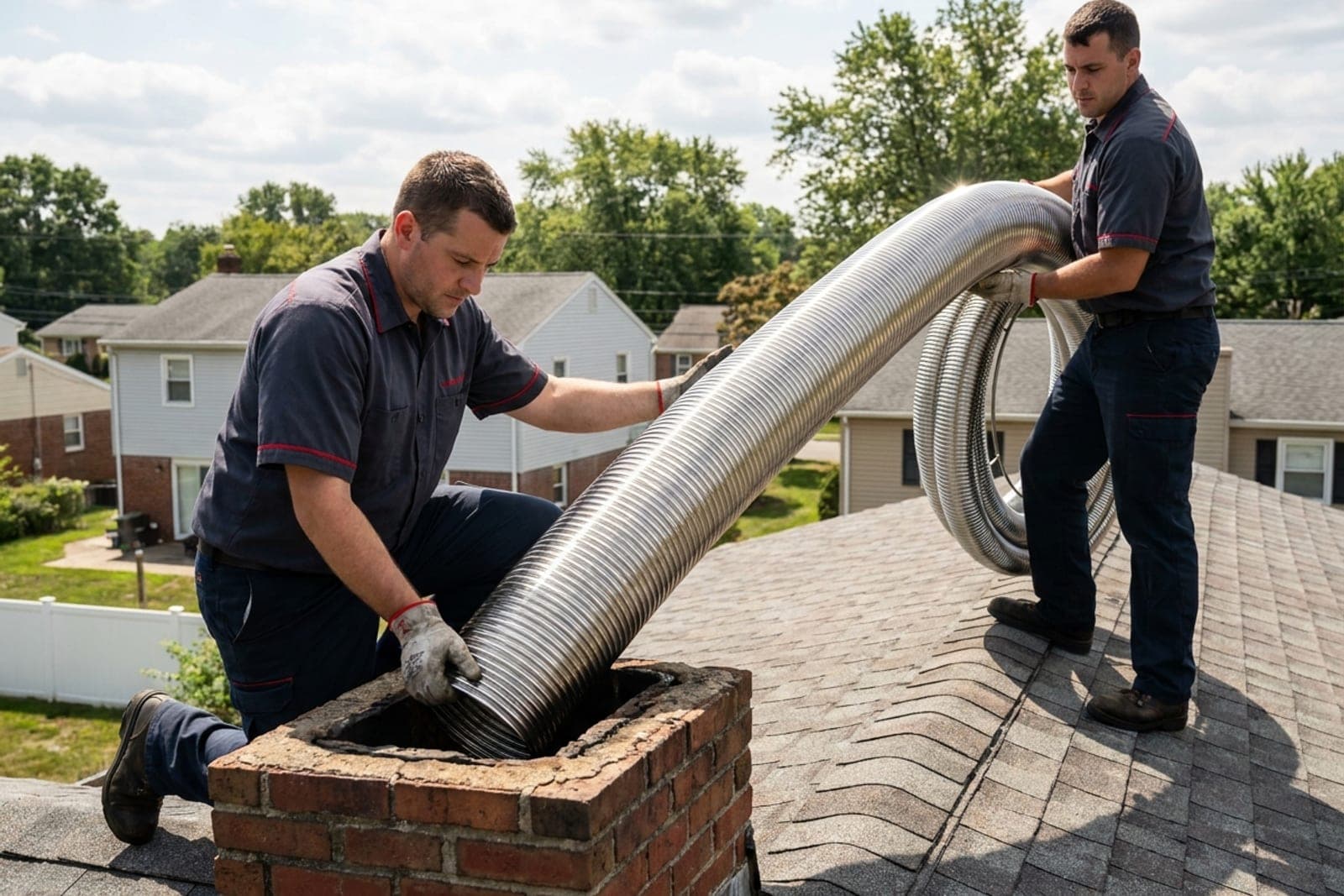
Chimney relining involves installing a new, properly sized and sealed liner inside your existing chimney flue. This new liner serves as the primary conduit for smoke and gases, protecting the masonry from corrosive byproducts and containing heat. Depending on your fuel type (wood, gas, oil) and chimney condition, we typically recommend high-grade stainless steel, durable cast-in-place liners, or specialized aluminum liners.
A compromised or missing liner poses serious risks: carbon monoxide can leak into your home, creosote buildup can ignite a devastating chimney fire, and your heating appliance operates inefficiently. Relining ensures a safe, airtight passage for fumes, improves your system's performance, and extends the overall lifespan of your chimney structure, preventing far more costly repairs down the line.
Signs Your Ocean & Monmouth County Chimney Needs Relining
Keeping an eye out for these indicators can save you trouble. Visible cracks, spalling (flaking or crumbling masonry), or missing mortar joints inside your firebox or flue are clear signs of liner failure. If you notice discoloration or staining on the exterior of your chimney above the roofline, it often indicates moisture penetration through a damaged liner.
Beyond visual cues, pay attention to how your fireplace or furnace operates. Poor draft, smoke spilling back into your home, unusual odors (especially when not in use), or excessive creosote buildup even after recent cleaning can all point to an inadequate or failing liner. For homes built before the 1940s, it's highly probable your chimney is unlined or has an outdated clay tile liner that should be inspected immediately.
The Professional Relining Process: What to Expect
Our process begins with a thorough Level 2 inspection, utilizing specialized cameras to assess the full extent of your existing flue's condition and identify any structural issues. This allows us to recommend the most appropriate liner material and installation method for your specific needs, considering your appliance type and desired outcome. We provide a clear, detailed explanation of our findings and proposed solution.
The installation itself is performed by certified technicians. Depending on the chosen liner, this can involve preparing the flue, installing a continuous length of stainless steel, or pouring a cast-in-place liner. We ensure minimal disruption to your home, protect surrounding areas, and meticulously clean up afterward. Upon completion, we conduct a final inspection to confirm proper installation and safety, providing you with peace of mind.
| Service | Cost | Note |
|---|---|---|
| On-site Inspection | $149 | Credited if work proceeds |
| Chimney Relining | from $1,500 | Protects masonry & contains heat |
| Liner Material Options | Varies | Stainless steel, cast-in-place, aluminum |
Don't Compromise Safety: A Local Expert's Plea
As a local chimney safety expert, I've seen firsthand the dangers posed by neglected chimneys in our community. The unique environmental stressors of Ocean & Monmouth County demand a proactive approach to chimney maintenance. Guessing about your chimney's condition or delaying necessary repairs puts your family and property at unacceptable risk.
If you suspect your chimney needs relining, or if it's been years since a professional inspection, don't wait. Addressing liner issues promptly is not just about compliance; it's about safeguarding your home against carbon monoxide poisoning, devastating chimney fires, and inefficient heating. Prioritize safety and reach out to an expert who understands the specific demands of the NJ shore.
Common questions
- How much does a chimney inspection cost in NJ?
- An on-site Level 2 chimney inspection by Jersey Chimney Pros costs $149. This fee is fully credited toward your total if you proceed with any recommended chimney relining or repair work with us.
- What's the typical price for chimney relining?
- Chimney relining services from Jersey Chimney Pros start from $1,500. The exact cost varies depending on your chimney's specific condition, the type of appliance it serves, and the liner material chosen for optimal safety and efficiency.
- How can I tell if my chimney needs a new liner?
- Look for visible cracks or crumbling masonry inside your firebox or flue, or discolored staining on your chimney's exterior above the roof. You might also notice poor draft, smoke entering your living space, or unusual smells when your fireplace is in use, all indicating a potential liner issue.
- What kind of chimney liners are best for NJ homes?
- For homes in Ocean & Monmouth County, we often recommend high-grade stainless steel liners for their durability and versatility. Depending on your fuel type and chimney's condition, durable cast-in-place liners or specialized aluminum liners may also be ideal to protect against our unique coastal environmental stressors.
- How often should I have my chimney inspected?
- Given the harsh coastal conditions in Ocean & Monmouth County, it's wise to have your chimney professionally inspected annually. Regular inspections ensure your chimney remains safe and efficient, catching potential issues early before they become costly or dangerous problems.
- Why is a damaged chimney liner dangerous?
- A compromised chimney liner can lead to serious hazards like house fires or carbon monoxide poisoning. It allows corrosive byproducts to damage the chimney structure, potentially letting heat escape into combustible parts of your home, or poisonous gases to leak into your living space.