
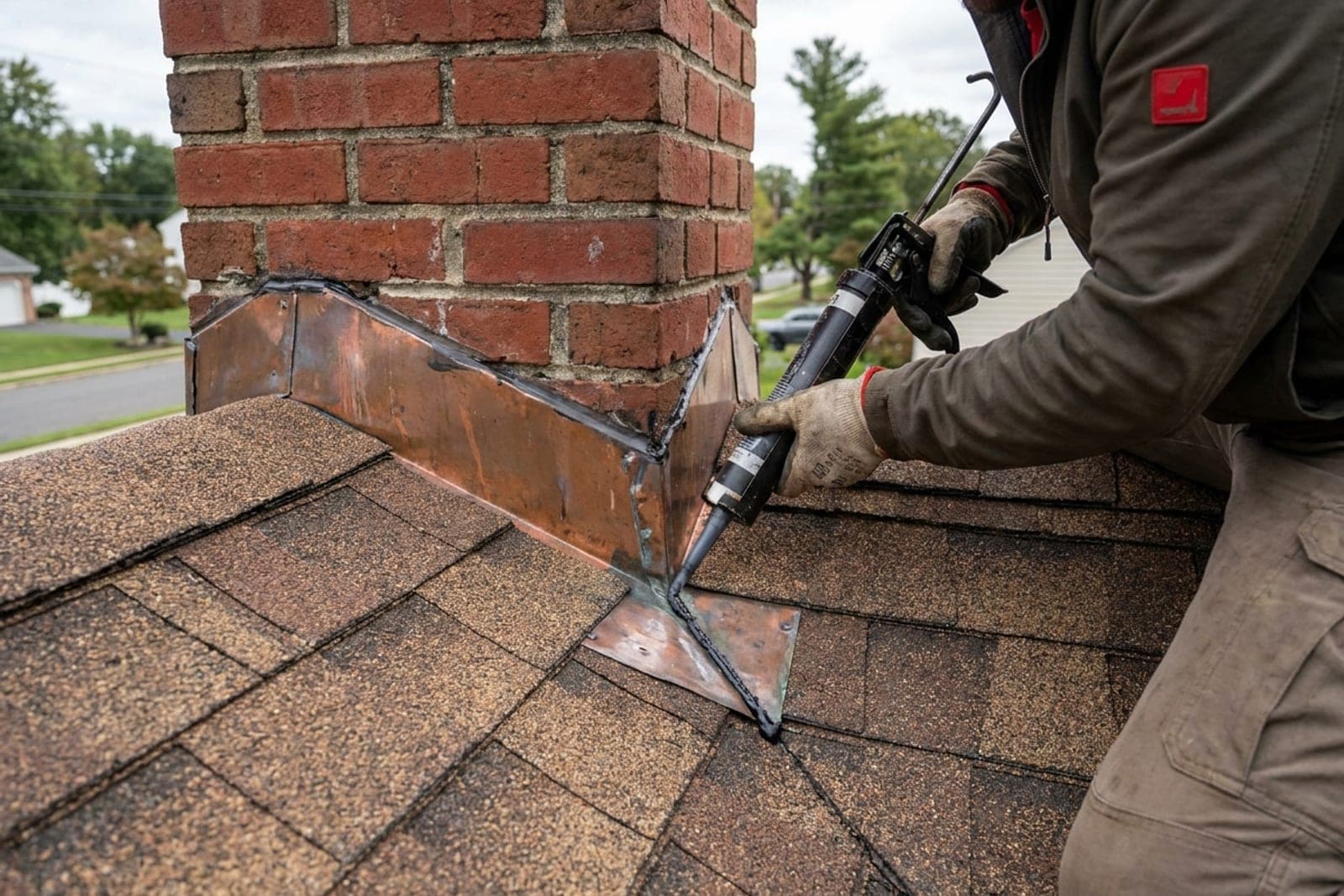
Water stains near your chimney are more than just an eyesore; they signal a serious problem with your chimney flashing. For homeowners in Ocean & Monmouth County, NJ, properly functioning flashing is critical to protecting your home against the unique challenges of our coastal environment.
Why Flashing Fails Here on the Jersey Shore
Chimney flashing is the metal barrier that creates a watertight seal between your chimney and roofline. In our corner of New Jersey, several factors accelerate its demise. Coastal salt air, a constant presence in places like Point Pleasant or Long Branch, aggressively corrodes common flashing materials like galvanized steel. This leads to rust and eventual breaches.
Our harsh freeze-thaw cycles contribute significantly. Water seeps into tiny cracks or gaps, freezes, expands, and pries the flashing away from the roof or chimney. Add to this the brutal winds and driving rain from Nor'easters, and compromised flashing can be lifted, torn, or damaged, leaving your home vulnerable. Many older shore homes, built decades ago, still have original flashing that is simply past its structural lifespan, regardless of its initial quality.
Warning Signs of Flashing Damage
Early detection is key to preventing costly damage. The most obvious sign is water stains on ceilings or walls in the attic or top floor, particularly near the fireplace or chimney. Don't dismiss a small discoloration; it's often the tip of a much larger water intrusion. You might also notice dripping sounds during rain, even after the storm has passed.
Outside, inspect your roof and chimney. Look for rust streaks running down the chimney masonry or onto the roof shingles below. Visible gaps or separation between the metal flashing and either the chimney or the roof surface are clear red flags. Curled, missing, or distorted shingles directly adjacent to the chimney can also indicate underlying flashing problems, as water may be running underneath them.
The Real Cost of Ignoring Leaks
Putting off flashing repair is a gamble you don't want to lose. What starts as a small leak can quickly escalate into significant structural damage. Water intrusion can rot roof decking, rafters, and attic insulation, compromising your home's integrity and energy efficiency. Damp conditions are also a breeding ground for mold and mildew, posing health risks and requiring expensive remediation.
Beyond the immediate structural concerns, persistent water can damage the chimney itself, washing out mortar joints and leading to brick spalling. This weakens the entire chimney structure and can lead to more complex, expensive repairs down the line. Ignoring a flashing issue today ensures a much larger, more invasive, and costly repair tomorrow.
Professional Repair for Lasting Protection
Attempting a DIY flashing repair with caulk or tar is a temporary fix at best; it rarely addresses the root cause and will fail quickly under our local weather conditions. Professional flashing repair involves selecting the right materials, such as durable copper, lead-coated copper, or specific gauges of stainless steel that can withstand salt air corrosion.
Our approach ensures proper installation, utilizing industry-best practices like step-flashing and counter-flashing, carefully integrated with your roofing system. This creates a lasting, watertight seal, specifically designed to handle Ocean & Monmouth County's unique climate. Trusting an experienced local chimney professional ensures your repair is done correctly, offering genuine protection for your home for years to come.
| Service | Cost |
|---|---|
| On-site Inspection | $149 |
| Chimney Flashing Repair | $300 – $1,200 |
| Inspection Fee Policy | Credited if repair proceeds |
Common questions
- How do I know if my chimney flashing is leaking?
- Look for water stains on ceilings or walls near your chimney, especially after rain. You might also hear dripping sounds or see rust streaks on the outside of your chimney or roof. A professional inspection can confirm the source of any leak.
- What happens if I don't fix my chimney flashing leak?
- Ignoring a flashing leak can lead to significant issues like rotten roof decking and rafters, damaged insulation, and hazardous mold growth. These problems compromise your home's integrity and can be very costly to repair, posing health risks too.
- How much does chimney flashing repair cost?
- Chimney flashing repair costs typically range from $300 to $1,200, depending on the extent of the damage and the materials required. For an accurate estimate tailored to your home's specific needs, we recommend an on-site inspection.
- Do you charge for a chimney inspection?
- Yes, our on-site inspection for chimney issues costs $149. This entire fee is fully credited towards your total cost if you decide to proceed with our recommended flashing repair services.
- Can I fix my chimney flashing myself?
- Attempting DIY flashing repairs with temporary fixes like caulk or tar is rarely effective, especially given our unique coastal weather conditions. Professional repair ensures durable materials are used and installed correctly to provide lasting protection against leaks.
- What materials do you use for flashing repair?
- To ensure lasting protection against coastal salt air corrosion, we utilize high-quality, durable materials for flashing repair. These often include copper, lead-coated copper, or specific gauges of stainless steel, chosen for their resilience in our environment.