
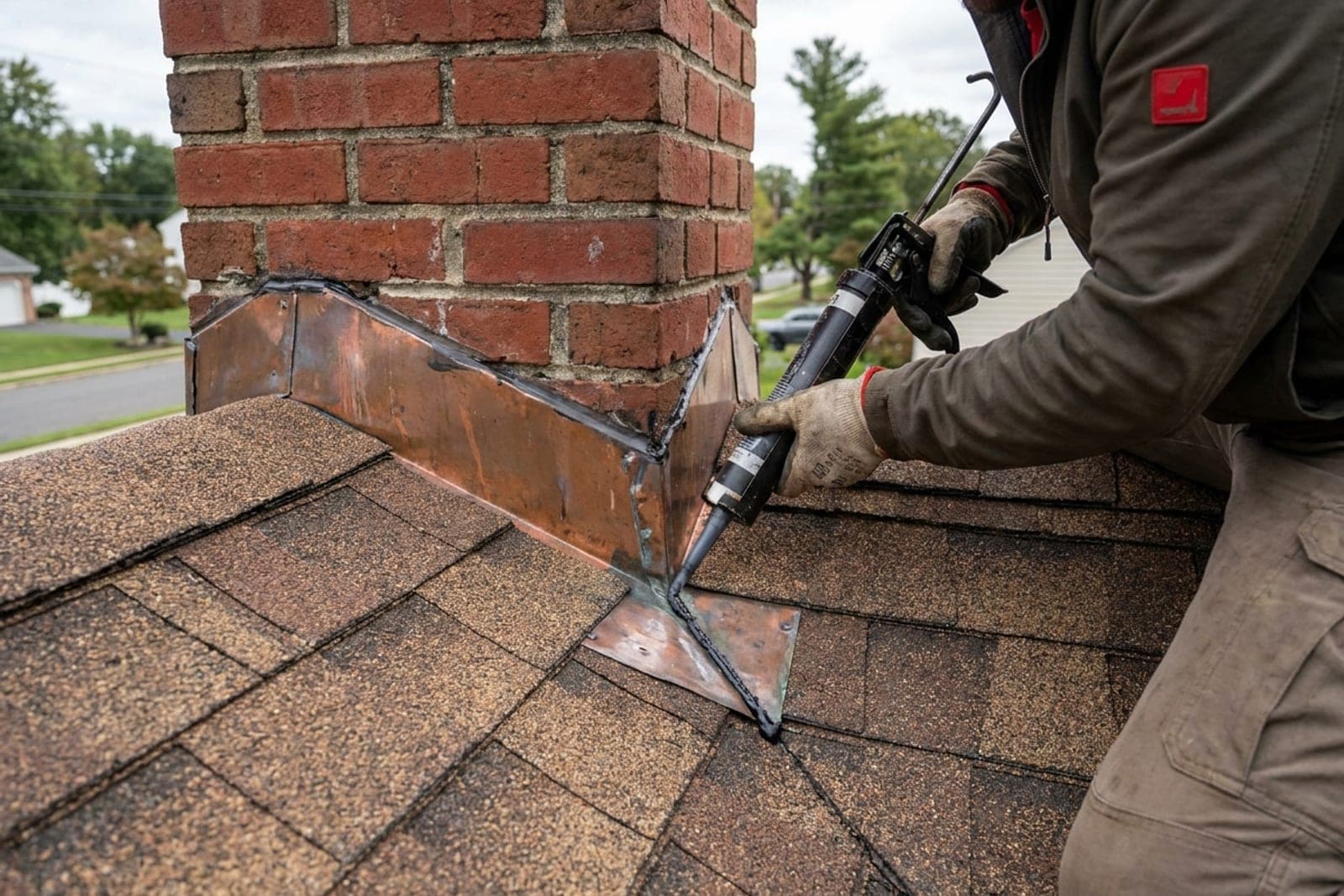
Your chimney's flashing is the critical, watertight seal where masonry meets roof. For Ocean & Monmouth County homes, facing relentless salt air, harsh winters, and powerful Nor'easters, maintaining this essential barrier is key to preventing costly water damage.
The Unsung Hero: What Chimney Flashing Does
Chimney flashing isn't just a strip of metal; it’s a meticulously installed series of custom-bent pieces designed to create a watertight transition where your chimney penetrates the roofline. This multi-layered system ensures that every drop of rain, melting snow, and wind-driven water is diverted away from your home's interior.
Without proper flashing, water would inevitably find its way into your attic, walls, and ceiling. This makes the flashing assembly a fundamental component in protecting your home's structural integrity against the persistent assault of the elements, especially in our challenging coastal environment.
Why Coastal NJ Flashing Takes a Beating
Homes in Ocean and Monmouth County are particularly vulnerable to flashing degradation. The constant presence of salt-laden air significantly accelerates corrosion, turning what might be years of life in an inland area into mere months for lesser-quality flashing materials, leading to rust and deterioration.
Our notorious freeze-thaw cycles also play a major role. Ice expands, pushing and pulling at metal flashing and sealant, creating microscopic cracks that grow with each temperature swing. Couple this with the high winds and torrential rains of a Nor'easter, and even robust flashing can be bent, torn, or compromised by debris.
Furthermore, many older shore homes, while charming, may have original flashing made from materials less resistant to today's extreme weather, or their sealants have simply aged beyond their useful lifespan. This combination of harsh conditions and material age creates a perfect storm for flashing failure.
Warning Signs of Flashing Failure
The most common sign of flashing failure is water intrusion. Look for tell-tale water stains on your attic ceiling, interior walls, or even light fixtures near the chimney, especially after heavy rain or significant snow melt. A persistent musty odor in your attic or upper floors can also indicate hidden moisture issues.
Externally, a visual inspection (from a safe distance with binoculars) can reveal problems. Look for bent, loose, or visibly rusted flashing. Cracks or crumbling in the sealant around the flashing are clear red flags. Also, check for deteriorated mortar joints or spalling (flaking) bricks near the roofline, as these can be a symptom of water repeatedly penetrating the masonry due to failed flashing.
Ignoring these warning signs means inviting escalating damage. What starts as a small drip can quickly become a significant leak, leading to far more expensive repairs if not addressed promptly.
The Peril of Procrastination: Why Professional Repair is Crucial
Delaying flashing repair isn't just about managing a minor leak; it's about preventing catastrophic damage. Persistent water intrusion can lead to widespread wood rot in your roof deck, rafters, and attic framing, compromising your home's structural integrity. It fosters hazardous mold growth, deteriorates your chimney's masonry from the inside out, and destroys interior finishes like plaster and paint.
Flashing repair is not a do-it-yourself task. It requires specific expertise in proper overlapping techniques, metal bending, and sealant application to ensure a truly watertight and durable seal. Working on roofs, especially on older homes or during less-than-ideal weather, also presents significant safety risks.
A professional assessment identifies the extent of damage and ensures the correct, corrosion-resistant materials are chosen for our coastal climate. We focus on a long-term solution, restoring your chimney's protective barrier and giving you peace of mind against Ocean & Monmouth County's relentless weather.
| Service | Cost / Detail |
|---|---|
| On-site Inspection | $149 |
| Inspection Fee Credit | Applied to full job cost |
| Chimney Flashing Repair | $300–$1,200 |
| Primary Goal | Prevent water damage & structural rot |
| Delaying Repair | Increases long-term costs significantly |
Common questions
- How much does it cost to have my chimney flashing inspected?
- Jersey Chimney Pros offers a thorough on-site inspection for $149. This inspection fee is fully credited towards the total cost of any recommended repair work if you choose to proceed with us.
- What's the typical cost for chimney flashing repair?
- The cost for professional chimney flashing repair with Jersey Chimney Pros typically ranges from $300 to $1,200. The final price depends on the extent of the damage, the complexity of the repair, and the materials required.
- Why does chimney flashing fail faster in coastal areas like Ocean and Monmouth County?
- Coastal homes are exposed to unique environmental stressors. Constant salt-laden air greatly accelerates corrosion of metal flashing, and the frequent freeze-thaw cycles common in our region cause materials to expand and contract, stressing the seals and leading to premature failure.
- What are the first signs I have a chimney flashing leak?
- Common warning signs include water stains on your attic ceiling, interior walls, or even light fixtures near the chimney, especially after heavy rain or snowmelt. A persistent musty odor in your attic or visible gaps, rust, or damage to the flashing itself can also indicate a problem.
- What exactly is chimney flashing?
- Chimney flashing is a critical system of custom-bent metal pieces installed to create a watertight seal where your chimney passes through your roof. Its purpose is to divert all rain, melting snow, and wind-driven water away from your home's interior, preventing leaks and water damage.
- What happens if I ignore a small chimney flashing leak?
- Delaying even a minor flashing repair can lead to severe and costly issues. Persistent water intrusion can cause widespread wood rot in your roof deck and framing, foster hazardous mold growth, and internally deteriorate your chimney's masonry, compromising your home's structural integrity.